


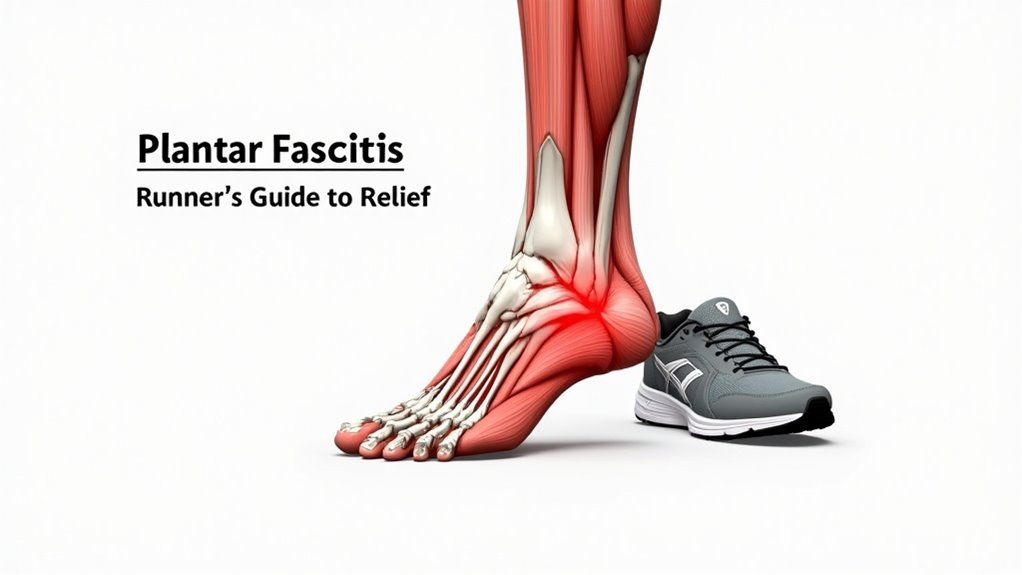
To prevent and treat plantar fasciitis, you’ll need a thorough approach. Start by wearing proper footwear with moderate cushioning and a 4-8mm heel drop, while gradually increasing your mileage by no more than 10% weekly. Incorporate daily stretches, including gentle calf and toe exercises, and use a tennis ball to roll under your foot. Cross-train on softer surfaces and strengthen your feet with resistance bands. Understanding additional strategies will help guarantee long-term relief and prevention.
Understanding Plantar Fasciitis in Athletes

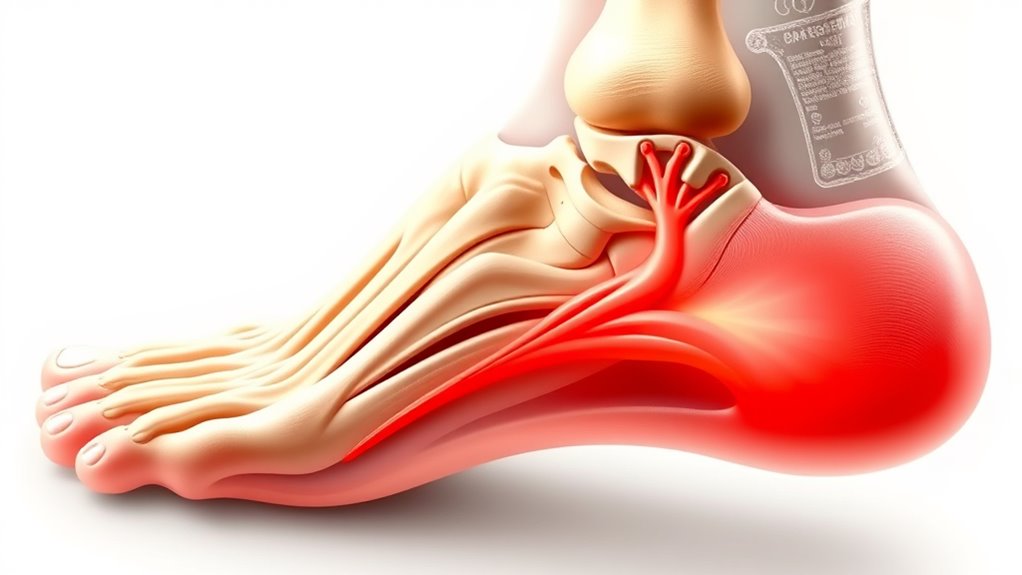
While running and other high-impact sports provide excellent cardiovascular benefits, they can place significant stress on your feet, particularly the plantar fascia.
Several biomechanical factors contribute to this condition, including repetitive forces that reach up to three times your body weight during running.
Running subjects your feet to massive forces – up to triple your body weight with each stride you take.
These forces, combined with inflammation triggers like prolonged standing and improper foot strike patterns, can lead to painful micro-tears in the fascia.
If you have flat arches or high arches, you’re particularly susceptible to developing plantar fasciitis due to altered gait patterns that increase tension on the connective tissue. Additionally, maintaining proper running form can significantly reduce the risk of developing this painful condition.
Early Warning Signs and Risk Factors
Recognizing the early warning signs of plantar fasciitis can help you prevent this condition from derailing your running routine. For effective symptom recognition, watch for sharp heel pain when you first get out of bed and increased discomfort during your push-off phase, especially on hills.
Training awareness is essential in identifying risk factors. You’ll want to monitor sudden mileage increases, changes in running surfaces, and worn-out footwear.
Pay attention to your biomechanics, including overpronation and high arches. If you’re experiencing post-rest pain that diminishes during warm-ups but returns later, don’t ignore these warning signals – they’re your body’s way of preventing serious injury.
Essential Footwear Modifications
Proper footwear choices can make or break your recovery from plantar fasciitis. When selecting shoes, you’ll want to focus on key features like toe box design, cushioning options, and midsole stiffness.
Look for brands like Altra, Lems, or Xero Shoes that offer foot-shaped toe boxes to improve circulation. You’ll benefit from moderate cushioning and firm midsoles, while avoiding overly soft, marshmallow-like materials that increase pressure.
Consider a heel-to-toe drop of 4-8mm to reduce tension, and choose arch support that matches your foot type. For insole types, opt for soft, cushioned options rather than rigid orthotics that might impede natural foot movement.
Smart Training Adaptations
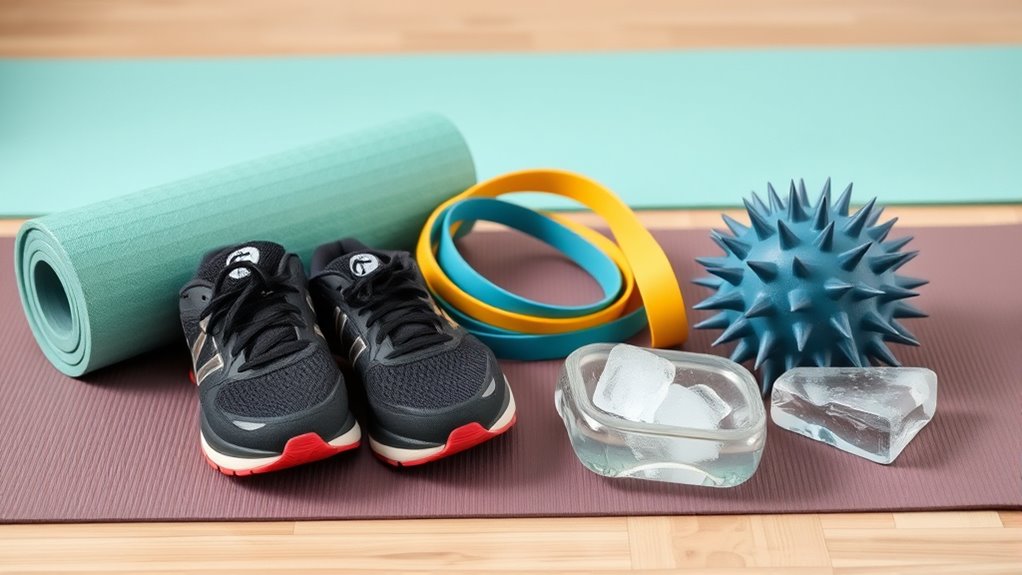
Your choice of running surfaces plays a critical role in managing plantar fasciitis, so you’ll want to start on softer surfaces like grass or tracks rather than concrete. You can gradually incorporate harder surfaces into your training as your symptoms improve, but always let pain be your guide for surface selection. Building your distance should follow a methodical approach, where you’ll increase your weekly mileage by no more than 10% while monitoring how your foot responds to the added stress. Additionally, incorporating cross-training exercises can enhance your overall fitness and help prevent further injury.
Surface Selection Matters
Smart selection of running surfaces plays a pivotal role in managing plantar fasciitis symptoms and promoting long-term foot health.
You’ll benefit from rotating between different training surfaces to reduce impact and prevent overuse injuries. Softer terrains like grass and trails can decrease ground reaction forces by up to 60% compared to concrete, while providing natural shock absorption for your feet.
Consider incorporating surface variety into your weekly routine – use treadmills for controlled workouts, trails for long runs, and rubber tracks for speed work. Additionally, proper footwear selection is critical for comfort and performance, ensuring you are well-supported on each surface.
Remember to match your footwear to each surface type, ensuring proper support and protection during recovery phases.
Progressive Distance Building
Beyond selecting ideal running surfaces, successfully returning to running with plantar fasciitis depends on building distance systematically.
You’ll need to carefully monitor your distance thresholds and make gradual mileage adjustments to prevent reinjury. Start with a conservative approach by incorporating walk-run intervals during your initial return phase.
Keep your weekly mileage increases to no more than 10%, allowing your body to adapt properly. You’ll also want to alternate between higher-mileage weeks and recovery weeks to avoid overloading your feet.
This structured progression helps guarantee your plantar fascia can handle the increasing demands of running without risking setbacks. Additionally, ensuring proper hydration needs can support your overall recovery and performance throughout this process.
Key Stretching and Strengthening Exercises
When managing plantar fasciitis, a combination of targeted stretching and strengthening exercises forms the cornerstone of effective treatment.
Start with gentle calf stretches against a wall and plantar fascia stretches by pulling your toes toward your shin. These movements help reduce tension and improve flexibility in your foot’s supporting structures.
Follow these key exercises for best results:
- Roll a tennis ball under your foot for 5 minutes daily
- Perform seated toe stretches to enhance mobility
- Practice resistance band exercises to strengthen foot muscles
- Include towel scrunches to activate arch support
Recovery Techniques and Pain Management
For immediate pain relief, you’ll want to apply ice packs to your affected foot for 15-20 minutes after running, followed by gentle self-massage using a tennis ball or frozen water bottle.
During your recovery days, it’s important to engage in active recovery methods like swimming or cycling to maintain your fitness while giving your feet a break from impact.
You can complement these techniques with heat therapy before your stretching routine to increase blood flow and promote healing in the plantar fascia tissue.
Ice and Heat Therapy
Although runners often seek quick relief from plantar fasciitis pain, understanding the proper timing and application of ice and heat therapy is essential for effective recovery.
Both cold therapy and heat therapy play distinct roles in your healing process, with timing being critical for maximum benefit.
- Apply ice immediately after running for 15-20 minutes to reduce inflammation.
- Switch to heat therapy once acute inflammation subsides to promote blood flow.
- Use contrast therapy by alternating 2 minutes cold with 30-60 seconds heat.
- Elevate your foot above heart level during ice treatments for enhanced results.
Active Recovery Methods
Successful recovery from plantar fasciitis requires an active approach that combines various therapeutic techniques and strengthening exercises.
You’ll want to incorporate tennis ball rolling alongside foam rolling to target tight fascia and improve circulation. Regular yoga practices can complement traditional calf stretches and help maintain flexibility throughout your recovery.
For enhanced healing, try incorporating kinesiotaping before your runs and using night splints while you sleep.
These techniques, combined with isometric heel holds and proper stretching routines, will help manage pain and promote healing while maintaining your running routine. Additionally, integrating strength training into your recovery plan can improve muscle balance and support overall injury prevention.
Conclusion
Don’t let plantar fasciitis stop you in your tracks. With proper prevention and treatment strategies, you’ll be back on the road to peak performance. Remember to listen to your body’s signals, maintain appropriate footwear, and incorporate targeted exercises into your routine. By following these evidence-based approaches and staying consistent with your recovery plan, you’re setting yourself up for long-term running success and injury-free training.