


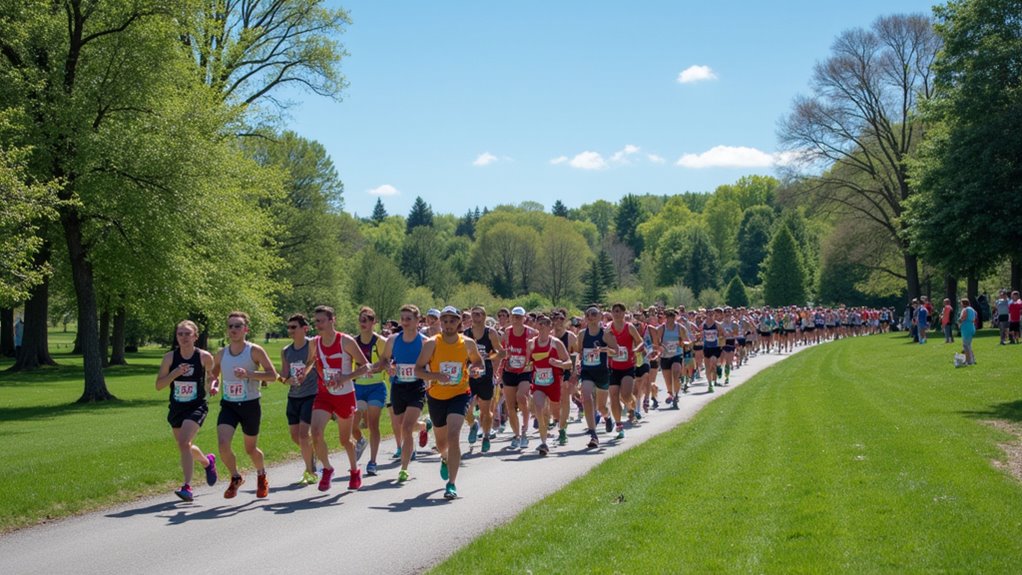
A 5K race measures exactly 3.1 miles, representing an inviting start for novice runners and drawing millions of participants annually in the U.S. A 10K doubles that distance to 6.2 miles, while a half marathon spans 13.1 miles. The marathon, a challenging 26.2-mile feat, requires extensive preparation. Ultramarathons push limits further, exceeding traditional distances. Each race offers unique experiences and challenges, appealing to diverse runner goals. Discover more about the fascinating world of running across various distances.
Understanding the 5K Race Distance


A 5K race covers a distance of precisely 3.1 miles, making it an accessible entry point for many individuals new to running. This distance equates to 12.5 laps on a standard outdoor track, offering a manageable challenge for beginners and a competitive opportunity for seasoned runners.
In 2023, the United States saw over 40,000 5K races, with nearly six million participants registering, highlighting its status as the nation’s most popular race distance. The 5K format encourages widespread participation due to its brevity and approachable nature, serving as a stepping stone in the journey of many aspiring runners. Additionally, following a structured beginner training plan can help new runners build confidence and prepare effectively for the race.
Exploring the 10K Race Experience
While the 5K race offers an introductory experience for many runners, those seeking a slightly more challenging endeavor often look towards the 10K race.
Spanning 6.2 miles, the 10K demands a higher level of stamina and preparation. Participants typically undergo at least eight weeks of training, enhancing both endurance and speed.
This distance, requiring 25 laps around a standard track, is popularized by events like the Crescent City Classic and the Peachtree Road Race.
These events often feature a festive atmosphere, drawing both seasoned athletes and enthusiastic novices, making the 10K a compelling choice for those ready for the next step. Integrating speed workouts into training can significantly improve performance in longer races like the 10K.
The Journey to a Half Marathon

Embarking on the journey to a half marathon requires dedication and a strategic approach to training. A half marathon spans 13.1 miles, demanding both physical endurance and mental resilience.
Training plans typically extend over several months, allowing gradual mileage increase and recovery periods to prevent injury. Runners often integrate long runs, speed work, and cross-training to build strength and stamina. A well-defined schedule ensures that new runners progressively enhance their endurance while minimizing the risk of injury.
Nutrition and hydration are key, as they support energy levels and recovery. Participants benefit from setting realistic goals, such as completing the race or achieving a personal best.
This race distance is a significant milestone, bridging 10Ks and full marathons.
Conquering the Marathon Challenge
Taking on the challenge of a marathon is a commitment that requires meticulous preparation and unwavering determination. Spanning 26.2 miles, this iconic distance demands months of disciplined training, typically ranging from 16 to 20 weeks.
Runners must develop a strategic plan that incorporates long runs, cross-training, and recovery periods to build endurance and prevent injury.
The marathon’s roots trace back to the legend of Pheidippides and the first Olympic marathon in 1896. Today, marathons attract participants from around the globe, each with personal goals, whether finishing, achieving a personal best, or qualifying for prestigious events like the Boston Marathon.
Beyond the Marathon: Ultramarathons and Other Distances
What lies beyond the traditional marathon distance? Ultramarathons, which stretch beyond the 26.2-mile marathon, challenge even the most seasoned runners.
Common ultramarathon distances include 50 kilometers (31.1 miles), 50 miles, 100 kilometers, and 100 miles, each requiring exceptional endurance and mental resilience. Varied race formats, such as 24-hour and 48-hour events, test not only distance but also time management.
In addition to ultramarathons, other race distances such as 8K, 15K, and 10 miles offer intermediate challenges. These events cater to runners seeking diversity in their racing experiences and those aspiring to push personal boundaries with longer, more demanding courses.
Conclusion
Participation in running events, from the accessible 5K to the demanding ultramarathon, offers individuals a chance to challenge themselves and achieve personal milestones. Understanding the nuances of each race distance is crucial for effective training and successful completion. Whether aiming to improve personal bests or simply enjoy the camaraderie of race day, runners benefit from informed preparation. Embracing the diversity of these events enhances the overall experience, fostering a deeper connection to the vibrant running community.