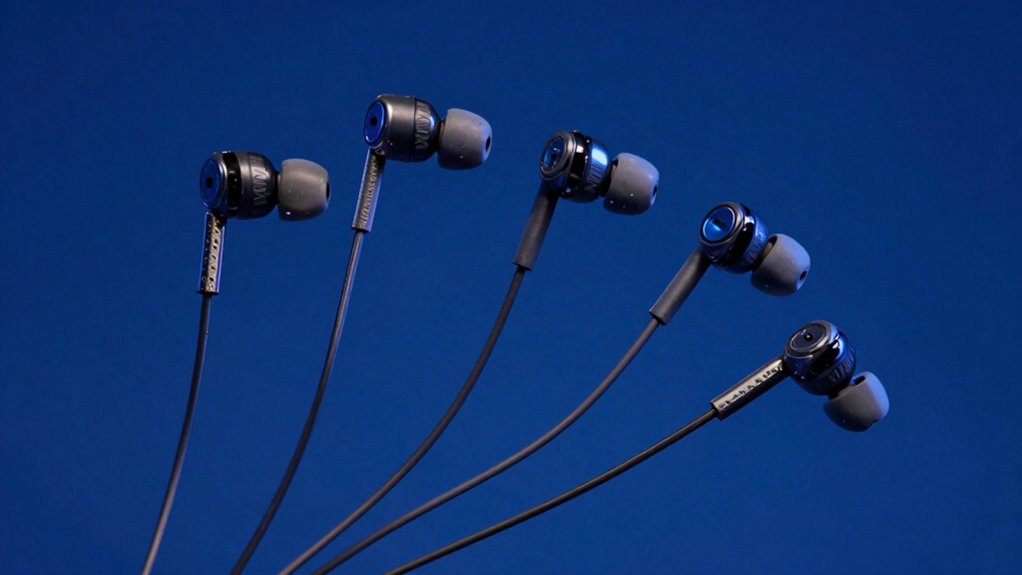
If you want wired running earphones with cords, consider seven solid options that fit over-ear hooks or secure fins, like the MUCRO Sport Earbuds or JBL Endurance Run 2, both with IPX5 sweat resistance and inline mics. Look for a comfortable fit, lightweight design under 0.8 ounces, memory wire tips, and easy inline controls for calls and music. Prices range from budget to mid-range, and warranties vary. You’ll discover more practical details as you continue.
Here are the five best sweatproof wired sport earphones built for tough workouts and all-day comfort: JVC HA-EN10B with secure ear hooks and extra nozzle sizes for a personalized seal, JBL Endurance Run 2 features FlipHook options and a rugged, IPX4–IPX5-rated build, wired over-ear options add stability with multiple tip sizes, these models use dynamic drivers for clear vocals and punchy bass, inline remotes and mics boost calls, expect 1.2 m cord, price varies, and you’ll find practical, durable choices—continue for more specifics.
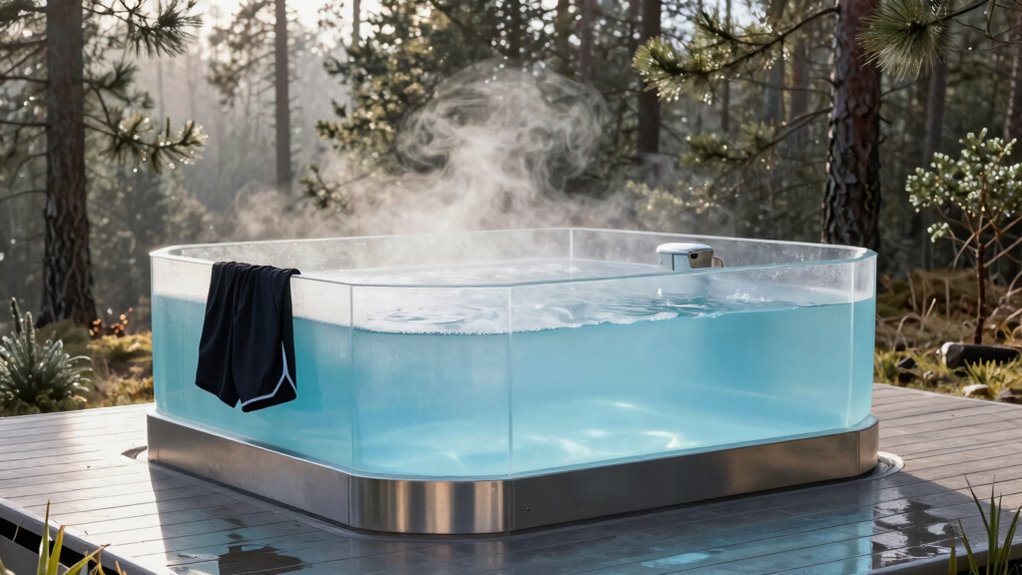
From 110 to 238 gallons, these cold plunge tubs fit different needs for runners. Look for full-body immersion with 119–120 gallon models for easy setup, or larger 131–140+ gallon options like Merapi XL or IcyPlunge for taller athletes and multi-user sessions. Many offer foldable portability, insulated lids, and dual drains, with chiller compatibility in models like AKSPORT and Albott. Choose an option with your height, space, and maintenance preference; more details ahead.
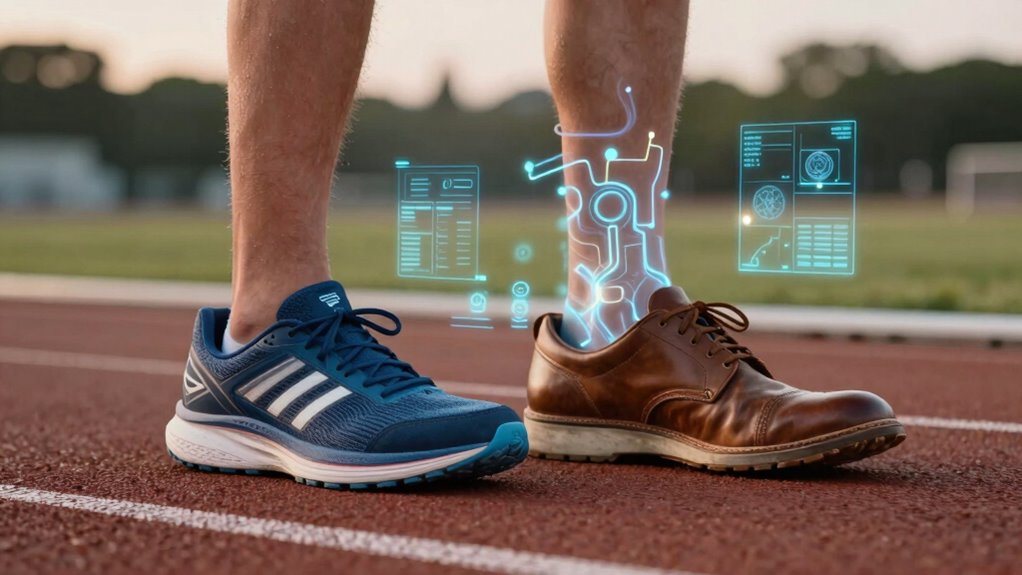
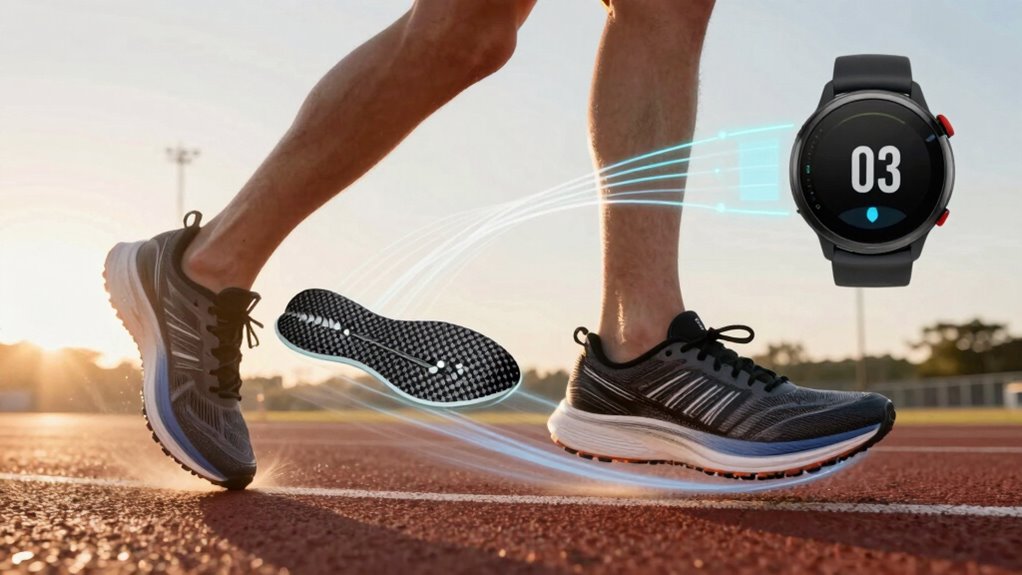
You’ve seen how technology reshaped running: better shoes, synthetic tracks, precise timing, and smart wearables that boost economy and safety. Innovations from vulcanized rubber and waffle soles to foam, carbon plates, and 3D printing improved cushioning, traction, and energy return. Photo-finish and chip timing guarantee fair results while GPS and sensors guide training and injury prevention. Sustainable materials and virtual races broaden access and reduce waste. Keep going and you’ll uncover specific advances, impacts, and future trends.
Why Running Tech Matters: Key Turning Points and Benefits
Although running has always been a test of human endurance, technological advances have repeatedly reshaped what athletes can achieve and how events are run.
You see key turning points—from vulcanized rubber soles improving grip and comfort to synthetic tartan tracks offering consistent surfaces—that directly influence daily training and competition.
Technology in running shoes now includes Advanced Footwear Technology and PEBA foams, which can improve running economy by 2.8–4.2%, delivering enhanced performance you can measure.
Timing innovations, like photo finish systems and chip timing with RFID, guarantee fairness and scalable event management so your results are accurate.
These developments also support injury prevention through better traction, cushioning, and predictable track responses, helping you train smarter and race more safely.
Assessing your own feet and gait—through simple checks like the wet test and observing wear patterns—can guide whether you need stability shoes or neutral options for better performance and injury prevention.
Shoe Evolution: From Leather to Foam to Carbon Plates
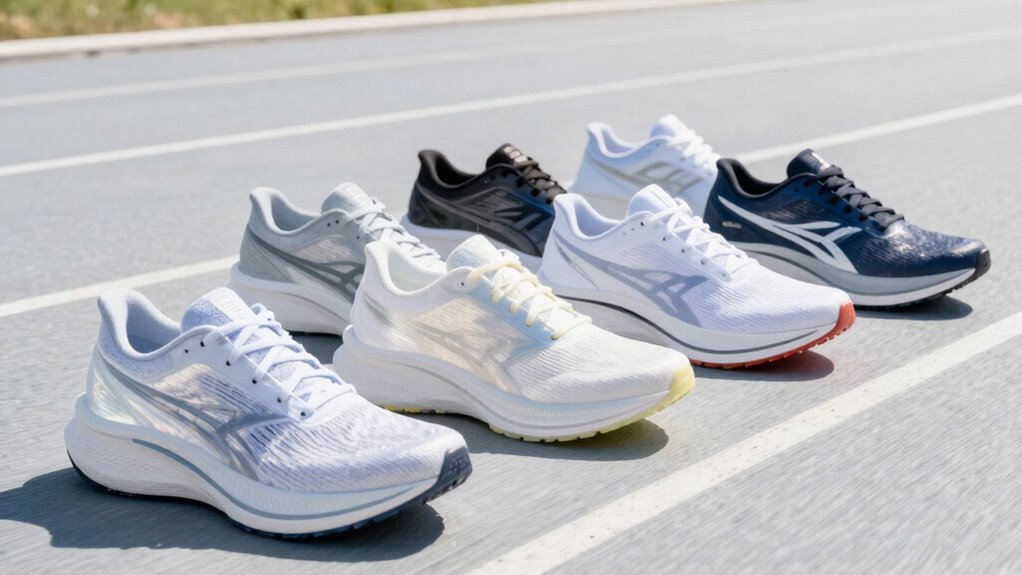
When you trace the history of running shoes, you see a clear progression from heavy, leather-bound designs that prioritized durability to highly engineered platforms focused on cushioning, stability, and energy return.
You move from early 1900s leather shoes that offered minimal padding and frequent injuries to the 1960s innovations—like the waffle sole—that improved traction and basic cushioning.
In the 1970s, foam and gel materials expanded shock absorption and comfort, tailoring shoes to varied gaits.
In the 1970s, foam and gel transformed cushioning, enhancing shock absorption and adapting shoes to diverse gaits
The 1980s introduced motion-control features for overpronators, adding stability elements to reduce injury risk.
Recent 2010s advances, including 3D-printed soles and carbon plates, emphasize responsive cushioning and energy return.
These technology-driven changes consistently aim to boost your performance while reducing injury.
Modern designs also integrate advanced foam compositions and geometry to fine-tune energy return and ride characteristics.
Track Surfaces: The Switch to Synthetic and Performance Effects
You’ve seen how tracks moved from uneven dirt to the springier Tartan surfaces introduced at the 1968 Olympics, and that shift changed how athletes run and records fall.
Synthetic polyurethane-and-rubber tracks give you far better traction, consistent footing in varied weather, and measurable energy return that reduces fatigue and improves economy.
Because these surfaces are durable and standardized worldwide, they let you compare performances across venues and have helped broaden the sport’s accessibility.
From Dirt To Tartan
Because track surfaces directly affect traction, energy return, and injury risk, the shift from dirt and grass to synthetic “Tartan” tracks in the late 1960s represented more than a change in materials—it transformed how athletes trained, competed, and measured performance.
You witnessed inconsistent timing and greater injury variability on natural surfaces; Tartan, introduced at the 1968 Mexico City Olympics, gave you a durable, bouncy alternative. Made from polyurethane and rubber, synthetic tracks improved grip and consistency, contributing to a surge in world records and clearer biomechanical advantages.
Standardized surfaces worldwide let you compare performances more fairly and encouraged broader competition. The change also pushed running shoe brands to adapt, integrating technological innovations that complemented synthetic track properties and advanced athlete preparation. This shift also coincided with running’s broader cultural evolution from primal activity to organized sport, reflecting its role in civilization growth and athletic tradition.
Traction And Energy Return
Having moved from the era of dirt and grass to engineered Tartan surfaces, it’s important to examine how traction and energy return reshaped performance.
You’ll notice synthetic tracks made from polyurethane and rubber give consistent, bouncy footing that translates into faster times and many world records since the 1968 Mexico City Olympics. Improved traction helps you accelerate and corner with confidence while enhanced energy return returns more of your stride’s force, boosting efficiency.
Research shows these surfaces lower impact forces on joints, which reduces injury risks compared with older, less forgiving ground. Standardized track technology also makes performance comparisons fairer across venues, so when you train or compete on modern surfaces you benefit from both measurable gains and a safer, more predictable platform.
Many runners also lower their overall injury risk by combining modern surfaces with strength training and gradual progression in their training plans.
Weather Resistance And Consistency
While variable weather once turned tracks into unpredictable challenges, the switch to synthetic surfaces has largely removed that uncertainty and made performance more reliable.
You benefit from weather resistance that keeps footing stable in rain or sun, unlike older dirt or grass that compacted, rut, or turned slippery.
Synthetic tracks—made of polyurethane and rubber—deliver standardized traction and a springier feel that improved running efficiency and helped produce records after their widespread adoption.
Because surfaces are uniform, you can compare times globally with greater confidence, and coaches can design training without accounting for surface variability.
Injury risk from uneven ground falls, too, so both amateurs and professionals get safer, more consistent conditions that support sustained performance consistency and measurable progress.
Real-time feedback from wearable devices like GPS watches further enhances training by providing immediate data on pace, distance, elevation, and heart rate.
Timing and Finishes: Photo-Finish Cameras to Chip Timing
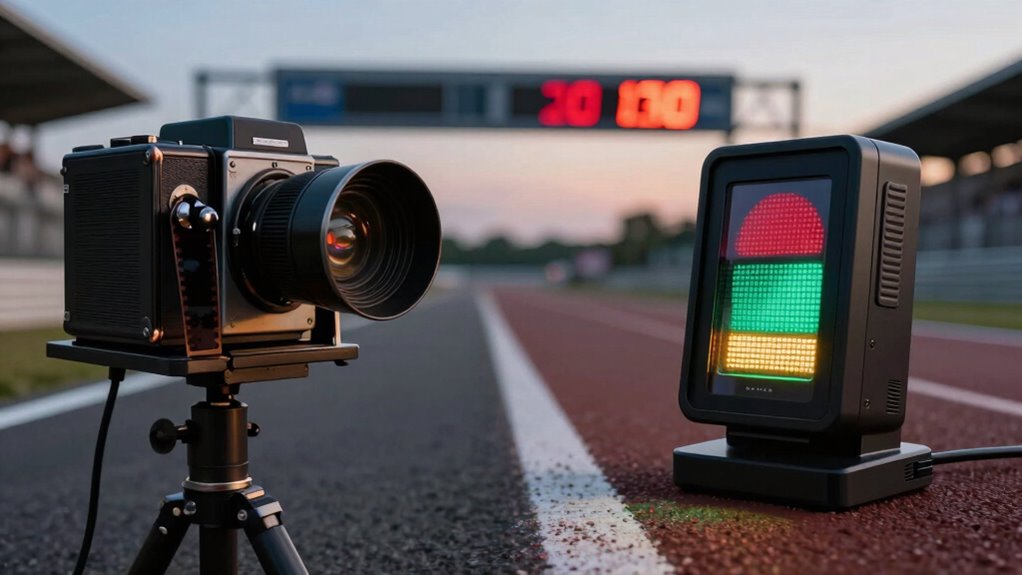
You’ll see how photo-finish cameras transformed outcomes by capturing thousands of frames per second to settle tight races with photographic precision.
Chip timing then reshaped event management using RFID transponders on bibs to automate accurate timing and provide real-time split and tracking data.
Together, these systems bolster race integrity, streamline logistics for large fields, and make competitive and mass-participation events fairer and more accessible.
Photo-Finish Precision
Although finishes once relied on human eyesight and stopwatches, the arrival of photo-finish cameras and, later, chip timing transformed how races are decided and managed.
You’ll see that the first use of photo finish technology at the 1912 Stockholm Olympics began a shift toward objective race timing, and its first official decision in the 1932 London Olympic 100m demonstrated the method’s power to resolve disputes.
Today’s photo finish systems use high-speed cameras capturing thousands of frames per second, delivering frame-by-frame evidence that officials can review.
That modern technology raises standards for fairness and accuracy, helping organizers publish results quickly and confidently.
While chip timing later expanded capabilities further, the photo finish remains central to definitive sprint outcomes.
Chip Timing Revolution
As chip timing emerged in the 1990s, it rapidly transformed how races are timed and managed by replacing manual methods with automated RFID-based systems that attach transponders to bibs and read them via antennas positioned at start, split, and finish points.
You’ll find chip timing has made accurate timing routine for events of any size, removing human error and enabling reliable split data. With RFID technology, organizers can track thousands of runners simultaneously, publish real-time results, and improve course logistics.
Athletes benefit because every participant, from elite to first-timer, receives precise results tied to their actual start and finish. Combined with photo-finish for close decisions, chip timing has professionalized race operations and broadened access to fair, verifiable competition.
Race Integrity Systems
Having automated split and finish times with RFID chips reshaped large-scale race logistics. Organizers also turned to optical systems to settle the closest, most contested outcomes.
You’ll find race integrity systems now blend chip timing with a modern photo finish to produce indisputable results. Photo-finish cameras, in use since early Olympic days and refined to capture thousands of frames per second, let officials resolve finishes to fractions of a second.
Chip timing, introduced in the 1990s, records each runner’s passage automatically, reducing human error and simplifying mass-participant management. Together these technologies streamline event operations, guarantee fair competition across all levels, and provide transparent evidence when placings are disputed.
Embracing both electronic and visual records safeguards accuracy and trust in race outcomes.
Running Tech: Wearables and Smartwatches for Training
When you strap on a modern smartwatch or fitness watch, you get more than a timepiece—you get a continuous stream of training data that can shape how you run.
Wearable technology delivers real-time performance metrics—heart rate, pace, distance, and calories—that let you adjust effort and structure workouts with intent.
GPS-enabled devices map routes and reveal pace patterns, so you can analyze segments and refine strategies over weeks.
Map your routes and spot pacing trends to analyze segments and sharpen your strategy over weeks.
Advanced features like VO2 max estimates and recovery-time suggestions help you plan intensity and rest.
Integration with apps such as Strava fosters community, competition, and data sharing.
Biomechanics and Injury Prevention: Tools That Help Runners Stay Healthy
Prevention starts with understanding how your body moves, and modern biomechanical tools give you that understanding in measurable detail. You can use motion capture and dynamic pressure mapping to spot gait inefficiencies and force imbalances, which lets you target interventions that cut injury risk by up to 50%. Wearable technology supplements lab data with real-time pace, heart rate, and training-load metrics so you can avoid overtraining and tune recovery. Advanced footwear with cushioning and carbon plates further reduces impact forces and improves economy, lowering stress-injury chances. Data analytics ties all inputs together, guiding progressive training plans and shoe choices.
Tool
Purpose
Benefit
Motion capture
Analyze gait
Tailored corrections
Pressure mapping
Foot force distribution
Better shoe fit
Wearables
Real-time load
Injury prevention
Virtual Racing and Apps: How Tech Builds Community and Competition
While virtual racing platforms connect runners across miles and time zones, they do more than just record times—they create structured spaces for competition, accountability, and community.
You can join global events that democratize racing, letting amateurs compete alongside seasoned runners without travel barriers. Apps like Strava and Runkeeper let you track progress via segment leaderboards, monthly challenges, and detailed activity logs, which heighten motivation and goal-setting.
Engagement data shows many users enter multiple virtual events annually, signaling sustained interest and social commitment. Even when you’re training solo, virtual reality features and shared metrics recreate social cues, making your running experience more interactive and competitive.
These tools build supportive networks, foster camaraderie, and expand access to organized racing for diverse participants.
Sustainability and Materials: Recyclable Shoes, Graphene, and Circular Design
As runners and manufacturers face increasing pressure to reduce environmental impact, sustainable materials and circular design are reshaping how shoes are conceived, made, and retired.
You’ll see sustainability push brands to rethink every component: midsoles, outsoles, uppers and adhesives.
Adidas’s FutureCraft Loop shows how recyclable shoes can return to production instead of landfills, embodying circular design principles that treat lifecycle management as core engineering.
At the same time, innovative technology such as graphene-enhanced rubber improves durability and flexibility, letting you run longer before replacing footwear and reducing waste.
Manufacturers are responding to consumer demand by integrating recycled content and designing for disassembly.
This shift balances performance with environmental responsibility, encouraging practices that make running gear both high-functioning and easier to recycle.
What’s Next: AI Coaching, Personalized Gear, and Emerging Materials
Sustainability-driven changes in materials and circular design are already reshaping how shoes are made and retired.
Now, technology is poised to reshape how you train and what you wear. AI coaching will analyze your pace, cadence, and recovery to create adaptive training plans that respond to fatigue, injury risk, and goal progression.
Technology will reshape training and gear: AI coaching analyzes pace, cadence, and recovery to craft adaptive, injury-aware plans.
Personalized gear, enabled by 3D printing, will produce custom-fit shoes that match your foot shape and gait, improving alignment and lowering injury likelihood.
Emerging materials like graphene rubber and PEBA foam will deliver better energy return, durability, and flexibility, enhancing performance while supporting longer product life.
Together, AI coaching, personalized gear, and advanced materials promise a more efficient, safer, and more sustainable future for runners.
Wrapping It Up
You’ll see how technology has reshaped running—from shoes and surfaces to timing and training—and why it matters for performance and injury prevention. Consider this: carbon‑plate shoes helped numerous athletes cut seconds off marathon times, contributing to a roughly 2–4% improvement in elite marathon performances since their introduction. As you embrace wearables, AI coaching, or sustainable materials, use data thoughtfully to personalize training, reduce injury risk, and choose gear that fits your goals and values.
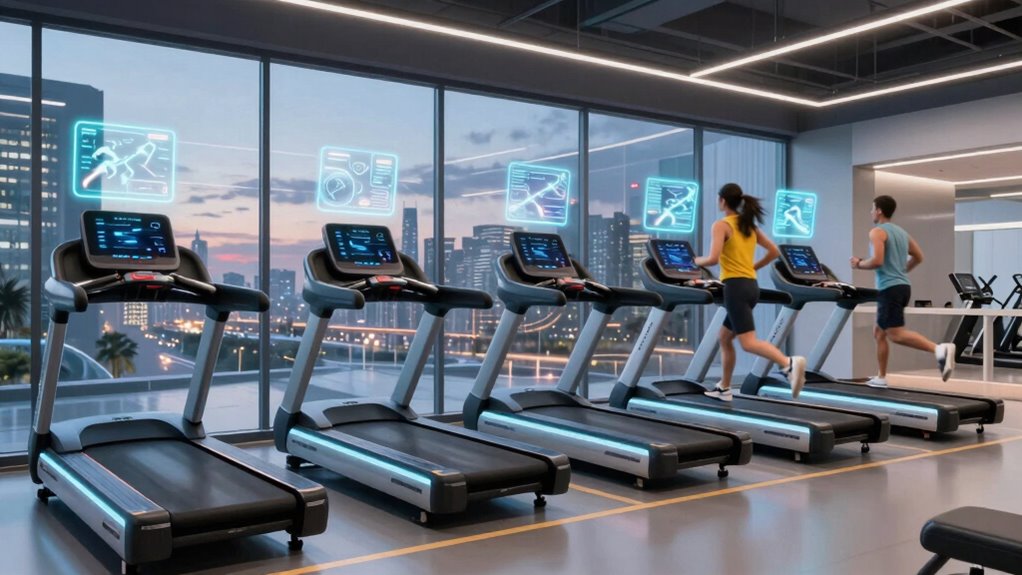
Here are 10 smart treadmills for interactive runs in 2026 you’ll want to compare: Folding Walking Pad with incline and app control, MERACH Incline Treadmill with 6–15% incline, ATEEDGE Auto Incline with Bluetooth app, 16% Treadmills for home (Cursor SF20) with 16% incline, YUEJIQI Treadmill 0–15% incline, SYTIRY Smart Foldable Treadmill with TV screen, BORGUSI Auto Incline with Bluetooth app, TREAFLOW Auto Incline folding model, plus features like auto incline up to 25%, built‑in apps, 42–44 inch decks and 0.6–7.5 MPH speeds. If you want specifics, you’ll find more details below.
Here are six great wide-toe-box options for 2026: Under Armour Charged Assert 9 with a lightweight mesh upper and a 10 mm heel-to-toe drop; Adidas Run Falcon 5 offers a roomy fit, cloudfoam midsole, and versatile use from track to daily wear; Under Armour Charged+ Assert 11 provides a soft ride and wide forefoot with a breathable mesh and leather overlays; Charged Assert 10 uses Charged Cushioning with breathable mesh and 10 mm offset; Adidas Swift Run 1.0 has a roomy toe box and sock-like upper; New Balance Fresh Foam 410 V9 Trail features BIO Foam cushioning and AT Tread for off-road grip. You’ll also find tips on fit, lacing, and forefoot space to match your needs as you compare prices and specs.
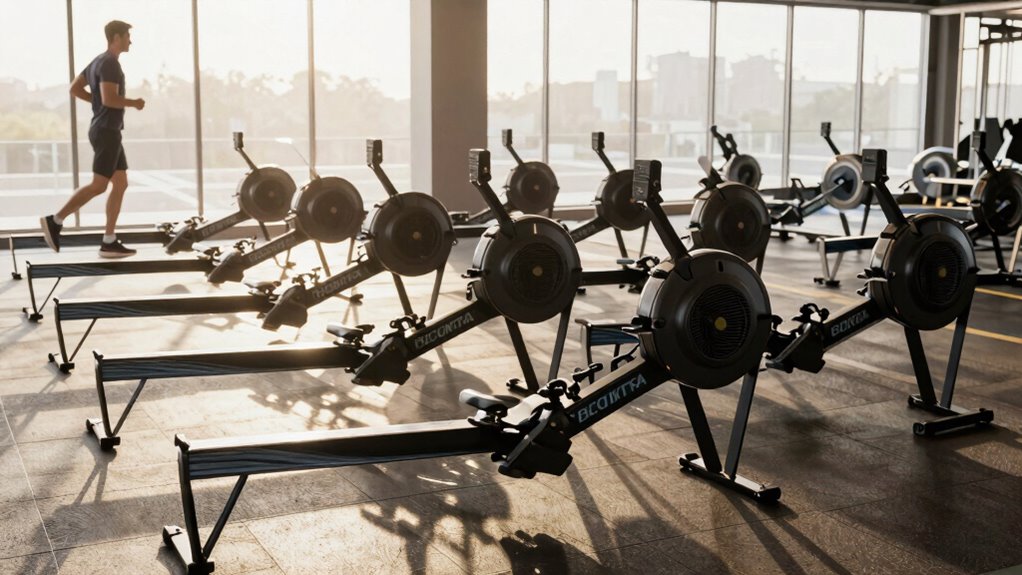
You’ll get 15 solid rowing options for runner cross-training in 2026, from space-saving foldables like the OWLSKY and YOSUDA to sturdy, high-capacity models such as Concept2 RowErg and KINGSMITH with app support. Look for adjustable resistance, real-time metrics on LCDs or PM5, and durable builds with 350–500 lb Capacity ranges. Many fold flat for storage and offer Bluetooth app syncing, wide seat comfort, and quiet operation. For specifics, you’ll find precise features and measurements as you continue.
The TOUSAINS 3-in-1 Adjustable Ab Machine with LCD suits runners who want an all-in-one home workout solution. You get three modes: abs, rowing, and a multi-mode trainer in one compact unit, with 3 height options for the ab work and two resistance levels for rowing. It folds to save space and fits small rooms, with thick foam pads and an ergonomic seat for comfort. The LCD shows calories, distance, speed, stroke count, and time, while the 265 lb weight limit keeps most users covered. Setup is about 20 minutes, and the 2-year warranty adds reassurance.
Type of Resistance:Adjustable resistance (rower modes; 2 rowing resistance levels)
Display / Tracking:LCD display with calories, distance, speed, stroke count, time
OWLSKY’s Foldable Squat Rowing Machine with Bands is a standout budget-friendly pick for runners seeking versatile cross-training at home. This foldable model serves as a squat assist and row trainer, with an LCD monitor that tracks time, count, and calories. It supports up to 350 lbs and has an adjustable padded seat for heights from 4’11” to 6’11”, plus three resistance bands (22 lbs each) for varied intensity. You get quiet, smooth operation under 20db, and three workout levels—high, median, and low. It’s a full-body tool, compact and easy to store. Overall, solid value for home use.
Type of Resistance:3 resistance bands (adjustable intensity)
KINGSMITH Magnetic Rowing Machine with App Support stands out for runners who want structured, app-integrated training at home. You get a compact, foldable design that fits about 7 sq. ft., with a 350 lb capacity and 17 kg weight. The magnetic resistance has 16 levels, so you can dial in workouts, and you’ll enjoy smooth, quiet operation for late-evening sessions. Trackers on the LCD show speed, time, distance, calories, strokes, and 500M split time. Apps like Kinomap and KS Fit provide competitions and goal setting, turning solo sessions into interactive training without leaving home. Practical, reliable, straightforward for daily use.
Type of Resistance:Magnetic resistance (16 levels)
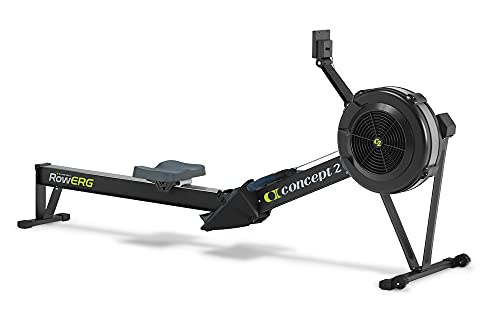
Concept2 RowErg Model D is a strong pick for runners who want reliable cross-training with measurable results. You get the PM5 Monitor, Bluetooth and ANT+, and an integrated device holder that fits 40+ apps, so tracking workouts is easy. It separates into two pieces, stores in a 25 x 33 x 54 inch space, and rolls with caster wheels for moving around. With adjustable damper (1–10) and up to 500 lb capacity, it suits many users. It’s a best-seller for decades, backed by a 2-year warranty, backlit display, USB save option, and accessible workouts. Overall, practical, durable, data-driven.
Type of Resistance:Air resistance with damper (PM5/Concept2 style)
Display / Tracking:PM5 monitor (advanced data)
Max User Weight Capacity:500 lbs
Foldability / Storage Footprint:Separates into two pieces; storage-friendly
Warranty / Support:2-year limited warranty
Target Use / Terrain:Home gym and facility training
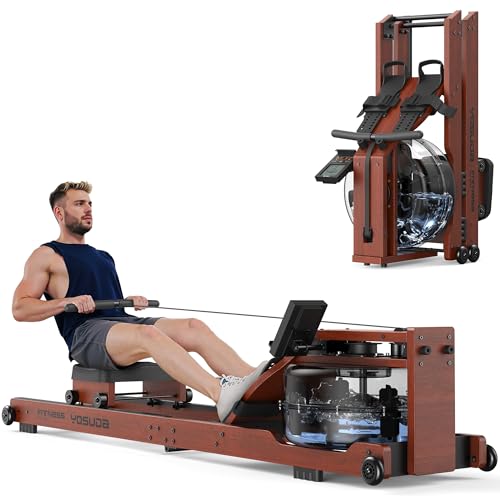
The YOSUDA Foldable Water Rowing Machine with Monitor stands out for runners who want a wood-water experience at home. You get authentic water resistance that changes with water volume and your rowing speed, plus a 22L tank for steady resistance. It folds to save 60% of space, and the beech wood frame supports up to 400 lbs. A Bluetooth app tracks calories, distance, speed, strokes, and time, with social goals and courses. Setup is quick—98% pre-assembled in about 10 minutes. It includes a 2-year replacement warranty and solid customer support via Amazon messages. Overall, practical, solid for cross-training.
Type of Resistance:Water resistance (water tank)
Display / Tracking:Bluetooth app integration; Bluetooth tracking
Max User Weight Capacity:400 lbs
Foldability / Storage Footprint:Foldable; 60% space saver
Warranty / Support:2-year replacement warranty for parts
This lightweight space-saver is ideal for runners who need a compact cardio option with strength potential. The Stamina BodyTrac Hydraulic Rowing Machine is a 250 Lbs model that serves home gyms and training spaces. It uses hydraulic cylinder resistance with a ball-bearing roller system for smooth, low-impact rowing-like movements. It tracks time, stroke count, calories burned, and total strokes with a built-in monitor. It folds for storage and weighs about 39 pounds, supporting up to 250 pounds. The padded seat and textured footplates add comfort, while the setup remains simple for immediate workouts. Optional smart app coaching adds guided routines.
Type of Resistance:Hydraulic resistance
Display / Tracking:Built-in electronic monitor (time, strokes, calories, total strokes)
Pair this MOSUNY 106C rowing machine with adjustable magnetic resistance for app-enhanced resistance that fits runner cross-training needs. You get 16-level magnetic resistance, so you can vary intensity beyond basic options for easier rehab or tougher workouts. The display shows real-time data like time, strokes, distance, calories, and 500-meter pace, plus a phone/iPad stand for media. It connects via Bluetooth to KINOMAP and EXR, offering at-home courses and tracking. Built with dual slide rails for stability and a 350 lb weight limit, it folds for compact storage and includes transport wheels. Assembly takes about 20 minutes with available setup videos.
For runners seeking a dependable cross-training tool, the Concept2 RowErg with PM5 stands out as a premium rower that blends performance with practicality. The Model D includes a PM5 monitor with Bluetooth and ANT+, letting you connect to apps and heart-rate monitors. It measures 96 by 24 by 14 inches, weighs about 57 pounds, and supports up to 500 pounds. It uses adjustable air resistance and a damper to set tension, with a quiet flywheel. It separates into two pieces for storage, and it comes with two D cells powering the monitor. A solid, long-lasting choice.
Type of Resistance:Air resistance (damper-based)
Display / Tracking:PM5-compatible / LCD display
Max User Weight Capacity:500 lbs
Foldability / Storage Footprint:Foldable; small footprint
The Sunny Health & Fitness Compact Adjustable Rowing Machine stands out for runners needing a space-saving cross-training option with 12 levels of hydraulic resistance, making it ideal for consistent tempo work at home. You get a compact, lightweight design at 22.4 lb with dimensions 58.1D x 20.1W x 24.8H inches and alloy steel construction. It supports up to 220 lb, and comes with a 3-year frame warranty plus 180 days for other parts. The SF-RW1205SMART offers full-body work, low-impact rowing, and the SunnyFit app with 1,000+ workouts and 10,000+ tours. Quick assembly under 5 minutes helps you start soon.
Type of Resistance:Hydraulic resistance (12-level)
Display / Tracking:3-6 data points on LCD (time, distance, calories, etc.)
Max User Weight Capacity:220 lbs
Foldability / Storage Footprint:Compact and lightweight; portable
This rower suits runners seeking steady, low-impact cardio with strong full-body engagement, and its bold lava-flow design adds a striking visual cue for home workouts. You get a GMWD Air Rowing Machine for Home with a lava flow colorway in bright Russet Orange and black. It folds for compact storage, measures 95D x 24W x 14H, and weighs 72 lb. It offers 10 adjustable air resistance levels, up to 110 lbs peak, and silent, smooth resistance for intervals. It supports up to 350 lbs, includes a Bluetooth monitor, and installs in about 15 minutes.
Type of Resistance:Air resistance
Display / Tracking:Bluetooth-enabled monitor; Bluetooth app integration
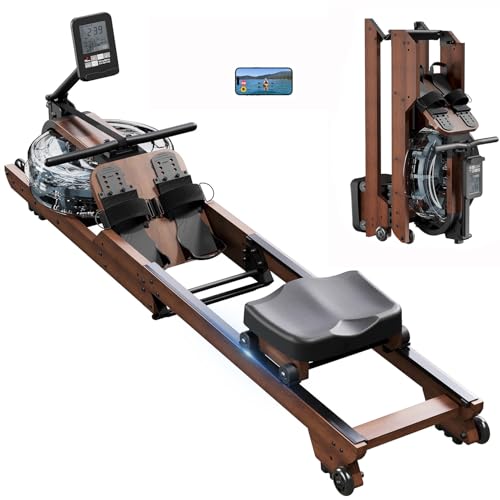
A standout choice for runner cross-training in 2026 is the Dripex Foldable Water Rowing Machine with LCD Monitor, thanks to its ultra-fold storage design. You get a sturdy oak frame, weighing about 55.56 pounds, supporting up to 400 pounds, and fits users up to 65 tall. It folds to 180° for vertical storage, with transport wheels to move it easily. The 14 L water tank offers six resistance levels, delivering quiet, smooth pedaling. The LCD monitor shows time, distance, strokes, and calories, with Bluetooth for syncing and training videos. It’s practical, compact, and built for tight spaces.
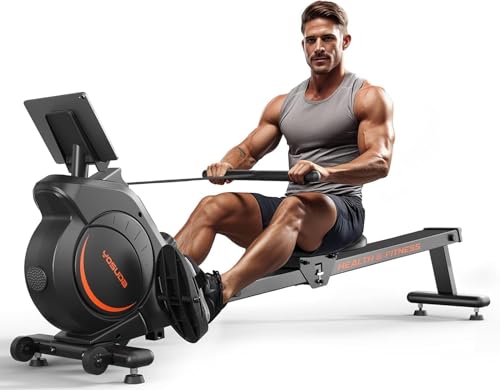
For runners needing steady cross-training at home, the YOSUDA Magnetic/Water Rowing Machine stands out with Bluetooth connectivity that syncs with devices for workouts and data tracking. This unit is designed for home use, supports Bluetooth and app connections, and fits taller users with a comfortable seat cushion. It features a 12-lb flywheel and magnetic resistance, offering a wide range of effort for all levels, with a 350-lb weight limit and a 48-inch motion. It’s quiet thanks to a dual silent system, shows six data metrics on a 3.45-inch LCD, and folds for easy storage. Overall, practical, solid value.
Type of Resistance:Magnetic/adjustable (dual system)
Display / Tracking:Dual display with Bluetooth app sync
Compact Magnetic Rowing Machine with LCD Monitor (16 Levels) helps runners who want steady low-impact cardio at home. You get a 350 lb weight capacity and full-body workouts that target most muscles in about 20 minutes, boosting cardiovascular health. It uses upgraded flywheel with 16 levels of magnetic resistance, staying quiet at under 30 dB for apartment use. The smart LCD shows Time, SPM, Distance, Calories, and Count, while a flexible phone holder angles your screen. The sturdy steel frame supports long sessions, and a padded seat with textured handles adds comfort and grip during workouts. Assembly takes about 20 minutes.
Type of Resistance:Magnetic resistance (16 levels)
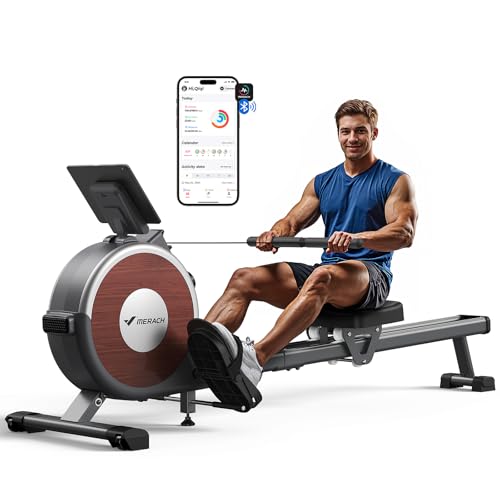
The MERACH Magnetic Rowing Machine with 16 levels stands out for runners seeking precise, steady resistance to mirror on-water effort. You get magnetic resistance with 16 levels and a maximum 350 lb weight capacity, plus 65 by 19.3 by 24.8 inches in size. The unit weighs 58.9 lbs and uses an alloy steel frame, battery power (2 AAA included). It works with MERACH and KINOMAP apps, showing distance, time, calories, speed, heart rate, and cadence, and records achievements. It’s quiet, stable, easy to assemble, with a 1.6 x 5.7 ft use space, and a one-year warranty.
Type of Resistance:Magnetic resistance (16 levels)
Display / Tracking:Screenless data described via app (levels)
This all-in-one compact machine from TOUSAINS combines a 3-in-1 ab trainer, foldable rowing system, and cable workout in one unit, making it ideal for runners who need balance training and core work at home. You’ll get 4-height levels, 2 resistance settings, and a 26-pound foldable frame that’s easy to store. The 30° beginners and 40° pro dual-angle switch require no tools, and the unit fits users 5’1″ to 6’1″. Real-time data tracks strokes, distance, time, and calories. With alloy steel construction and a 1‑year warranty, it’s solid for home workouts and light strength work.
Type of Resistance:Cable-resistance system (manual tension; 2 levels noted)
Display / Tracking:Smart data tracking (strokes, distance, time, calories)
Target Use / Terrain:Home gym; cable/ab training synergy
Additional Feature:4-height rail
Additional Feature:2-resistance levels
Additional Feature:Real-time metrics
Factors to Consider When Choosing Rowing Machines for Runners’ Cross-Training
When you pick a rowing machine for runners, check the resistance range and control, so you can simulate quick sprints or steady state miles without overloading joints. Consider space and portability, noting the footprint in inches and whether it folds for storage, plus the weight limit and wheels for easy moving. Look at noise, comfort, data tracking metrics, durability, and price, aiming for a model with at least 8–12 levels of resistance, a sturdy frame, comfortable seat, and a clear display within a practical budget.
Resistance Range and Control
Have you considered how a wide resistance range and precise control can shape your running cross-training on a rower? A broad range lets you do easy aerobic sessions and hard intervals, helping you overload gradually. Magnetic resistance usually offers steady, quiet control with multiple levels, like 16 levels, for clear progression over weeks. Air resistance rows provide large, smooth resistance that rises with speed, great for tempo work and sprint intervals. Hydraulic and water systems vary in max resistance and noise, affecting hill work and recoveries. Look for adjustable resistance that lets you set intensity and stroke rate independently, so you tailor workouts to endurance and strength goals without extra gear.
Space and Portability
Are space considerations important when choosing a rowing machine for runner cross-training? Yes, they matter, and you should look for space-smart options first. Foldable designs and compact footprints enable easy storage in small spaces or behind doors, so you can reclaim floor space quickly after workouts. Models with space-efficient dimensions, such as under 9×4 feet or similarly compact profiles, maximize usable area in limited home gyms. Foldable or vertical storage features reduce clutter and allow quick setup between running workouts and rowing sessions. Lightweight, portable units around 20–30 pounds or foldable frames make moving the machine between rooms or into a closet practical. Slender machines with transport wheels enhance interim repositioning during cross-training routines.
Noise and Comfort
Noise and comfort matter just as space does when you’re planning runner cross-training. You’ll notice that magnetic and air-resistance rowers stay quieter than hydraulic models, with some units under 20 dB for smooth, unobtrusive workouts. Cushioned seats and padded grips directly affect comfort during long sessions, reducing pressure points on hips and back for runners doing cross-training. Foldable designs and compact footprints help you set up in small spaces without sacrificing stability, aiding consistent routines. Dual-rail or reinforced frames improve stability at higher intensity, minimizing wobble during endurance intervals. Real-time monitors and Bluetooth/app connectivity help you pace efforts and recover more effectively, without added stress or noise. Practical choices keep you focused on training goals.
Data Tracking Metrics
Data tracking metrics matter when you’re choosing a rowing machine for runner cross-training. You’ll want a unit that logs time, distance, speed, calories, stroke count, and split times so you can measure running-focused cardio progress. A monitor showing 500M split time helps gauge pace consistency, useful for tempo runs and intervals. Real-time metrics let you compare workout intensity with running sessions, aiding cross-training load management. Bluetooth or app integration can provide structured workouts or Kinomap/EXR-style courses aligned with running plans. Clear data readouts and export options support tracking improvements over weeks of runner-specific training. Look for a display that’s easy to read while you’re moving and a companion app that exports CSV data for charts and weekly reviews.
Durability and Capacity
Durability and capacity matter more than you might think when you’re pairing running with cross-training, because you’ll push these machines hard and often. You should choose a rowing machine with a high user weight capacity, ideally 350 lbs or more, to fit runners and potential strength gains. Look for sturdy construction, such as steel frames and dual-rail designs, to survive repeated, high-intensity workouts. Favor reliable resistance systems—magnetic or hydraulic—that stay smooth and consistent across sessions to protect your joints. Check for foldable storage and stable bases so setup and takedown between running and cross-training are easy. Verify a solid warranty of two years or more and solid frame durability specs to ensure lasting performance under cross-training stress.
Training Versatility and Programs
Training versatility and programs matter because runners need options that keep workouts fresh and progressively challenging. You should look for rowers with multiple training modes, like abs/row or functional trainer, and adjustable resistance to create varied cross-training stimuli. Real-time metrics matter too—calories, distance, time, and stroke count help you plan interval and tempo runs, while programmable workouts add structure. Ensure access to different resistance types—magnetic, hydraulic, water—or bands to mimic hills and build leg strength for running efficiency. Check data connectivity or app compatibility for guided programs, virtual courses, and performance tracking across cycles. Favor models that support safe, low-impact, full-body workouts with stable bases and adequate weight capacity to sustain running-focused training.
Frequently Asked Questions
How Does Rower Ease Impact Running Recovery Time?
Rower ease can speed running recovery by lowering heart rate, reducing muscle soreness, and clearing lactic acid faster, especially after tempo runs or intervals. You’ll want a machine with smooth, quiet strokes and adjustable resistance to match your effort without jolts. Aim for a relatively gentle finish, 20–25 minutes cool-down, and 1–2 easy row sessions weekly. Look for seats, toeholds, and leg drive that feel natural; price around $500–$1,500.
Can Rowers Replace Treadmill Workouts for Runners?
Yes, rowers can replace some treadmill workouts, but not all runs. You’ll gain cardio and leg strength with low impact, yet you’ll miss exact pace, incline, and tempo cues that treadmills offer. Look for a water or air rower with adjustable resistance, monitor clarity, and a price around $800–$2,000. Use intervals, 20–40 minutes, 5–6 times weekly, and mix in actual runs for cadence and sport-specific fitness. Overall, rowers supplement, not fully replace, running.
Which Resistance Type Best Suits Sprint Training?
You’ll want magnetic resistance for sprint training, since it stays smooth and quiet at high speeds. If you prefer harsher power, air resistance ramps up as you push harder, giving real sprint feel. A combination of adjustable resistance with data readouts helps you track pace, splits, and watts. Look for units with 6–14 levels, sturdy frames, and affordable prices around $400–$900. Choose one that fits your space and your sprint-focused workouts.
Do Rowers Simulate Uphill Incline for Runners?
Yes, rowers can simulate hills with adjustable resistance and incline features, but not all models do it the same way. Look for a higher-resistance setting, a curved or slope-like flywheel path, and a programmable incline option or variable damper. Many machines offer adjustable resistance in both air or magnetic systems, plus preset programs that mimic incline workouts. Expect prices from $800 to $2,500, with about 8–20 levels of incline or resistance.
Is Form on a Rower Safer for Runners’ Joints?
Yes, form on a rower is safer for runners’ joints when you use proper technique and features like adjustable resistance, smooth seat glide, and a sturdy foot strap system. Look for machines with a natural erg row stroke, low impact on knees, and a reinforced frame. Aim for under $1,200, a 20–22 inch seat height, and clear console feedback. Practice form, keep core tight, and avoid jerky movements for long-term joint comfort.
Wrapping It Up
If you’re choosing a rower for running cross‑training, look for smooth resistance, solid build, and clear data, plus enough space for your room. Models likeConcept2 Model D offer reliable performance and a strong price anchor, while magnetic options provide quiet workouts and adjustable resistance. Foldable designs save space, and a monitor with pace, distance, and calories helps track progress. Consider price, warranty, and height clearance, then pick the rower that fits your routine, budget, and space.
Smart fabrics and wearables let you manage body temperature by using phase-change materials, conductive fibers, and embedded sensors to absorb, store, or release heat as conditions change. You can choose low-maintenance passive textiles for everyday comfort or active systems with PCMs and controls for sports, medical, or sleep applications. Evaluate performance through thermal and wash tests, check sustainability and care instructions, and confirm safety certifications. Keep exploring to learn specific product features, limits, and maintenance needs.
What Temperature-Regulating Smart Fabrics Do
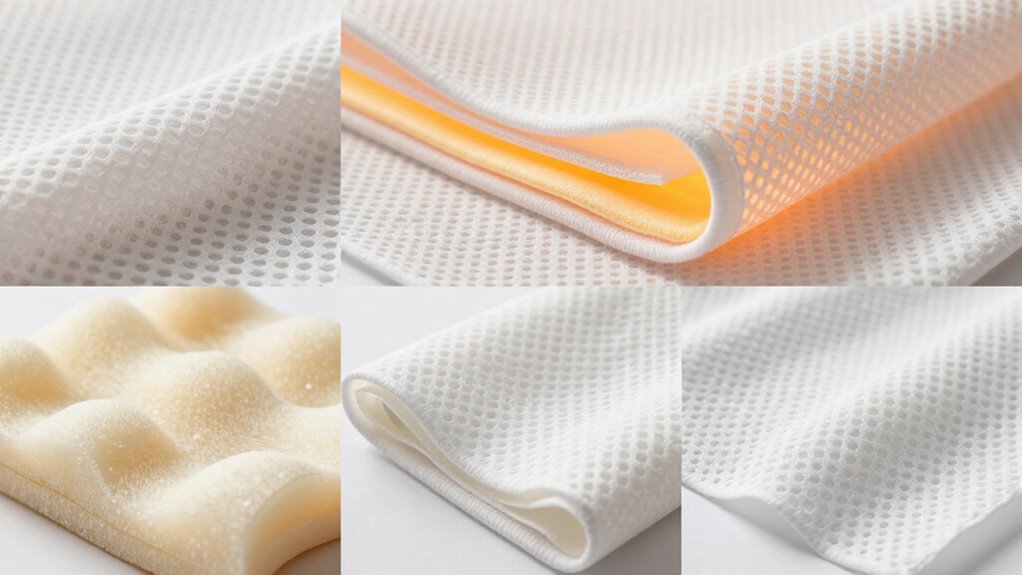
When you wear temperature-regulating smart fabrics, they actively manage heat by using embedded phase-change materials (PCMs) that absorb excess warmth and release stored heat as temperatures drop.
You’ll notice how smart fabrics respond dynamically: the microencapsulated wax derived from sustainable rapeseed oil melts to absorb surplus body heat when you get warm and solidifies to retain warmth as you cool down.
Microencapsulated rapeseed-wax melts to absorb excess heat and solidifies to lock in warmth as you cool.
This Temperature Regulation works without external energy sources, maintaining a stable comfort range and reducing sweat production—Outlast® technology can cut sweating by up to 48%, improving hygiene and comfort in clothing and bedding.
You can rely on these textiles across sportswear, medical gear, and bedding to moderate thermal swings and support consistent comfort using passive and active mechanisms tied to your body heat.
Passive vs. Active: Which Temperature Tech Should You Choose?
Although both passive and active smart textiles aim to improve comfort, they do so in fundamentally different ways, so choosing the right option depends on your needs and use case.
If you want reliable, low-maintenance performance for everyday outdoor wear, passive smart textiles are a solid choice: they offer UV protection, moisture-wicking, and breathability without electronics or user input.
If you need dynamic temperature regulation for sports, medical use, or variable conditions, active smart textiles deliver by responding to environmental changes and user needs. Many active systems incorporate phase-change materials to absorb and release heat, cutting sweat and thermal spikes.
Consider durability, maintenance, cost, and the degree of real-time control you require when selecting between passive comfort and active, adaptive solutions.
How PCMs, Conductive Fibers, and Sensors Work (Practical Mechanisms)
After choosing between passive and active temperature strategies, it’s helpful to look at how the core components—phase-change materials, conductive fibers, and embedded sensors—actually work together in a garment.
You rely on PCMs to absorb excess heat when you’re warm and release it as you cool, smoothing temperature swings without external energy.
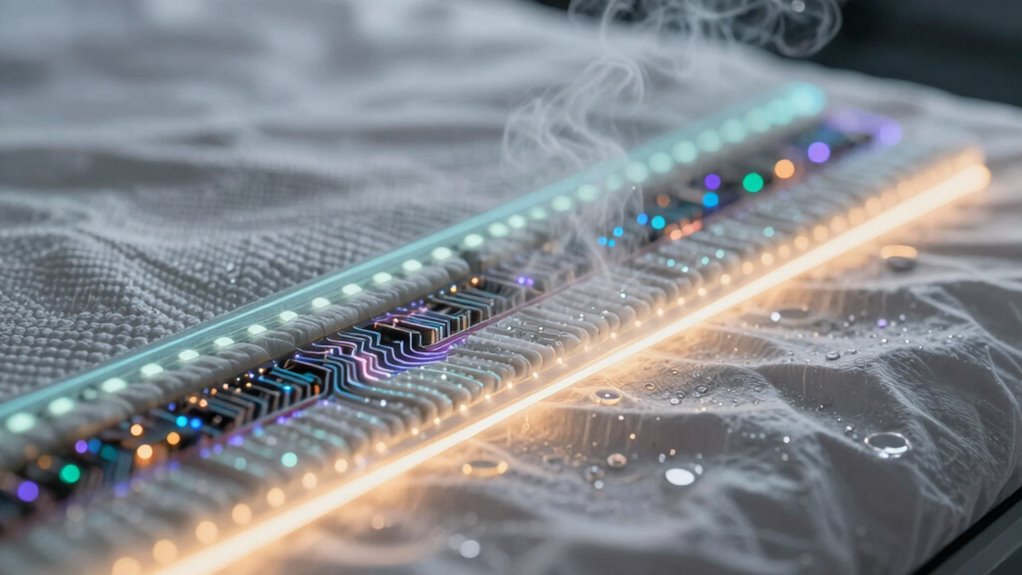
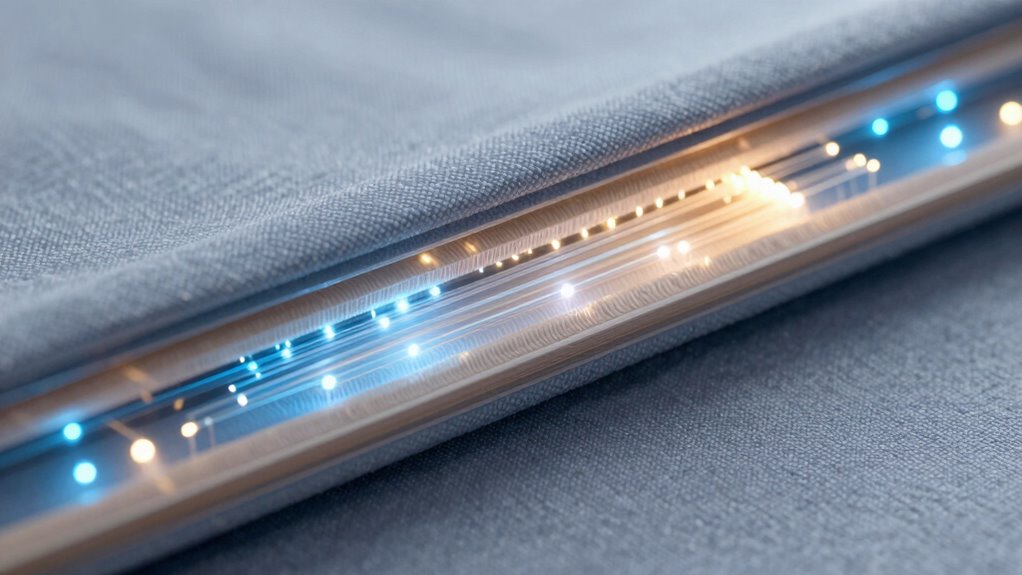
Conductive fibers, often coated with carbon nanotubes, interact with infrared radiation and shift insulation properties as humidity and temperature change; fiber spacing opens to release heat in hot conditions and closes to trap warmth when it’s cold.
Integrated sensors monitor your skin temperature and moisture in real time, enabling responsive adjustments.
Together, these elements support precise temperature regulation, reduce sweat production, and improve comfort and hygiene in practical applications.
Temperature-Regulating Fabrics in Sports, Bedding, Seating, and Medical
Because temperature-regulating fabrics actively balance heat and moisture at the point of contact, they’re especially well suited to sports, bedding, seating, and medical uses where comfort and microclimate control matter most.
You’ll find temperature-regulating fabrics in sportswear that use phase-change materials to reduce sweat production by up to 48%, so athletes stay drier and perform longer during high-intensity activity.
In bedding applications, these textiles stabilize the sleep environment, minimizing temperature peaks to improve sleep quality and reduce disorders.
For seating—office chairs and car seats—they maintain a balanced microclimate to prevent discomfort during prolonged use.
In medical products, smart textiles reduce overheating and moisture that can cause blisters and wounds, improving patient comfort in wheelchairs and medical seating without external power.
When you evaluate and integrate temperature-regulating smart fabrics, start with quantitative performance tests that measure thermal stability, moisture transport, and user-level outcomes such as sweat reduction and skin microclimate. These metrics tell you whether a fabric’s phase-change materials and moisture-management technologies deliver the claimed benefits (for example, reducing sweat production by up to 48%) under realistic activity and environmental conditions.
Start with quantitative tests—thermal stability, moisture transport, and real-world sweat and skin microclimate outcomes.
You should then assess durability limits through wash-cycle trials and mechanical wear tests to confirm long-term function without charging needs. Follow evolving standards to verify electronic safety, moisture management, and thermal regulation for specific applications.
Use lab and field data to guide integration into sportswear, bedding, seating, or medical gear.
Lab thermal cycling and moisture transport
Wash and abrasion durability limits
Field user-level outcome trials
Compliance with current standards
Safety, Sustainability, and Maintenance: What to Ask Manufacturers
When you evaluate smart fabrics, start by asking manufacturers for safety certifications and test reports that address material risks—especially for coatings like carbon nanotubes that are still under review.
Also question their environmental footprint and material choices, including use of natural, recycled, or low-impact inputs and resource-friendly dyes.
Finally, get clear care instructions and durability data showing how electronic components and textiles hold up through washing and drying to guarantee long-term performance.
Check whether manufacturers support sustainable farming practices and avoid exploitative labor in their supply chains.
Safety Certification And Testing
Start by demanding clear evidence of safety and testing from any smart fabric manufacturer you’re considering: certifications like OEKO-TEX® or GOTS, documented dermatological testing, and published test protocols for thermal and moisture regulation show that a product has been evaluated for harmful substances, skin compatibility, and functional performance.
You should also ask for formal testing protocols that quantify temperature regulation, moisture wicking, and long-term durability. Verify dermatological reports to confirm skin compatibility and reduce allergic risks. Confirm that listed certifications meet recognized environmental standards.
Finally, request maintenance guidelines and independent lab reports to guarantee results hold after repeated washing.
Request safety certification documents.
Review published testing protocols.
Check dermatological skin compatibility results.
Ask for maintenance and independent lab reports.
Environmental Impact And Materials
Before you commit to a smart fabric, ask specific questions about the materials and their environmental footprint so you can assess both safety and long-term sustainability.
Ask whether the temperature-regulating elements use biodegradable PCMs like rapeseed-based wax and whether fabrics incorporate recycled polyester or Lyocell to reduce water use.
Confirm use of eco-friendly dyes and request data on chemical treatments or coatings.
Probe safety for coatings such as carbon nanotubes and demand testing results that address health risks.
Verify durability to guarantee functionality survives repeated washing.
Finally, clarify end-of-life options: can components be recycled, composted, or returned via a manufacturer take-back program?
These questions help you choose safer, more sustainable wearables.
Care Instructions And Durability
Because smart textiles combine functional materials and traditional fibers, you should get clear, specific care instructions from manufacturers to preserve both safety and performance.
Ask whether Outlast® and carbon nanotube coatings tolerate machine washing, what temperatures are safe, and which detergents to avoid.
Confirm any recommended drying methods and limits on dyeing or ironing, since improper handling can reduce temperature regulation and durability.
Also inquire about sustainable materials like recycled polyester and natural dyes to guarantee eco-friendly maintenance.
Verify manufacturer care instructions for washing temperature and cycle.
Avoid harsh chemicals and high-heat drying that can degrade coatings.
Confirm colorfastness and dyeing compatibility for long-term use.
Ask about repairability, expected lifespan, and warranty coverage.
Wrapping It Up
You’ll think you can just buy “smart” fabric and forget the rest, and wouldn’t that be convenient — except temperature regulation still depends on choices you make. Match passive or active systems to use, check PCM ranges, conductive fiber limits, sensor accuracy, and durability claims. Ask about wash cycles, recycling, and safety certifications. Doing that due diligence won’t be glamorous, but it’ll keep your gear honest and your body comfortable when it matters most.
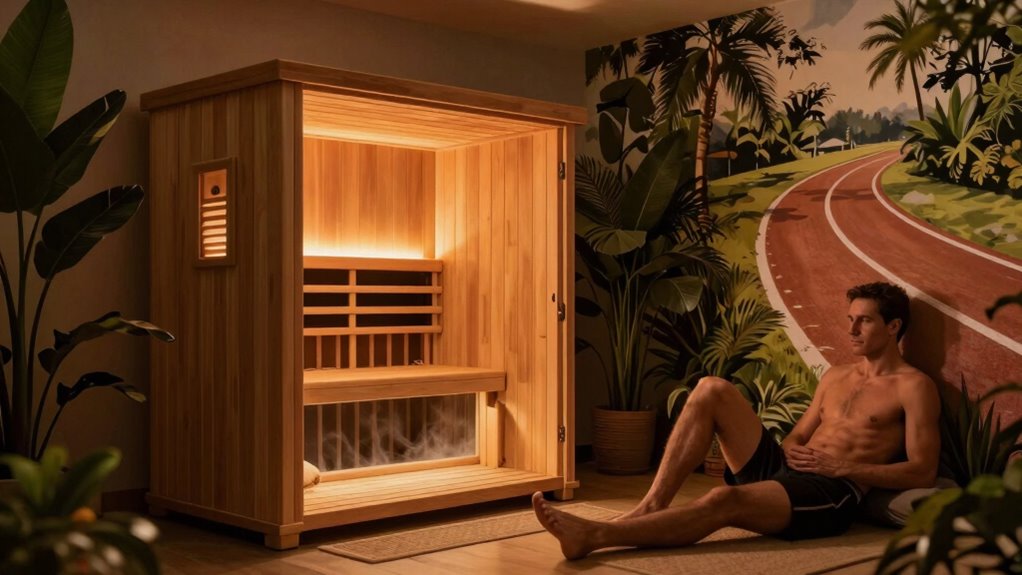
If you’re chasing recovery after runs, these 7 infrared saunas fit home gyms and travel needs. The LifePro RejuvaWrap offers 9 heat levels, full-body coverage, low EMF, and a 95°F–176°F range in a 71×36 inch blanket. A portable black model delivers up to 158°F with low EMF and 20–60 minute timers. Other picks include a 71x32x32 inch steam tent, a 70.8×33.5 inch purple wrap with AI controls, and a compact 140°F box with 9 levels. More options come with practical specs for fit and function.
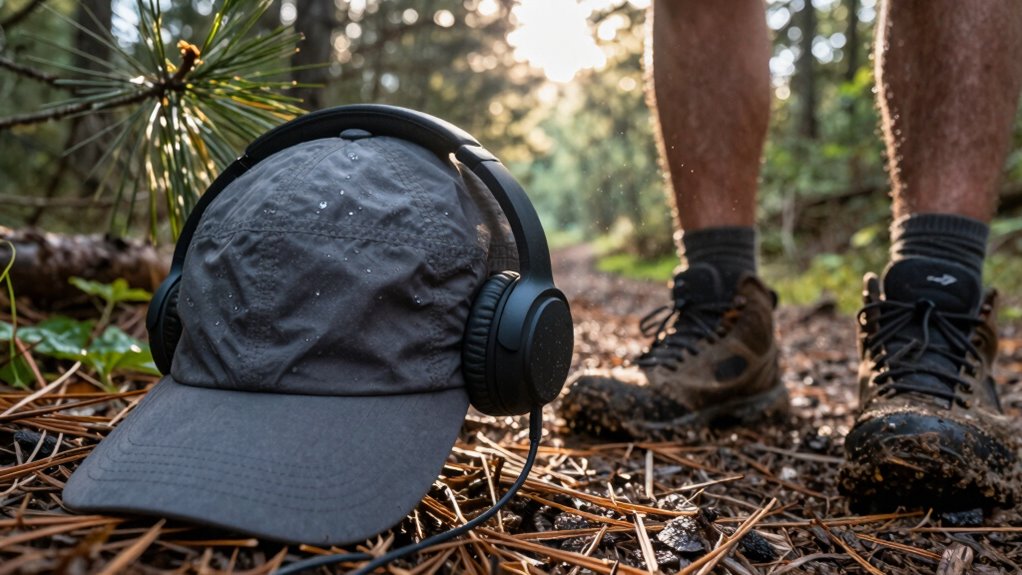
You want wired trail running headphones that stay secure and resist sweat, no matter the terrain. Look for models with ear hooks or over‑ear clips, like MUCRO Sport Earbuds or JBL Endurance RUN, plus IPX5+ protection for sweat and rain. Expect a wide 20 Hz–20 kHz range, 16 Ω impedance, and inline mic controls for calls. Many options are around $20–$50, lightweight under 1.5 oz, with multiple tip sizes. If you keep exploring, you’ll uncover more useful picks.