If you want wired running earphones with cords, consider seven solid options that fit over-ear hooks or secure fins, like the MUCRO Sport Earbuds or JBL Endurance Run 2, both with IPX5 sweat resistance and inline mics. Look for a comfortable fit, lightweight design under 0.8 ounces, memory wire tips, and easy inline controls for calls and music. Prices range from budget to mid-range, and warranties vary. You’ll discover more practical details as you continue.
You’ll train endurance, speed, strength, and technique to race efficiently and stay durable. Fit your lightweight racing chair for power transfer, set camber and tire pressure, and carry spares. Practice the five push phases—contact, drive, release, lift, accelerate—plus starts, cornering, and drafting tactics. Follow a structured plan with recovery, strength sessions, and mobility work to prevent overuse injuries. Prepare mentally and plan nutrition and equipment checks, and keep learning more about competition preparation.
Wheelchair Racing 101: Who It’s For and Event Types
Wheelchair racing welcomes a wide range of athletes, from people with amputations or paralysis to those with vision loss, because classifications and equipment are designed to promote inclusivity and fair competition.
You can enter events that match your abilities and goals, from explosive 100m sprints to endurance marathons, and choose track or road formats that suit your strengths.
Minimum age rules, often set at 11 under IPC guidelines, encourage youth participation and progression through competitive ranks.
Local meets and major events like the Stoke Mandeville Grand Prix let beginners gain experience alongside elite Paralympians.
As part of adaptive sports, wheelchair racing offers structured pathways, clear competition formats, and classification systems so you’ll compete fairly while developing technique, strategy, and race-specific conditioning.
Wheelchair Racing Equipment: Chairs, Wheels, Helmet & Gloves
Equipment choices make a big difference in racing performance and safety, so you’ll want to understand how chairs, wheels, helmets, and gloves work together.
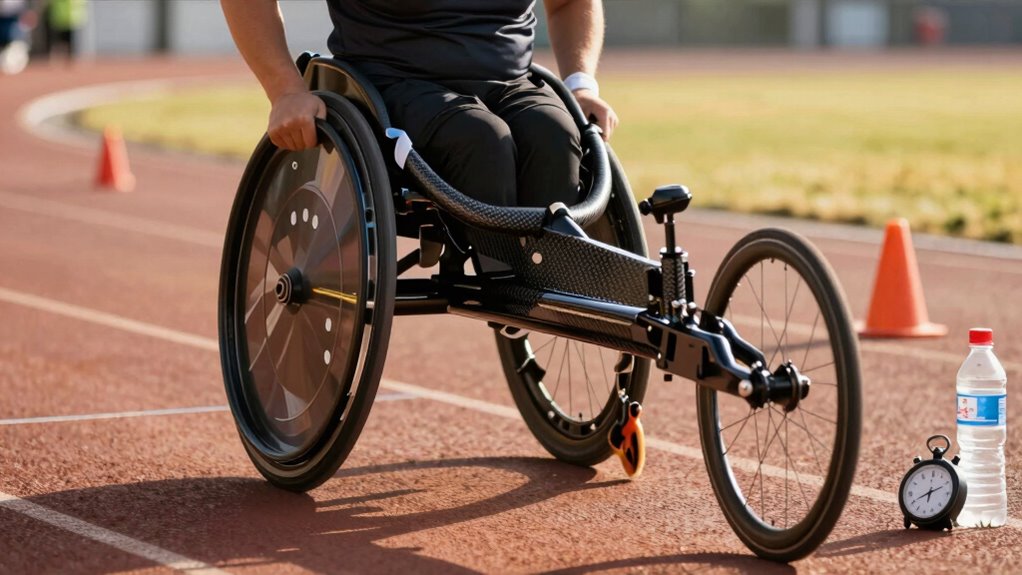
Your racing chair should be lightweight and custom-built, with a single front wheel and two angled rear wheels for stability and speed. Proper fit matters: position influences power transfer and injury risk, so get measured and adjusted professionally.
Your lightweight, custom racing chair—single front wheel and angled rear wheels—needs professional fitting to optimize power and reduce injury.
Choose a standard racing helmet that balances impact protection with low weight for comfort during longer efforts.
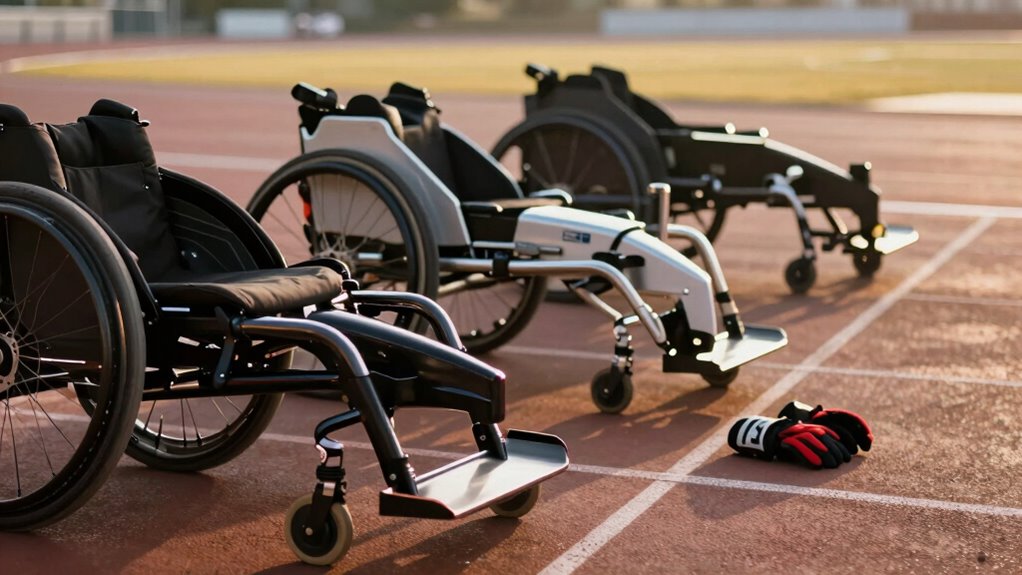
Gloves tailored to your grip preferences and prevailing weather improve control and pushing technique; try several styles to find what maximizes contact and reduces skin breakdown.
Carry spare racing and training wheels and an extensive tool kit to handle repairs quickly at events.
Set Up Your Racing Chair: Fit, Camber & Tyre Pressure
Get your seat position dialed in so your hips, backrest, and footrest let you transfer power efficiently without sacrificing comfort.
Adjust the camber of the rear wheels to match your cornering style and track conditions, and watch tire wear patterns for clues about alignment.
Keep tire pressure in the ideal range (usually 80–100 psi) to minimize rolling resistance and maintain consistent speed.
Optimal Seat Position
One precise setup can make a big difference: positioning your seat for ideal height, angle, and depth directly affects how efficiently you transfer power to the wheels. You’ll aim for a *best* seat position that supports a straight back, relaxed shoulders, and efficient leg extension so pushes are powerful and sustainable. Adjust seat height so your arms reach the pushrim without shoulder elevation; set depth to support hip stability without restricting leg drive; tilt seat angle to balance comfort and forward reach. Check footrest height to *enhance* push-and-glide mechanics and reduce injury risk. Use the table below to compare quick adjustments and expected effects.
Adjustment
Target
Effect
Height
Arm reach neutral
Power efficiency
Depth
Hip support
Stability
Angle
Slight forward
Reach balance
Footrest
Leg extension
Injury prevention
Camber And Tire Pressure
After you’ve dialed in seat height, angle and depth for power and comfort, the rear wheel camber and tyre pressure become the next adjustments that shape how your chair handles and rolls.
You’ll use camber to lean the rear wheels outward, increasing lateral stability and making turns more efficient. Tire pressure controls rolling resistance; keep it between 85 and 100 psi for best track performance.
Regularly inspect wear patterns and adjust accordingly to maintain control and comfort. Experiment with camber angles to match your push technique and body mechanics, and check tire pressure before every session.
Adjust camber incrementally for predictable changes
Mastering the push technique means coordinating five precise steps—Contact, Drive, Release, Lift & Stretch, and Accelerate—to convert your upper-body effort into smooth, efficient propulsion. Your pushing technique relies on core strength and timing: make solid glove contact to start each stroke, drive with consistent rhythm while leaning forward, release quickly to reduce drag, lift and stretch to prepare, then accelerate into the next contact. Practice drills that isolate each phase and monitor timing to reduce wasted motion. In races, smooth shifts sustain speed and save energy. Maintain posture and breathing to support repeated drives. Below is a simple visual aid summarizing the phases and goals.
Phase
Focus
Outcome
Contact
Solid grip
Stable start
Drive
Power, rhythm
Efficient push
Release
Quick removal
Reduced drag
8‑Week Beginner Plan: Endurance, Speed and Strength Sessions
You’ll follow a simple weekly layout that mixes three endurance sessions, one focused speed interval workout, two strength days, and a technical push session to build fitness and efficiency.
For speed work you can alternate interval formats—short 30-second all-outs with longer rests or repeated 1-minute efforts with shorter recoveries—to train both acceleration and repeat sprint ability.
Balance those sessions with targeted upper-body and core resistance work, and schedule active recovery and careful progress tracking so you can adjust volume, intensity, and rest as you improve.
Weekly Training Breakdown
Plan your week to balance endurance, speed and strength so you build fitness while minimizing fatigue and injury risk.
Use a clear training plan that schedules endurance days, interval work, technique drills, strength sessions focusing on upper body, and recovery. Track intensity and adjust based on how you feel.
Monday: 45–60 min steady endurance push at conversational pace, focus on push-and-glide rhythm.
Tuesday: Technique drills—work through Contact, Drive, Release, Lift and Stretch, Accelerate.
Wednesday: Upper body strength training with bands or weights, targeting shoulders, arms, core.
Thursday: Interval speed session—short sprints (30–60s) with 2–3 min recovery repeats.
Friday: Active recovery or easy mobility work;
Saturday: mixed session;
Sunday: full rest.
Speed Workout Variations
When you’re introducing speed workouts into a beginner week that already balances endurance and strength, vary the sessions so each targets a specific adaptation—top-end speed, repeatability, or power—while keeping overall fatigue manageable.
Use interval training with 30-second high-speed pushes and 1-minute recovery glides to develop speed and aerobic capacity; repeat sets with clear rest protocols and record times and distances to track progress.
Schedule hill sprints—30-second uphill pushes with controlled descents—to build power and refine technique without substituting separate strength sessions.
Designate speed days for consistent push-and-glide rhythm, targeting set distances like 400 meters and aiming for a time goal to measure repeatability.
These speed workout variations integrate fitness and skills development while informing progressive adjustments to your plan.
Strength And Recovery
Although balancing endurance and speed sessions is important, dedicating two to three focused strength workouts per week is essential for developing the upper-body power and muscular endurance that wheelchair racing demands.
You’ll prioritize exercises targeting shoulders, chest, triceps, and core to improve pushing strength and efficiency. Combine strength with structured endurance intervals and sprint practice to translate power into speed.
Schedule 2–3 strength sessions weekly, using resistance bands, weights, and bodyweight movements.
Use 2-minute hard/1-minute recovery intervals for endurance development.
Add 30-second maximal sprints with full recovery to hone speed.
Apply recovery techniques—stretching, hydration, and gentle mobility—after workouts.
Include rest days to allow adaptation, prevent overtraining, and optimize performance through planned recovery.
Strength training also helps prevent common overuse injuries by improving muscle balance and tissue resilience, allowing athletes to better absorb the stresses of frequent pushing.
Race Skills & Tactics: Starts, Turns, Drafting and Race‑Day Strategy
Sharpening your race skills — from explosive starts to efficient turns and smart drafting — will give you a measurable edge on race day.
You’ll practice starts to develop quick acceleration and a strong push-and-glide rhythm that gets you up to speed immediately.
On course, efficient turns matter: lean into corners and use compensators to angle the front wheel, maintaining control and minimizing speed loss.
Drafting is a tactical tool; follow closely behind another racer to reduce wind resistance and conserve energy for decisive moves.
Your race-day strategy should include pacing, hydration, and nutrition plans tailored to the event distance and conditions.
Finally, prepare mentally—visualize success and use calming techniques to maintain focus and confidence throughout competition.
Care, Injury Prevention & Where to Find Support
Because your body and equipment work together, caring for both is central to staying healthy and performing well in wheelchair racing. You should keep your chair maintained—check tire pressure, bearings, and frame integrity—to prevent mechanical failures and support injury prevention.
Optimize seating position and alignment to reduce shoulder, elbow, and wrist strain. Follow a structured training plan that increases load gradually so your tissues adapt. Listen to your body and address discomfort early with rest, modification, or professional assessment.
Regular wheelchair maintenance schedule
Ergonomic seating and alignment checks
Gradual, progressive training programs
Prompt response to pain and recovery strategies
Connect with local clubs (e.g., Achilles International) for resources and support
These steps protect performance and reduce injury risk.
Wrapping It Up
You’ve got the tools, techniques, and plan to start racing confidently; now test the theory that practice beats equipment every time. Regular, focused sessions will improve your push, endurance, and tactics more than chasing marginal gear gains. Keep your chair well‑set, prevent injuries, and learn racecraft through drills and local competitions. Stay consistent, track progress, and lean on coaches and peers—improvement comes from disciplined training plus smart preparation, not instant breakthroughs.
Here are the five best sweatproof wired sport earphones built for tough workouts and all-day comfort: JVC HA-EN10B with secure ear hooks and extra nozzle sizes for a personalized seal, JBL Endurance Run 2 features FlipHook options and a rugged, IPX4–IPX5-rated build, wired over-ear options add stability with multiple tip sizes, these models use dynamic drivers for clear vocals and punchy bass, inline remotes and mics boost calls, expect 1.2 m cord, price varies, and you’ll find practical, durable choices—continue for more specifics.
You’ll lead safe, fun youth running groups by setting age-appropriate goals (short, play-focused sessions for 5–6; 1-mile and 5K targets for older kids), using three simple form cues—arms relaxed, posture tall, light feet—and mixing skill drills with games like relays, tag, and obstacle courses. Keep practice logs, celebrate milestones with stickers or badges, assign roles for ownership, and balance training with recovery to prevent burnout; continue for practical session plans and templates.
Set Age-Specific Running Goals (Ages 5–12) : Examples & Targets
Setting age-appropriate goals helps you guide young runners toward steady progress while keeping the sport enjoyable; start by matching targets to typical developmental stages and adjust for each child’s ability.
In a youth running program you’ll emphasize fun for ages 5–6, keeping distances around 1/4 to 1/2 mile so kids enjoy movement without pressure.
For ages 7–8, introduce a 1-mile target to build endurance and confidence, using encouragement more than strict pacing.
At 9–10, aim for a comfortable 5K completion, stressing personal achievement over competition.
For 11–12-year-olds, suggest local race participation with realistic time goals—such as sub-30-minute 5Ks—while tailoring expectations to individual growth.
Maintain a positive environment that rewards effort and hard work.
Include team-based activities like relays and trust exercises to develop social skills and cooperation among young runners, which also reinforces peer accountability during practices.
Sample Practice Plans: 20–45 Minute Sessions by Age
Three clear, age-tailored practice templates will help you plan efficient sessions that match attention spans and physical development.
For ages 5–7, run 20–30 minutes with a dynamic warm-up, short playful games that teach basic running skills, one or two simple drills, and a cooldown; emphasize social interaction so kids run with peers and stay engaged.
20–30 minute playful sessions with warm-up, simple running games, one or two drills, and a social cooldown.
For ages 8–10, plan 30–40 minutes: dynamic warm-up, structured skill development, short interval repetitions with rest, teamwork activities, and cooldown; reinforce proper mechanics and cooperative challenges.
For ages 11–12, use 40–45 minutes: dynamic warm-up, longer runs, targeted speed and endurance drills, varied running games, and cooldown; include team-building and goal-setting to build stamina and motivation while maintaining safety and balance.
Consider adding short, age-appropriate core-strength activities to enhance stability and reduce injury risk.
Teach Safe Running Form: 3 Simple Cues for Kids
When teaching safe running form, use three short, memorable cues kids can repeat: “arms relaxed,” “posture tall,” and “light feet.”
Show how to keep the elbows at about 90 degrees and avoid excessive torso twisting so their shoulders stay loose and efficient.
Then have them practice quick, short strides landing softly on the midfoot while breathing rhythmically to build endurance and reduce impact.
Strength training also supports young runners by strengthening key muscles and improving running efficiency to reduce injury risk.
Short Quick Cues
Start with three quick, easy-to-remember cues you can use every practice to reinforce safe running form for kids.
Use short, consistent phrases tied to running rhythm techniques, stride adjustment drills, and arm swing exercises so kids remember what to do under fatigue.
Head up: eyes forward, chest open to keep posture first.
Arms drive: elbows at 90°, swing forward/back to aid momentum.
Quick steps: shorter strides to prevent over-striding and reduce impact.
Soft land: aim for midfoot contact to smooth shifts and protect joints.
Breathe steady: try in for three steps, out for two to regulate effort.
Repeat cues during warm-ups, drills, and cool-downs.
Keep language simple, model each cue, and offer corrective feedback promptly and positively.
Include regular strength and flexibility work to reduce injury risk and support these cues, especially exercises that target knees, hips, and calves to promote proper alignment and durability for young runners (strength training).
Arm Relaxation Tips
A relaxed arm carriage makes running feel easier and keeps young athletes efficient, so teach kids to hold their elbows at about a 90-degree bend and let their forearms swing naturally alongside the torso.
Start by showing simple arm swing techniques: instruct them to move arms forward and back, not across the body, which preserves alignment and reduces torso twist.
Emphasize shoulder relaxation strategies by having children drop shoulders away from their ears and breathe normally to avoid tension and fatigue.
Provide hand positioning tips: hands should be lightly cupped near the waist without clenching, as a loose grip promotes fluid motion.
Reinforce these cues through short drills and playful games that let kids practice form consistently and enjoyably.
Including short dynamic warm-ups before running can help prepare muscles and reduce injury risk by increasing blood flow and range of motion dynamic stretching.
Landing Lightly On Feet
Three simple cues can help kids land lightly on their feet and make running safer and more efficient: aim for a midfoot strike, keep feet low to the ground with quick, short strides, and maintain a relaxed upper body to preserve balance.
Teach midfoot striking to distribute impact evenly and lower injury risk. Cue kids to take short, quick steps with feet barely lifting to promote efficiency. Emphasize relaxed arms and avoid excessive twisting to keep balance steady.
Use games that reward quiet landings so they learn by feel.
Demonstrate midfoot striking and have them mimic it.
Use cadence drills to shorten stride and keep feet low.
Play “soft footsteps” games for quiet landings.
Check posture and relaxed arms regularly.
Give positive, specific feedback during practice.
Practice Games That Build Fitness & Friendship (5 Examples)
Five energetic, well-structured practice games can simultaneously build fitness and strengthen friendships among youth runners, and you should choose activities that balance challenge, inclusivity, and clear rules.
Use relay races as team bonding activities: split kids into teams, rotate legs, and emphasize handoffs, communication, and speed work.
Add running tag to develop quickness and decision-making; set boundaries and safe tagging rules to keep play constructive.
Build obstacle courses that emphasize fitness through play—combine running, jumping, and crawling to target strength and coordination.
Design treasure hunts that require running between clues to promote problem-solving and camaraderie.
Finish with themed fun runs—color or costume runs—to celebrate participation and create community.
Each game provides engaging challenges while prioritizing safety and inclusivity.
Track Progress: Simple Logs, Milestones & Rewards
Keep a simple daily log that records each child’s miles or active minutes so they can see steady improvement over time.
Celebrate small milestones—like first mile, weekly consistency, or a new personal best—to build confidence and keep motivation high.
Use tangible rewards such as stickers, leaderboard acknowledgments, or small prizes and review progress regularly with the group so recognition feels public and meaningful.
Simple Daily Log
A simple daily log gives your young runners a clear, hands‑on way to track miles and active time so they can see improvement week to week.
You’ll design logs that balance simplicity and engagement, using log design ideas that prioritize visual progress and quick entries. Keep entries short so kids will use them daily and understand growth without confusion.
Use columns for date, distance, time, and one quick note.
Add stickers or colored dots to mark consistency.
Include a small space for personal goals each week.
Review logs briefly after practice to reinforce effort.
Use a visible chart to summarize week‑to‑week gains.
These practices build ownership, make progress tangible, and support milestone celebration without complex tracking.
Celebrate Small Milestones
When you pair simple daily logs with regular recognition, small milestones become powerful motivators that keep young runners engaged and confident in their progress. You’ll track distance and times so each child sees tangible progress visualization. Celebrate incremental gains—extra lap, faster minute, consistent attendance—with milestone recognition that reinforces effort. Share brief updates in group meetings to foster community encouragement and camaraderie. Use visual markers like stickers or badges for personal bests and completing run blocks, keeping goals short-term and attainable so every child feels success. Below is a quick reference to help you implement this approach clearly and consistently.
Action
Purpose
Log runs
Progress visualization
Set short goals
Achievable steps
Celebrate PBs
Milestone recognition
Share updates
Community encouragement
Visual markers
Engagement
Rewards That Motivate
Building on milestone recognition, rewards can turn steady progress into ongoing motivation by giving kids tangible goals to aim for and celebrate.
You’ll use visual progress tracking and simple logs to make miles and active time obvious, so kids see gains and stay engaged.
Combine milestone celebrations with small, consistent rewards to reinforce achievement and confidence.
Apply fun competition strategies carefully, keeping focus on personal improvement and team goals while letting friendly rivalry boost effort.
Use stickers, badges, or wristbands tied to logged miles.
Keep a visible leaderboard that highlights improvement, not just top times.
Award mini-prizes for practice attendance milestones.
Recognize incremental gains in speed or endurance each week.
Rotate rewards so motivation stays fresh and meaningful.
Build Team Culture: Routines, Roles, And Social Support
Because routines, clear roles, and deliberate social support work together to shape how your group behaves and connects, you should treat team culture as an intentional part of coaching rather than an afterthought.
Establish routine benefits by scheduling consistent warm-ups, cool-downs, and check-ins so athletes know what to expect and feel included.
Use role assignment strategies to give runners responsibilities—team leaders, motivators, equipment managers—that build ownership and accountability.
Plan team bonding activities and regular feedback sessions to strengthen friendships, surface concerns, and let every voice be heard.
Celebrate achievements frequently to reinforce identity and morale without creating pressure.
Although enthusiasm and hard work are essential, you’ll prevent burnout by balancing structured training, appropriate recovery, and athlete choice so runners stay healthy and motivated over the long term.
Define clear goals and expectations for each session to reduce confusion and keep progress measurable. Use age-appropriate volumes and gradual intensity increases, and schedule planned rest to support recovery and mental resilience.
Foster team activities that make sessions enjoyable and reinforce accountability with constructive feedback. Promote athlete empowerment by letting runners help set personal goals and select some session options; that ownership boosts commitment.
Implement structured sessions with clear objectives.
Keep training volumes age-appropriate and progressive.
Build planned recovery into weekly plans.
Use team challenges to maintain engagement.
Balance feedback with supportive encouragement.
Wrapping It Up
You’ll leave each season with clearer goals, safer form, stronger friendships, and less risk of burnout if you coach with age-appropriate plans and consistent routines. Think of your group like a garden: one study found consistent, varied care increases long-term growth by 30%, so water, prune, and rotate activities to suit each child. Use simple logs, positive roles, and recovery days to help every runner develop sustainably and enjoy the process.
Here are seven lightweight options for 2026: Under Armour Charged Assert 10 with a breathable mesh upper, synthetic overlays, 10 mm drop, and durable solid rubber outsole; Skechers Summits slip‑ins use a fixed stretch lacing system, Heel Pillow, and Air‑Cooled Memory Foam for easy on/off comfort; ASICS Gel‑Excite 11 uses AMPLIFOAM PLUS for soft cushioning and a wide variant; New Balance Fresh Foam Arishi V4 offers no‑sew upper and breathable mesh; Brooks Anthem 7; adidas X_PLR Path. Expect practical price points and durable design; more details await further points.
Looking for the 10 best running shoes for girls in 2026? Start with Adidas Lite Racer Adapt 7.0 for a sock-like fit, elastic laces, and lightweight cushioning, plus Adidas Ultrarun 5 with a top strap for easy on/off and breathable mesh. Include ASICS Contend 9 PS for stability and a hook-and-loop strap, New Balance Rave Run V2 for all-day comfort, and Skechers Microspec Plus-Swirl for durable comfort. Each option pairs breathable uppers, secure fastenings, and durable outsoles—plus more to consider as you compare, and you’ll find practical details ahead.
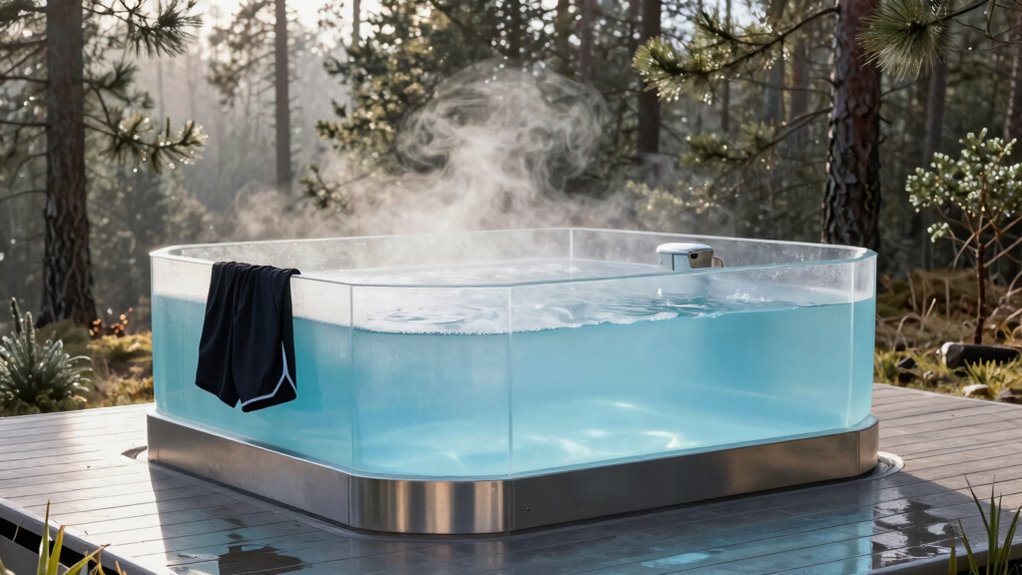
From 110 to 238 gallons, these cold plunge tubs fit different needs for runners. Look for full-body immersion with 119–120 gallon models for easy setup, or larger 131–140+ gallon options like Merapi XL or IcyPlunge for taller athletes and multi-user sessions. Many offer foldable portability, insulated lids, and dual drains, with chiller compatibility in models like AKSPORT and Albott. Choose an option with your height, space, and maintenance preference; more details ahead.
You’ve seen how technology reshaped running: better shoes, synthetic tracks, precise timing, and smart wearables that boost economy and safety. Innovations from vulcanized rubber and waffle soles to foam, carbon plates, and 3D printing improved cushioning, traction, and energy return. Photo-finish and chip timing guarantee fair results while GPS and sensors guide training and injury prevention. Sustainable materials and virtual races broaden access and reduce waste. Keep going and you’ll uncover specific advances, impacts, and future trends.
Why Running Tech Matters: Key Turning Points and Benefits
Although running has always been a test of human endurance, technological advances have repeatedly reshaped what athletes can achieve and how events are run.
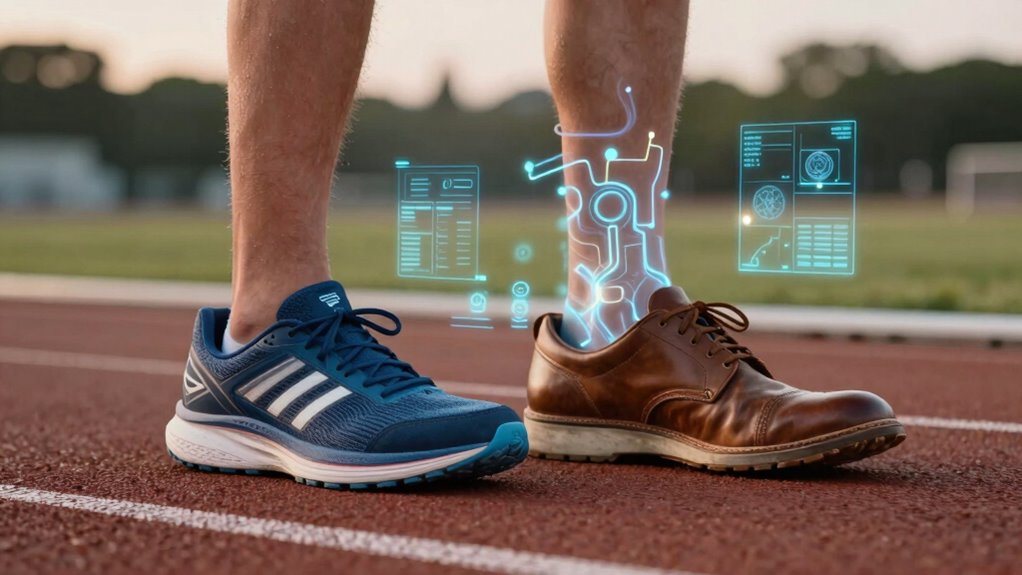
You see key turning points—from vulcanized rubber soles improving grip and comfort to synthetic tartan tracks offering consistent surfaces—that directly influence daily training and competition.
Technology in running shoes now includes Advanced Footwear Technology and PEBA foams, which can improve running economy by 2.8–4.2%, delivering enhanced performance you can measure.
Timing innovations, like photo finish systems and chip timing with RFID, guarantee fairness and scalable event management so your results are accurate.
These developments also support injury prevention through better traction, cushioning, and predictable track responses, helping you train smarter and race more safely.
Assessing your own feet and gait—through simple checks like the wet test and observing wear patterns—can guide whether you need stability shoes or neutral options for better performance and injury prevention.
Shoe Evolution: From Leather to Foam to Carbon Plates
When you trace the history of running shoes, you see a clear progression from heavy, leather-bound designs that prioritized durability to highly engineered platforms focused on cushioning, stability, and energy return.
You move from early 1900s leather shoes that offered minimal padding and frequent injuries to the 1960s innovations—like the waffle sole—that improved traction and basic cushioning.
In the 1970s, foam and gel materials expanded shock absorption and comfort, tailoring shoes to varied gaits.
In the 1970s, foam and gel transformed cushioning, enhancing shock absorption and adapting shoes to diverse gaits
The 1980s introduced motion-control features for overpronators, adding stability elements to reduce injury risk.
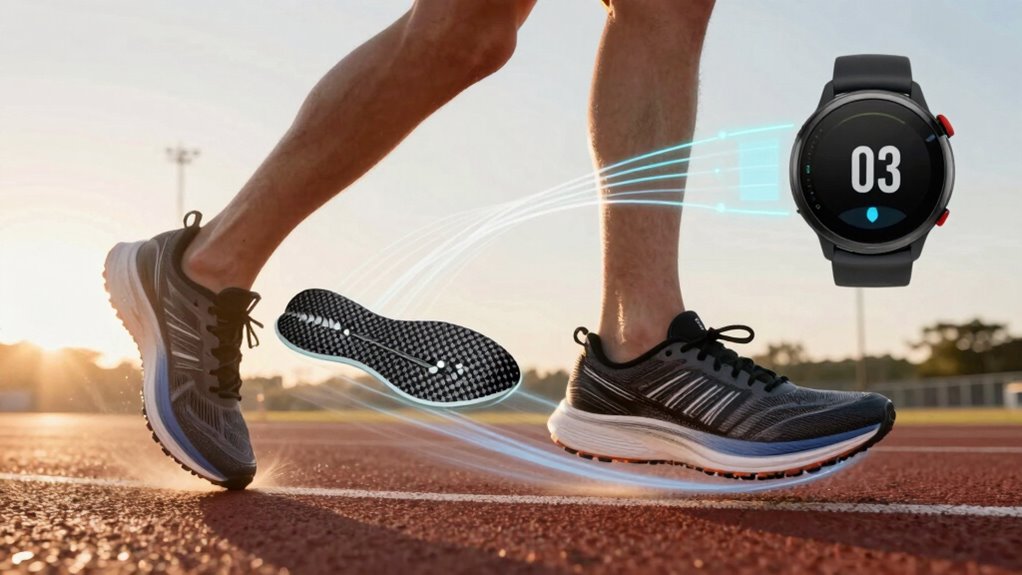
Recent 2010s advances, including 3D-printed soles and carbon plates, emphasize responsive cushioning and energy return.
These technology-driven changes consistently aim to boost your performance while reducing injury.
Modern designs also integrate advanced foam compositions and geometry to fine-tune energy return and ride characteristics.
Track Surfaces: The Switch to Synthetic and Performance Effects
You’ve seen how tracks moved from uneven dirt to the springier Tartan surfaces introduced at the 1968 Olympics, and that shift changed how athletes run and records fall.
Synthetic polyurethane-and-rubber tracks give you far better traction, consistent footing in varied weather, and measurable energy return that reduces fatigue and improves economy.
Because these surfaces are durable and standardized worldwide, they let you compare performances across venues and have helped broaden the sport’s accessibility.
From Dirt To Tartan
Because track surfaces directly affect traction, energy return, and injury risk, the shift from dirt and grass to synthetic “Tartan” tracks in the late 1960s represented more than a change in materials—it transformed how athletes trained, competed, and measured performance.
You witnessed inconsistent timing and greater injury variability on natural surfaces; Tartan, introduced at the 1968 Mexico City Olympics, gave you a durable, bouncy alternative. Made from polyurethane and rubber, synthetic tracks improved grip and consistency, contributing to a surge in world records and clearer biomechanical advantages.
Standardized surfaces worldwide let you compare performances more fairly and encouraged broader competition. The change also pushed running shoe brands to adapt, integrating technological innovations that complemented synthetic track properties and advanced athlete preparation. This shift also coincided with running’s broader cultural evolution from primal activity to organized sport, reflecting its role in civilization growth and athletic tradition.
Traction And Energy Return
Having moved from the era of dirt and grass to engineered Tartan surfaces, it’s important to examine how traction and energy return reshaped performance.
You’ll notice synthetic tracks made from polyurethane and rubber give consistent, bouncy footing that translates into faster times and many world records since the 1968 Mexico City Olympics. Improved traction helps you accelerate and corner with confidence while enhanced energy return returns more of your stride’s force, boosting efficiency.
Research shows these surfaces lower impact forces on joints, which reduces injury risks compared with older, less forgiving ground. Standardized track technology also makes performance comparisons fairer across venues, so when you train or compete on modern surfaces you benefit from both measurable gains and a safer, more predictable platform.
Many runners also lower their overall injury risk by combining modern surfaces with strength training and gradual progression in their training plans.
Weather Resistance And Consistency
While variable weather once turned tracks into unpredictable challenges, the switch to synthetic surfaces has largely removed that uncertainty and made performance more reliable.
You benefit from weather resistance that keeps footing stable in rain or sun, unlike older dirt or grass that compacted, rut, or turned slippery.
Synthetic tracks—made of polyurethane and rubber—deliver standardized traction and a springier feel that improved running efficiency and helped produce records after their widespread adoption.
Because surfaces are uniform, you can compare times globally with greater confidence, and coaches can design training without accounting for surface variability.
Injury risk from uneven ground falls, too, so both amateurs and professionals get safer, more consistent conditions that support sustained performance consistency and measurable progress.
Real-time feedback from wearable devices like GPS watches further enhances training by providing immediate data on pace, distance, elevation, and heart rate.
Timing and Finishes: Photo-Finish Cameras to Chip Timing
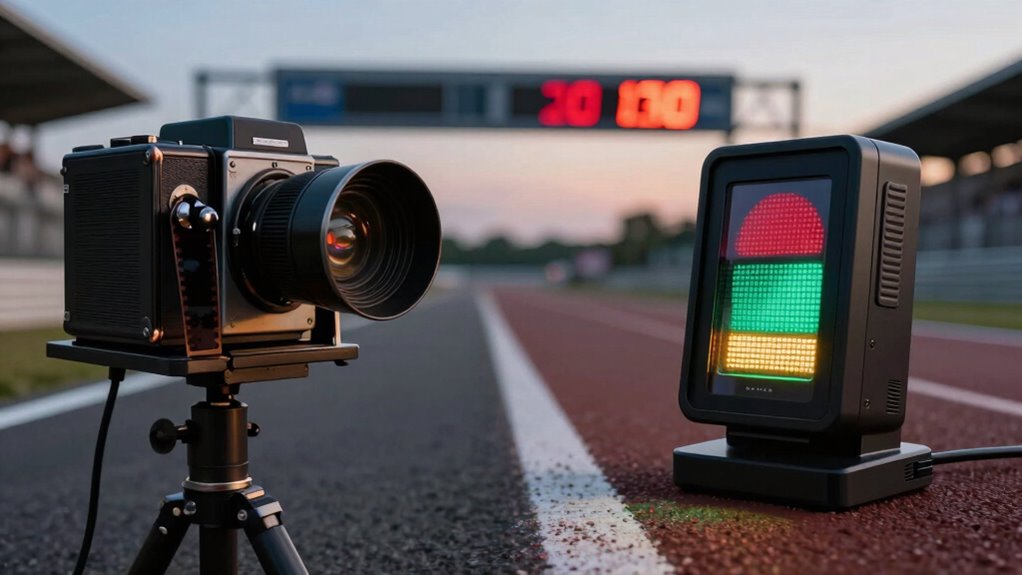
You’ll see how photo-finish cameras transformed outcomes by capturing thousands of frames per second to settle tight races with photographic precision.
Chip timing then reshaped event management using RFID transponders on bibs to automate accurate timing and provide real-time split and tracking data.
Together, these systems bolster race integrity, streamline logistics for large fields, and make competitive and mass-participation events fairer and more accessible.
Photo-Finish Precision
Although finishes once relied on human eyesight and stopwatches, the arrival of photo-finish cameras and, later, chip timing transformed how races are decided and managed.
You’ll see that the first use of photo finish technology at the 1912 Stockholm Olympics began a shift toward objective race timing, and its first official decision in the 1932 London Olympic 100m demonstrated the method’s power to resolve disputes.
Today’s photo finish systems use high-speed cameras capturing thousands of frames per second, delivering frame-by-frame evidence that officials can review.
That modern technology raises standards for fairness and accuracy, helping organizers publish results quickly and confidently.
While chip timing later expanded capabilities further, the photo finish remains central to definitive sprint outcomes.
Chip Timing Revolution
As chip timing emerged in the 1990s, it rapidly transformed how races are timed and managed by replacing manual methods with automated RFID-based systems that attach transponders to bibs and read them via antennas positioned at start, split, and finish points.
You’ll find chip timing has made accurate timing routine for events of any size, removing human error and enabling reliable split data. With RFID technology, organizers can track thousands of runners simultaneously, publish real-time results, and improve course logistics.
Athletes benefit because every participant, from elite to first-timer, receives precise results tied to their actual start and finish. Combined with photo-finish for close decisions, chip timing has professionalized race operations and broadened access to fair, verifiable competition.
Race Integrity Systems
Having automated split and finish times with RFID chips reshaped large-scale race logistics. Organizers also turned to optical systems to settle the closest, most contested outcomes.
You’ll find race integrity systems now blend chip timing with a modern photo finish to produce indisputable results. Photo-finish cameras, in use since early Olympic days and refined to capture thousands of frames per second, let officials resolve finishes to fractions of a second.
Chip timing, introduced in the 1990s, records each runner’s passage automatically, reducing human error and simplifying mass-participant management. Together these technologies streamline event operations, guarantee fair competition across all levels, and provide transparent evidence when placings are disputed.
Embracing both electronic and visual records safeguards accuracy and trust in race outcomes.
Running Tech: Wearables and Smartwatches for Training
When you strap on a modern smartwatch or fitness watch, you get more than a timepiece—you get a continuous stream of training data that can shape how you run.
Wearable technology delivers real-time performance metrics—heart rate, pace, distance, and calories—that let you adjust effort and structure workouts with intent.
GPS-enabled devices map routes and reveal pace patterns, so you can analyze segments and refine strategies over weeks.
Map your routes and spot pacing trends to analyze segments and sharpen your strategy over weeks.
Advanced features like VO2 max estimates and recovery-time suggestions help you plan intensity and rest.
Integration with apps such as Strava fosters community, competition, and data sharing.
Biomechanics and Injury Prevention: Tools That Help Runners Stay Healthy
Prevention starts with understanding how your body moves, and modern biomechanical tools give you that understanding in measurable detail. You can use motion capture and dynamic pressure mapping to spot gait inefficiencies and force imbalances, which lets you target interventions that cut injury risk by up to 50%. Wearable technology supplements lab data with real-time pace, heart rate, and training-load metrics so you can avoid overtraining and tune recovery. Advanced footwear with cushioning and carbon plates further reduces impact forces and improves economy, lowering stress-injury chances. Data analytics ties all inputs together, guiding progressive training plans and shoe choices.
Tool
Purpose
Benefit
Motion capture
Analyze gait
Tailored corrections
Pressure mapping
Foot force distribution
Better shoe fit
Wearables
Real-time load
Injury prevention
Virtual Racing and Apps: How Tech Builds Community and Competition
While virtual racing platforms connect runners across miles and time zones, they do more than just record times—they create structured spaces for competition, accountability, and community.
You can join global events that democratize racing, letting amateurs compete alongside seasoned runners without travel barriers. Apps like Strava and Runkeeper let you track progress via segment leaderboards, monthly challenges, and detailed activity logs, which heighten motivation and goal-setting.
Engagement data shows many users enter multiple virtual events annually, signaling sustained interest and social commitment. Even when you’re training solo, virtual reality features and shared metrics recreate social cues, making your running experience more interactive and competitive.
These tools build supportive networks, foster camaraderie, and expand access to organized racing for diverse participants.
Sustainability and Materials: Recyclable Shoes, Graphene, and Circular Design
As runners and manufacturers face increasing pressure to reduce environmental impact, sustainable materials and circular design are reshaping how shoes are conceived, made, and retired.
You’ll see sustainability push brands to rethink every component: midsoles, outsoles, uppers and adhesives.
Adidas’s FutureCraft Loop shows how recyclable shoes can return to production instead of landfills, embodying circular design principles that treat lifecycle management as core engineering.
At the same time, innovative technology such as graphene-enhanced rubber improves durability and flexibility, letting you run longer before replacing footwear and reducing waste.
Manufacturers are responding to consumer demand by integrating recycled content and designing for disassembly.
This shift balances performance with environmental responsibility, encouraging practices that make running gear both high-functioning and easier to recycle.
What’s Next: AI Coaching, Personalized Gear, and Emerging Materials
Sustainability-driven changes in materials and circular design are already reshaping how shoes are made and retired.
Now, technology is poised to reshape how you train and what you wear. AI coaching will analyze your pace, cadence, and recovery to create adaptive training plans that respond to fatigue, injury risk, and goal progression.
Technology will reshape training and gear: AI coaching analyzes pace, cadence, and recovery to craft adaptive, injury-aware plans.
Personalized gear, enabled by 3D printing, will produce custom-fit shoes that match your foot shape and gait, improving alignment and lowering injury likelihood.
Emerging materials like graphene rubber and PEBA foam will deliver better energy return, durability, and flexibility, enhancing performance while supporting longer product life.
Together, AI coaching, personalized gear, and advanced materials promise a more efficient, safer, and more sustainable future for runners.
Wrapping It Up
You’ll see how technology has reshaped running—from shoes and surfaces to timing and training—and why it matters for performance and injury prevention. Consider this: carbon‑plate shoes helped numerous athletes cut seconds off marathon times, contributing to a roughly 2–4% improvement in elite marathon performances since their introduction. As you embrace wearables, AI coaching, or sustainable materials, use data thoughtfully to personalize training, reduce injury risk, and choose gear that fits your goals and values.
For 2026, consider the ALTRA Torin 7, Merrell Trail Glove 7, and Adidas Run Falcon 5. The Torin 7 uses EGO MAX foam for extra bounce, a plush upgraded tongue, and a secure heel collar with a mesh upper for breathability. The Merrell Trail Glove 7 sticks to a minimalist, barefoot feel with Vibram EcoStep outsole for solid grip and ground connection. The Run Falcon 5 offers a wide fit, Cloudfoam comfort, and Adiwear durability. Curiosity grows as you compare specifics.
The four best low-drop options for 2026 are the Adidas Women’s Questar 3, New Balance Fresh Foam Roav, Under Armour Charged Assert 10, and Adidas Women’s Run Falcon 5 Trail. Expect 0–6 mm drops, all-around comfort, and stable setups with responsive foams or cushioning. Questar 3 and Run Falcon 5 Trail offer breathable uppers and solid traction, while Fresh Foam Roav provides long‑lasting comfort and Roav’s removable insole. Charged Assert 10 delivers a lightweight, rebound ride, all priced around $100–$140. If you want more details, you’ll find practical fit tips and traction insights ahead.