


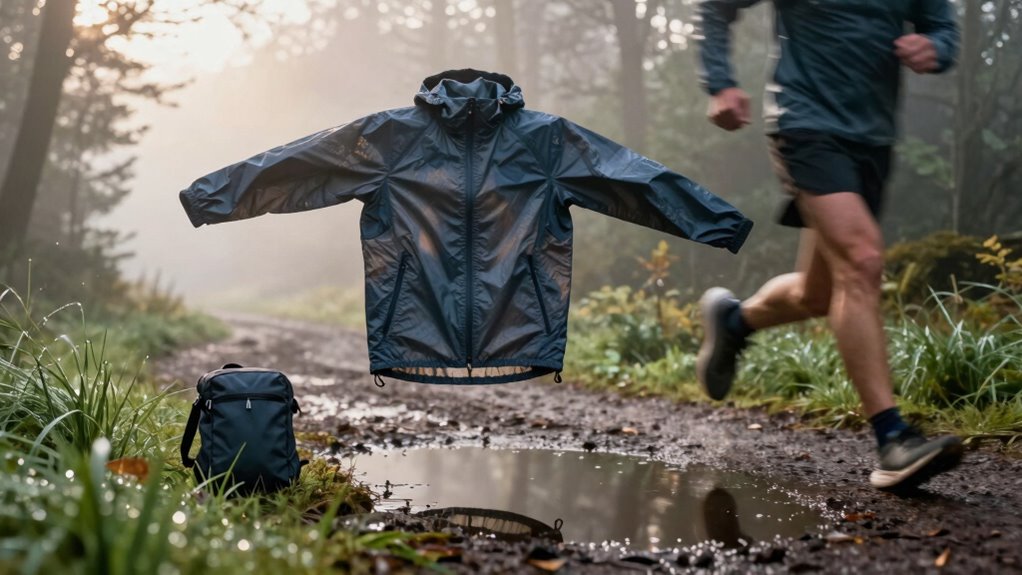
The 1 best packable running wind shell is the Little Donkey Andy Men’s Waterproof Packable Cycling Jacket. It’s ultra-light, weighing about 200–300 g and folds into a back pocket for easy stowage. It uses a 2.5-layer 5000mm waterproof, 3000g/m²/24hr breathable system with fully taped seams and back vents for airflow. It’s reinforced with ripstop outer fabric and reflective accents for visibility. If you want more specifics, keep going to learn how it fits your runs.
| Little Donkey Andy Men’s Waterproof Packable Cycling Jacket |  | Best Lightweight Packable | Waterproofing: 5000mm waterproof | Breathability: 3000g/m²/24hr | Packability: Ultralight, foldable, fits in back pocket | VIEW LATEST PRICE | See Our Detailed Review |

More Details on Our Top Picks
Little Donkey Andy Men’s Waterproof Packable Cycling Jacket
If you want a packable shell that handles wet and windy conditions without weighing you down, the Little Donkey Andy Men’s Waterproof Packable Cycling Jacket is a solid pick. You get a 95% Polyester, 5% Elastane fabric with a 2.5 layer waterproof and breathable system, plus a ripstop outer shell that stays stretchy and windproof. It seals with fully taped interior seams and a 5000mm waterproof rating, 3000g/m²/24hr breathability. Back vents improve airflow, and it folds into a back pocket to become a small bag. Reflective stripes boost visibility, while elastic cuffs and a longer tail suit cycling and running.
- Waterproofing:5000mm waterproof
- Breathability:3000g/m²/24hr
- Packability:Ultralight, foldable, fits in back pocket
- Seams/Construction:100% fully sealed interior seams
- Reflective Elements:Two reflective stripes and logo + back reflective print
- Pockets:1 back zip pocket + 1 chest zip pocket
- Additional Feature:Fold into back pocket
- Additional Feature:2.5 layer tech
- Additional Feature:Fully sealed seams
Factors to Consider When Choosing Packable Running Wind Shell (Ultra-Light)
When choosing an ultra-light packable wind shell, you’ll weigh weight and packability, aiming for something around 3–6 ounces with a compact stow size. Look for good breathability, like a 10,000+ g/m²/24h rating, and check waterproof capability with a lightweight DWR coating for light rain. Consider fit for layering, plus visible safety features and practical details like a hem drawcord, reflective trim, and a price in the $40–$100 range.
Weight and Packability
A packable running wind shell should be ultralight and easy to fold, with a target weight around 200–300 grams so it won’t weigh you down on longer runs. You want a design that minimizes weight without sacrificing performance, so look for around 200–300 grams as the benchmark. A jacket that can be easily folded and tucked into a small pocket or pouch increases its packability, making it convenient to carry during runs or outdoor activities. Confirm the packable wind shell features a compact volume when folded, allowing it to fit into a pocket or bag without taking up much space. Consider durable, lightweight materials like ripstop polyester and features like elasticized hems and cuffs to seal out wind.
Breathability Performance
Breathability matters a lot when you’re choosing a packable running wind shell, because it helps keep you comfortable by letting sweat vapor escape while you stay dry and cool. Breathability performance matters for temperature control during runs, so you don’t overheat. Look for a rating of 3000g/m²/24hr or higher to manage moisture and wind, while preventing rain from soaking through. Enhanced breathability comes with design features like back air vents that boost air flow and disperse heat, keeping you cooler when you push hard. Fully sealed seams and laminated membranes support breathability by reducing moisture buildup, but they must balance waterproofing. Too much waterproofing can trap moisture inside, so choose a shell that pairs good breathability with solid protection.
Waterproof Capability
Waterproof capability matters just as much as breathability when you’re shopping for an ultra-light packable wind shell. When you pick, check the hydrostatic head rating; 5000mm or higher signals solid waterproofing for rain and mist. Look for jackets with a laminated TPU membrane, which improves waterproof performance while keeping breathability intact. Make sure seams are fully sealed, so water can’t seep through stitch holes and weaken protection. Breathability matters too, so choose fabrics rated 3000g/m²/24hr or higher to let sweat escape and keep you dry inside. Back air vents add comfort by boosting air flow during hard efforts in wet weather. Also note practical details like pack size, weight, and price, which influence daily usability on errands or long runs.
Fit and Layering
When choosing a packable running wind shell, focus on fit, functionality, and layering options to stay prepared for changing conditions. Look for an athletic fit that allows freedom of movement yet stays snug enough to limit wind entry. Elasticized hems and cuffs help seal out the elements and boost comfort during runs. A drop tail hem adds back coverage, improving both fit and practicality for cycling or long miles. The jacket should be lightweight and compact, easily packing into a pocket or small bag for everyday layering. Check compatibility with other layers, such as moisture-wicking base layers and insulating mid-layers, to create a flexible system that adapts to varying weather. This balance supports versatile, all-season performance.
Safety Visibility Features
Reflective visibility is a key factor when choosing a packable running wind shell, especially for early mornings or after dark. Look for shells that incorporate reflective materials or stripes, which boost visibility in low light and help you stand out to drivers and pedestrians. A jacket with multiple reflective elements, including logos and prints on both the front and back, can greatly improve 360-degree visibility during evening or dawn runs. Designs should place reflective features where oncoming traffic will see you first, such as the chest and back. Combine safety features with bright colors to increase presence in varying lighting. Confirm the reflectivity lasts after multiple washes, since durability maintains safety over time.
Storage Pockets Utility
Storage pockets are a key practical feature to check in a packable running wind shell. You want enough pockets to carry essentials like keys, snacks, or a phone without bulk. Look for zippered pockets to keep items secure while you move. A zippered back pocket with reversible double zipper pullers offers versatile storage and easy access without removing the jacket. Chest pockets are useful for quick access to small items, helping you stay focused on your run. Evaluate pocket size and design to guarantee items fit without adding weight or bulk. Favor thoughtful placement and simple access, so retrieval doesn’t disrupt your pace. Prioritize pockets that balance security, accessibility, and compact packing.
Frequently Asked Questions
How Does Breathability Affect Comfort on Long Runs?
Breathability directly boosts comfort on long runs by letting heat and moisture escape, so you stay cooler, drier, and less sweaty. A wind shell with good vents or breathable fabric reduces cling, helps regulate your core, and minimizes chafing. Look for fabrics rated to high breathability, underarm panels, and mesh zones; expect lighter shells to trade off some wind protection. At about $40–$120, prioritize a balance of airflow, weight, and fit for endurance runs.
Can It Replace a Heavier Rain Shell in Storms?
A packable wind shell isn’t a rain shell for storms. It can block wind and light drizzle, but heavy rain needs a proper rain shell or waterproof layer. If storms hit, you’ll still want a waterproof jacket with taped seams and a higher waterproof rating (2.5–10,000 mm). Use it as a light layer on milder days, not as your sole rain protection. Check weight, fit, and price, around $40–120. Prioritize breathability and weatherproof features.
Is There a Gender-Specific Fit for Most Runners?
Yes, there’s a fairly standard fit split, but most runners find gender-specific cuts help. Women’s shells often have narrower shoulders, longer torsos, and tailored hips; men’s cuts tend to be square at the chest and waist. Look for adjustable hems, elastic cuffs, and a roomy armpit area. Check size charts and try a medium first; prices range $40–120. If you’re between sizes, size up for layering, or choose a unisex option with good adjustability.
How Compact Is the Packed Size in Liters?
You’ll find the packed size is tiny, typically around 0.7 to 1.0 liters when compressed, and many models include a built-in stuff sack for easy carry. If you want exact numbers, check the specific shell’s per-zip compression rating and the official volume listed by the maker. It stays compact in your pack or belt, remains lightweight, and drops into a pocket without extra bulk. For most runners, that 0.7–1.0 L range fits fine.
What Warranty and Care Tips Preserve Ultra-Light Fabric?
You’ll want a warranty that covers at least a year for fabric defects, and prefer brands offering 2–3 years on zippers and seams. Care tips: wash cold, on gentle, with like colors; use mild detergent; avoid fabric softeners; tumble dry low or air dry; don’t iron; store folded. Ultra-light fabrics dry fast, so air out after runs and avoid harsh solvents. Follow tag directions for best longevity, and inspect seams after heavy use.
Wrapping It Up
If you want a true ultra-light wind shell, this packable option fits in your pocket and weighs next to nothing, yet it blocks wind well and dries fast. It features a compact cut, breathable panels, and a snag-free zipper, plus a small chest pocket for keys or a card. At around $60, it’s affordable for casual runners and commuters who value simplicity and quick stowaway ability. Consider the fit and layerability to guarantee it stays comfortable on longer runs.