


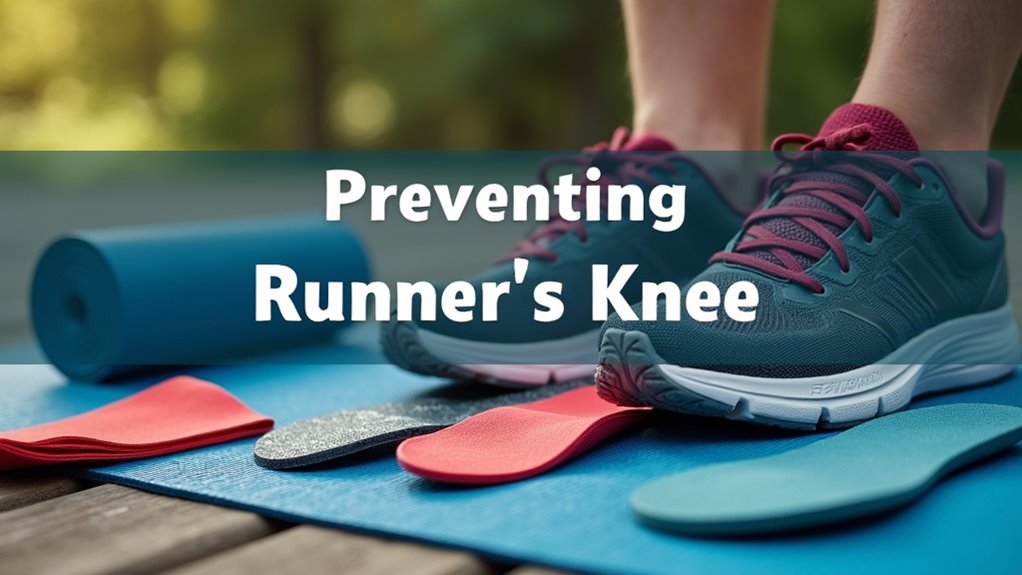
To prevent runner’s knee, start with proper warm-up exercises like dynamic stretches and leg swings. Focus on maintaining correct form while running, including a neutral head position and midfoot strike with a cadence of 170-185 steps per minute. Strengthen your hips and core through targeted exercises, and guarantee you’re wearing appropriate running shoes that match your style. Don’t increase weekly mileage by more than 10%. Discovering additional preventive techniques will enhance your running performance and injury resistance.
Understanding Runner’s Knee Symptoms and Risk Factors

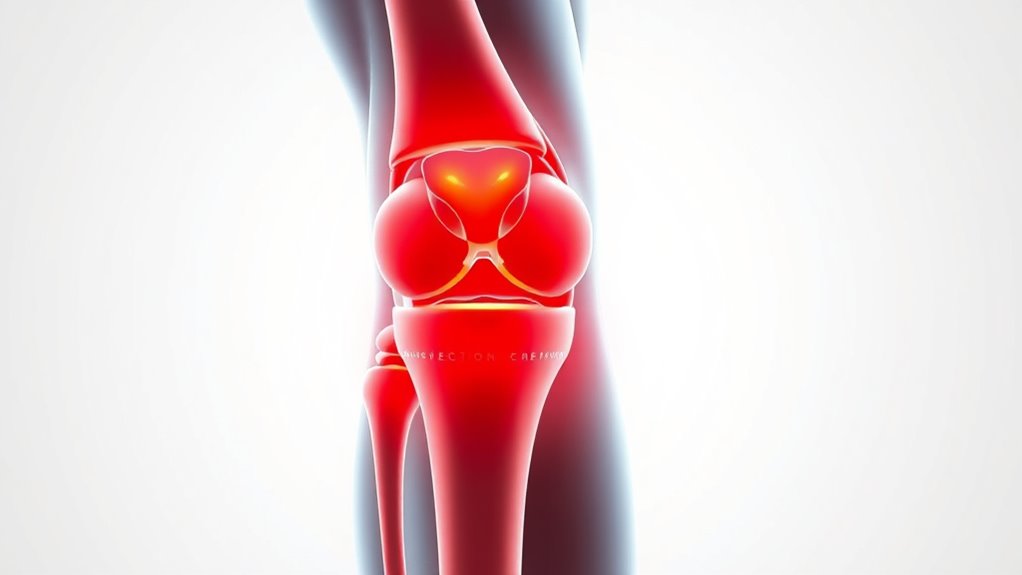
The twinge of runner’s knee can strike even the most dedicated athletes, turning a routine run into an uncomfortable ordeal.
You’ll typically notice a dull ache around your kneecap during activities, especially when climbing stairs or squatting. For effective pain management, it’s important to recognize common risk factors, including sudden increases in training volume, muscle imbalances, and poor footwear choices. Proper footwear selection is crucial in preventing injuries like runner’s knee, as it provides the necessary support and alignment needed during runs.
Women face a higher risk due to biomechanical factors, while excess weight and training surface choices can impact anyone’s likelihood of developing symptoms.
If you’re experiencing grinding sensations or tenderness around your kneecap, don’t ignore these warning signs.
Essential Warm-Up Techniques for Knee Protection
Preventing runner’s knee starts long before your feet hit the pavement, and a proper warm-up routine can make all the difference.
Dynamic stretching is essential for mobility enhancement and knee protection. Start with leg swings, both forward and lateral, to activate your hip flexors and improve joint mobility.
Progress to walking lunges, ensuring your knee stays aligned with your ankle throughout the movement. Incorporate high knees and butt kicks to engage your core and quadriceps while mimicking running mechanics.
These movements prepare your muscles and joints for the impact of running while reducing your risk of knee-related injuries. Additionally, a well-structured warm-up can significantly enhance oxygen delivery to your muscles, improving overall performance and reducing the likelihood of injury.
Proper Running Form and Posture Adjustments
Mastering proper running form serves as your first line of defense against runner’s knee and other common injuries.
Keep your head neutral while focusing your gaze 10-20 feet ahead, maintaining an upright spine with a slight forward lean from your ankles. Your foot alignment should favor a midfoot strike, supported by a cadence of 170-185 steps per minute.
Core engagement is essential – activate those muscles to stabilize your torso and prevent side-to-side motion. Remember to keep your shoulders relaxed and positioned away from your ears, while taking shorter strides to reduce stress on your knees. Additionally, incorporating strength training into your routine can significantly enhance your muscle balance and resilience against injuries.
Strengthening Exercises for Knee Stability
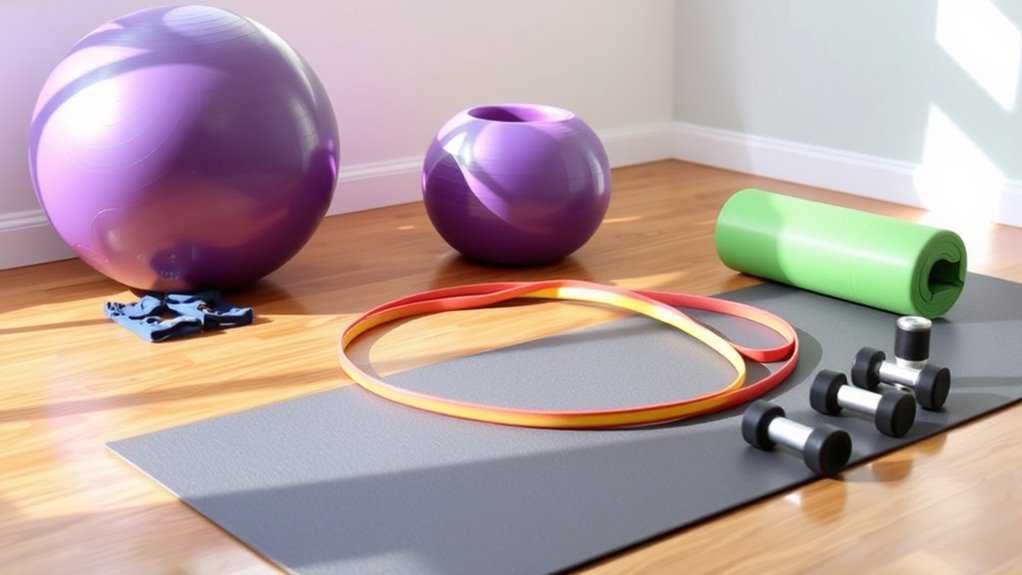
Building knee stability starts with targeted exercises that strengthen the muscles supporting your knee joint and running mechanics.
You’ll want to focus on hip abductor exercises like clamshells and lateral band walks to improve pelvic stability, while incorporating quad-strengthening movements such as wall sits and step-ups to enhance patella tracking.
Single-leg balance work, including exercises like unilateral bridges and controlled step-ups with knee drives, helps develop the stabilizer muscles that prevent unwanted knee movement during your runs. Additionally, incorporating consistent stretching routines can further enhance muscle flexibility and reduce the risk of injuries.
Hip Abductor Training
When runners experience knee pain, strong hip abductors often hold the key to recovery and prevention. By incorporating targeted strength exercises, you’ll improve muscle balance and enhance performance.
Focus on exercises like clamshells, monster walks, and side-lying leg lifts to develop hip stability and prevent injury. Training your hip abductors 2-3 times weekly guarantees consistent progress while avoiding overload.
- Use resistance bands during exercises to progressively challenge your muscles and detect imbalances.
- Maintain strict form during side leg raises to prevent compensatory movements.
- Incorporate both isolated and functional movements to build thorough hip strength. Additionally, cross-training can help reduce overuse injuries by promoting overall fitness and skill enhancement.
Quad Strengthening Exercises
Strong quadriceps serve as the foundation for knee stability and injury prevention in runners. To enhance your quad activation techniques, start with straight leg raises while lying on your back – lift one leg to match the height of your bent knee, focusing on controlled movement and proper muscle engagement strategies.
For additional strengthening, incorporate wall slides by performing controlled knee bends against a wall.
You’ll also benefit from quad sets, where you’ll press the back of your leg into the floor while seated.
These exercises target key muscle groups while minimizing stress on your knees, helping you build the strength needed for injury-free running.
Single-Leg Balance Work
Three essential single-leg balance exercises form the foundation of knee stability training for runners.
Start with single-leg bridges to strengthen your hip and core muscles, then progress to lateral step-downs from a platform, and finally incorporate banded hip abduction exercises.
These stability techniques help prevent runner’s knee by improving neuromuscular control and joint alignment.
- Maintain neutral arch positioning during balance challenges to prevent foot pronation
- Use slow, controlled movements to maximize stability gains and proper form
- Add resistance bands or unstable surfaces to progress your exercises as you improve
Choosing the Right Running Shoes and Gear
Selecting the right running shoes plays an essential role in preventing runner’s knee and maintaining ideal joint health.
Look for shoe features that include balanced cushioning with a stack height of at least 25mm and adequate forefoot padding. Different cushioning types work together to absorb impact while maintaining responsiveness.
When choosing shoes, opt for models with a low heel-to-toe drop (under 5mm) to encourage midfoot striking and reduce knee stress.
You’ll also want to match your arch support needs – high arches require flexible shoes while flat feet need stability features.
Consider adding specialized insoles for enhanced support.
Cross-Training Methods to Reduce Knee Stress
To protect your knees while maintaining peak fitness, incorporating diverse cross-training methods into your running routine can considerably reduce joint stress and prevent overuse injuries.
Low-impact alternatives like swimming and cycling offer excellent cross training benefits, while strengthening exercises build knee stability and resilience. By alternating between different alternative exercises, you’ll develop a more balanced fitness profile.
- Combine aquatic workouts with elliptical sessions to maintain cardiovascular endurance without joint compression
- Integrate strength training focusing on hamstrings and quadriceps to improve knee stability
- Practice yoga and mobility work to enhance flexibility and proper joint alignment during running
Recovery Strategies and Injury Prevention Tips
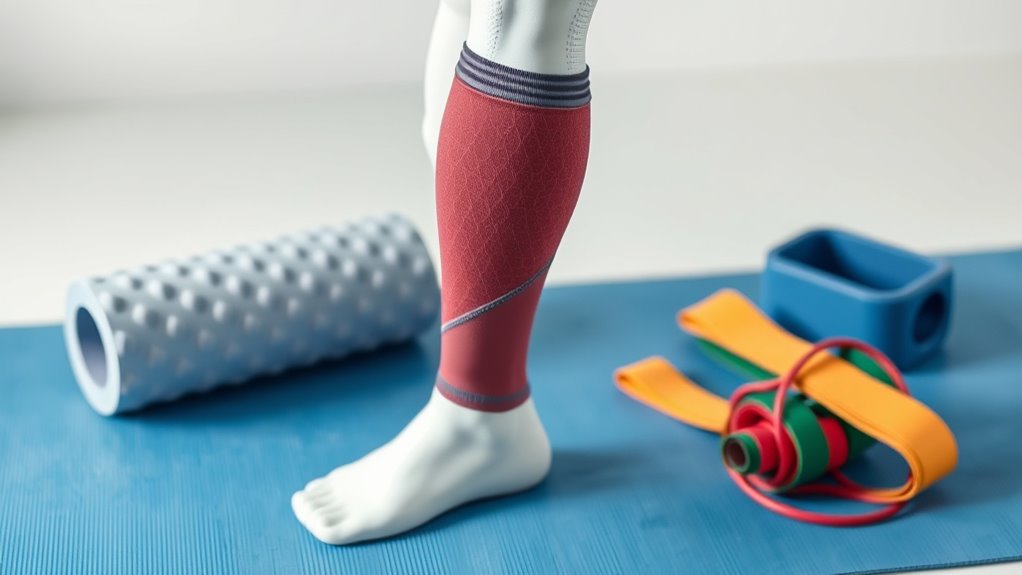
To protect your knees while running, you’ll want to combine active recovery methods with preventive training techniques.
You can enhance your recovery by incorporating foam rolling sessions, gentle stretching routines, and compression therapy after runs, while maintaining proper hydration and nutrition throughout your training.
Preventing future knee issues means you’ll need to focus on building strength in your hips and core, regularly replacing worn-out shoes, and following a structured training plan that includes adequate rest days.
Active Recovery Methods
While recovering from runner’s knee, implementing active recovery methods can considerably accelerate your healing process and maintain fitness levels. Focus on low-impact activities that promote blood flow without stressing the joint. Incorporate muscle stimulation techniques like Marc Pro therapy to enhance recovery while avoiding overexertion.
- Combine heat therapy with gentle dynamic stretches before any activity to improve flexibility and circulation.
- Utilize foam rolling on IT bands, quads, and calves to release tension that affects knee alignment.
- Switch to swimming or cycling sessions to maintain cardiovascular fitness while reducing joint impact.
Preventive Training Techniques
Preventing runner’s knee requires a thorough approach that combines strategic training progression with targeted strength and mobility work. You’ll need to focus on dynamic flexibility and correct muscle imbalances through specific exercises while maintaining proper form.
| Training Focus | Key Exercise | Weekly Frequency |
|---|---|---|
| Strength | Wall Sits | 2-3 times |
| Mobility | Hip Flexors | Daily |
| Balance | Single-leg Drills | 2-3 times |
Remember to increase your mileage by no more than 10% weekly and maintain a stride rate of 170-180 steps per minute. Incorporate rest days between training sessions, and always start with dynamic warm-ups before shifting to your main workout routine.
Conclusion
You’ve now got all the tools to avoid runner’s knee – unless you’re planning to ignore everything you’ve just read. While there’s no guarantee you won’t still end up hobbling around like a penguin in high heels, implementing these strategies will greatly reduce your risk. Remember, your knees aren’t disposable parts, so warm up properly, maintain good form, wear appropriate gear, and listen to your body’s signals.