


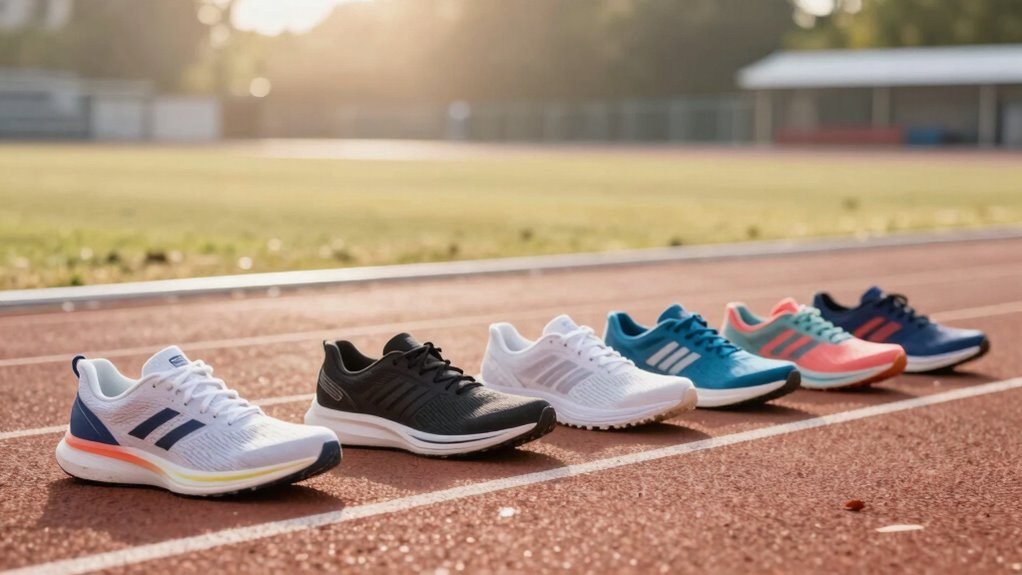
The 5 best wide toe box options for 2026 include the New Balance Arishi V4, Skechers Max Cushioning Endeavour Canova, ASICS Gel-Contend 9, Adidas X_PLR Path, and New Balance Fresh Foam 520 V9. Each offers a roomy forefoot, breathable mesh uppers, and no-sew or light overlays to reduce bulk. Expect a comfortable daily trainer with cushioned midsoles (Fresh Foam, Amplifoam, or Cloudfoam) and stable support. If you want more detail, you’ll find it just ahead.
New Balance Women’s Fresh Foam Arishi V4 Running Shoe

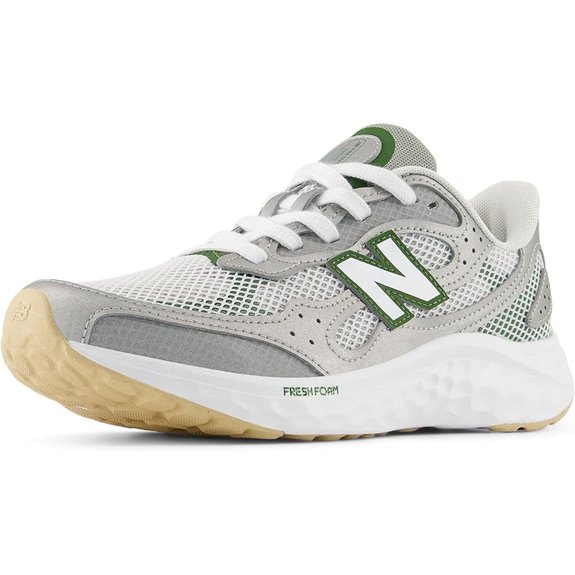
The New Balance Women’s Fresh Foam Arishi V4 is a solid choice for those who want a wide toe box without sacrificing everyday style or function. You’ll get a breathable mesh upper with no-sew construction that reduces bulk while boosting durability, so the shoe feels clean and light. The Fresh Foam midsole delivers soft, responsive cushioning for miles of comfort. This lightweight road shoe is built for training or casual wear, providing comfort from mile one and a lightweight feel for continuous wear. It suits daily workouts, errands, and relaxed runs without fuss or excess weight.
Skechers Women’s Max Cushioning Endeavour Canova Running Shoes
This shoe stands out for its max cushioning and supportive fit, ideal if you need all-day comfort on long runs. You get an engineered mesh upper with synthetic overlays for breathable, secure support, plus vegan-friendly construction. The midsole uses Ultra Light cushioning and Max Cushioning, delivering soft landings and steady push-off. An Air-Cooled Goga Mat insole adds added comfort, while Natural Rocker Technology supports smooth transitions. It’s designed for running and training, offering a lightweight, supportive athletic sneaker feel. Great for wide toe boxes, with practical, durable construction and everyday wear versatility. Price varies by retailer.
ASICS Women’s Gel-Contend 9 Running Shoes
ASICS Women’s Gel-Contend 9 stands out for its combination of comfort and stability, ideal if you need reliable support on varied surfaces. You get a sleek polyester upper and lining with breathability and durability, plus an EVA insole and Amplifoam cushioning for long wear. The Ortholite Sockliner adds cushioned softness, and rearfoot GEL tech absorbs impact for gentler footstrikes. A Trusstic Technology outsole delivers solid stability across terrains. This shoe balances style with comfort, built for daily training and longer runs. Expect durable construction, dependable grip, and a roomy fit that suits wider toe boxes without sacrificing performance. Prices vary by retailer.
adidas Women’s X_PLR Path Running Shoes
The adidas Women’s X_PLR Path stands out for its breathable mesh upper and supportive TPU 3-Stripes, making it a practical choice if you need a wide-toe-box feel without sacrificing style. You get a Cloudfoam midsole for lightweight cushioning and daily comfort, plus breathability that helps keep feet cool during longer runs or walks. These running-inspired sneakers emphasize light steps and a comfy fit, with adidas branding elements visible through the 3-Stripes and finishing touches. Expect a snug yet roomy toe box, a versatile look, and a price that sits around the mid-range for athletic shoes.
New Balance Women’s Fresh Foam 520 V9 Running Shoes
Looking for a comfy daily trainer with soft cushioning and a lightweight feel? The New Balance Women’s Fresh Foam 520 V9 Running Shoes deliver. A Fresh Foam midsole provides soft, responsive cushioning, while the lightweight design adds comfort during activity. The breathable mesh upper promotes ventilation, helping feet stay cool during training, and the mesh construction keeps the shoe feeling light on your feet. It’s versatile for easy runs and casual errands, offering solid daily training performance. Weighing just over 200 grams per shoe, these feel barely noticeable, making them a practical choice for everyday wear and workouts.
Factors to Consider When Choosing Wide Toe Box Running Shoes for Women
When you pick wide toe box shoes, check Toe Box Width Options and look for measurements like 1.25 to 1.4 inches of forefoot room, so your toes have space without rubbing. Consider Upper Construction Flexibility, such as a stretchy mesh or accommodating overlays, to reduce pressure as you move. Also compare Midsole Cushioning Response and Sizing and Fit Tips, so you get a stable feel, careful about true-to-size vs. half-size up, and make sure Foot Shape Compatibility is noted for your arch and toe spread.
Toe Box Width Options
Can you find the right fit by focusing on toe box width options? Toe box widths are labeled narrow, standard, wide, or extra-wide to match different toe splay and forefoot breadth. A true wide toe box adds at least 2-3 millimeters more width across the forefoot than standard, reducing crowding for the toes. Some models use a rounded or anatomical toe box shape to support natural toe splay during footstrike. A wider toe box is typically paired with a higher forefoot stack and sometimes a roomier midfoot to help prevent bunion-related pressure. If a product lists toe box width, forefoot width, or wide fit, that signals the available wider dimensions designed for toe accommodation.
Upper Construction Flexibility
Upper construction flexibility plays a big role in how comfortable a wide toe box shoe will feel during run-ups or tempo miles. You want breathable mesh or engineered mesh with minimal overlays, so natural toe splay isn’t restricted. No-sew or stitched-down designs reduce bulk at the forefoot, helping the toe area stay roomy. Synthetic overlays should be placed to support the midfoot without squeezing the toes, preserving space for a wider toe box. Lightweight, flexible uppers pair well with responsive midsoles to keep the forefoot bend unblocked. Breathability in the upper helps prevent heat buildup and swelling that can tighten the toe box during activity. Look for options around $90–$140 with visible flexibility and minimal weight.
Midsole Cushioning Response
Midsole cushioning in a wide-toe-box shoe plays a big role in how the forefoot feels and reacts during runs. A wide toe box can help the forefoot sit evenly, reducing forefoot compression that can change feel and how you move. Midsole foams with higher deformation resistance, or firmer foams, tend to deliver a more responsive feel in a wide toe box, while softer foams may feel cushier at first but compress more under the toes. Max cushioning systems often trade some ground feel for plushness, which can dampen snap in a wide-toe-box fit unless paired with reactive midsole geometry. The midsole stack height alignment relative to a wide forefoot affects how quickly energy returns during push-off, impacting perceived responsiveness.
Sizing and Fit Tips
To choose a wide-toe-box running shoe that really fits, start by looking for models labeled wide or extra-wide, and pay attention to forefoot depth and volume so your toes have room to splay during midstance. Look for toe boxes labeled as wide or extra-wide to ensure adequate room for the toes without binding. Check the shoe’s forefoot volume and depth, aiming for a roomy toe box that accommodates toe splay during midstance. Consider shoes with a spacious toe box in the last (the shape of the outsole) rather than relying on overall shoe width alone. Try shoes with flexible, zero-delay upper materials, like mesh or knit, that expand slightly to accommodate width without compromising fit. Try on with planned socks and walk, then jog lightly to confirm no pinching.
Foot Shape Compatibility
When choosing wide toe box running shoes for women, focus on foot shape compatibility by checking ball width and toe box depth to ensure the forefoot can spread naturally without squeezing the toes. A true wide (2E+) or a design labeled “wide fit” should be prioritized so the forefoot is roomy and the toes can splay. Look for a tapered heel paired with a roomy forefoot, and a boxier toe cap design that helps balance weight and stability. Avoid rigid forefoot overlays; seamless uppers or knit constructions reduce constriction for broader toes. Choose shoes that clearly state wide width in sizing and test for about a thumbs’ width of space at the big toe. Aim for comfort during runs and daily wear.
Frequently Asked Questions
How Do I Measure Foot Width Correctly for Wide Toe Boxes?
To measure foot width correctly for wide toe boxes, start with a socked foot and stand flat, weight even. Use a ruler or measuring tape to measure the widest part of the forefoot across the ball joints, not the arch. Compare to a sizing chart and note inches or millimeters. Do both feet, use the larger measurement, and try width options like B, D, or E. Consider sizing up half a size for toe room.
Are Wide-Toe-Box Shoes Suitable for Overpronation Support?
Yes, wide-toe-box shoes can help with overpronation, but they aren’t a guaranteed fix. Look for stability or support models that include a firm medial post, GuideRails, or built-in arch support, and choose wide toe boxes to reduce crowding. Aim for a heel-to-toe drop around 8–12 mm, a snug midfoot, and a roomy forefoot. Check that width options include 2E/4E, price around $100–150, and try on with your usual socks.
Do Wide Models Affect Running Speed or Performance?
Wide models can affect speed, but mostly through fit and stability, not inherent power loss. If you choose a shoe with a roomy toe box, you’ll push off more naturally, yet you may trade some precision on fast turns. Look for 8–12 mm drop, a weight around 9–11 oz, and responsive foam. Prices range $90–$140. Try a wide width in brands like Brooks or ASICS, and test for comfort and propulsion.
Which Materials Maximize Breathability in Wide Toe Boxes?
Breathable materials in wide toe boxes come from mesh uppers, airy knit, and engineered mesh with perforations. Look for shoes offering a mesh upper with a minimum 180–200 gsm density, and a wide toe box built around a breathable frame. Integrated mesh linings, moisture-wicking padding, and three-dimensional spacer fabrics improve airflow. Avoid heavy overlays. Expect prices around $90–$180, sizes up to EE or EEEE, and features like breathable insoles and wide toe boxes noted in product specs.
Can Wide Shoes Accommodate Orthotics or Inserts Effectively?
Yes, wide shoes can accommodate orthotics or inserts effectively, as long as you select models with removable insoles and enough depth. Look for widths labeled Wide or 2E, a roomy toe box, and at least 1.5 to 2.0 cm of stack height above the footbed. Check that the removable insole leaves room for your orthotics, and try shoes with a secure lacing system. Prices range $90–180, depending on brand and features.
Wrapping It Up
If you want wide toe box runners, these picks cover comfort, fit, and value. The New Balance Fresh Foam Arishi V4 and 520 V9 offer roomy forefeet with soft foam for daily miles, while Skechers Max Cushioning Endeavour and ASICS Gel-Contend 9 prioritize plush cushioning on longer runs. Adidas X_PLR Path adds a simple, breathable option. Check prices, check widths, and try on in-store if possible to confirm the fit suits your toes and stride.