


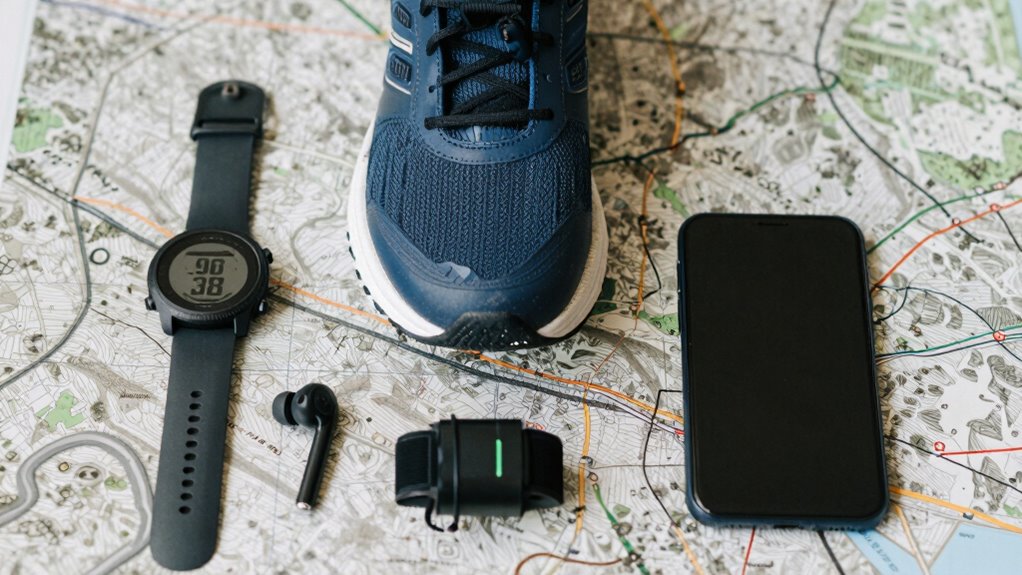
Decide what you’re training for—distance, speed, or general fitness—and pick metrics that match, like GPS distance and pace for races, heart rate for endurance, and cadence for form. Prioritize comfortable, compatible wearables with reliable GPS and continuous heart monitoring, then match battery life and features to your budget (starter, midrange, premium). Factor environment: trail needs long battery and rugged gear; road favors lightweight accuracy. Test and sync devices with apps for consistent data, and keep reading to learn specifics.
Define Your Running Goals and Tech Needs

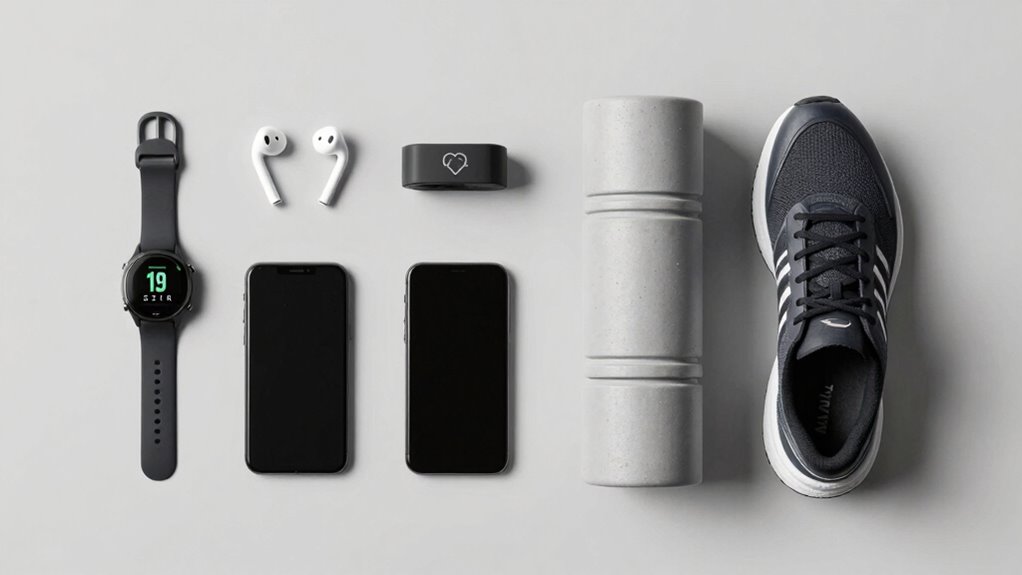
What do you want your running tech to accomplish? Start by identifying your goals: are you training for a marathon, chasing speed improvements, or maintaining general fitness? That clarity lets you choose devices tailored to purpose rather than impulse.
Next, choose the right metrics that match those goals—heart rate for endurance, pace and distance for races, or cadence for form work—and pick a device that tracks them reliably.
Prioritize comfort and fit when evaluating wearables; an accurate sensor that irritates you won’t get used. Also consider compatibility with your phone, preferred apps, and other sensors so data flows into one place for analysis.
Finally, set a sensible budget aligned with the features you actually need. Investing in a quality watch can improve performance by an average of 15% and provide valuable performance monitoring for smarter training and injury prevention.
Performance Metrics to Look for in Running Tech
Curious which numbers will actually move the needle in your training? Focus on core performance metrics that give actionable insight.
GPS accuracy matters first: a reliable device tracks distance and pace with minimal error, so interval and threshold sessions reflect reality.
GPS accuracy is paramount—accurate distance and pace ensure interval and threshold workouts truly reflect your progress.
Heart rate monitoring is essential for intensity control and recovery decisions; optical sensors on chest straps or wrist devices deliver continuous data you can trust.
Cadence and ground contact time help you refine form and efficiency, especially when your watch reports them alongside stride length.
Real-time displays in smart glasses keep these metrics visible without breaking rhythm.
Finally, consider hydration tracking to monitor sweat rate and electrolyte loss, so you can plan fueling and avoid performance drops on longer runs.
GPS devices also enhance navigation and safety with real-time tracking and route features that prevent getting lost and can send emergency notifications.
Budget: Running Tech Kits (Starter, Midrange, Premium)
Begin by grouping gear into three practical tiers—starter, midrange, and premium—so you can match features to your goals and wallet.
Starter kits cover essentials: a basic GPS watch like the Garmin Forerunner 55 tracks pace and distance and usually sits near $200, making it ideal if you mainly want reliable distance and time data without extras.
Midrange kits add accuracy and comfort, for example pairing a COROS heart-rate monitor ($79) with a sports watch to get precise heart-rate metrics without chest-strap discomfort.
Premium kits bring advanced tech such as Engo 2 Glasses ($299.95) that project metrics into your eyeline for real-time feedback.
Consider budget flexibility: starter kits generally cost $100–$300, midrange $300–$600, and premium often exceed $600.
Customize by priority—distance, heart rate, or recovery—when choosing.
Many runners also value devices with long battery life to support extended training sessions and races.
Gadgets by Environment: Road, Trail, and Treadmill
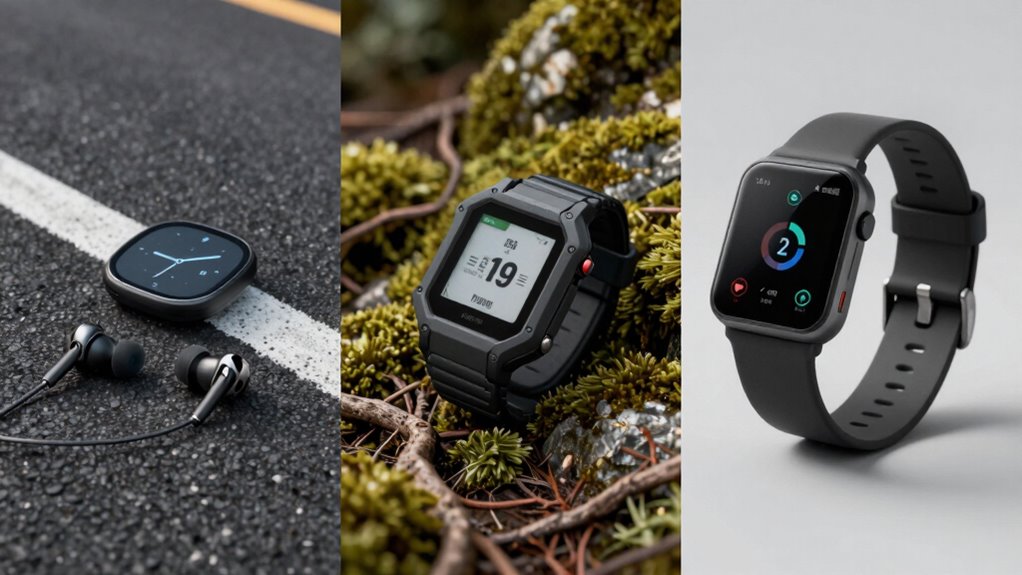
Because each running environment presents different challenges, choosing the right gadgets means matching features to terrain and goals so you get useful data and stay safe.
For road running, prioritize a GPS watch like the Garmin Forerunner 55 to track pace, distance, and heart rate for consistent splits and training progress.
On trails, opt for devices with robust GPS accuracy and long battery life—models such as the Coros Pace 4 handle rugged navigation and extended outings.
Trail runners also benefit from hydration vests like the Salomon Adv Skin 12 to carry water and essentials comfortably.
For treadmill sessions, a reliable fitness tracker such as the Fitbit Inspire 3 monitors heart rate and calorie burn indoors.
In all settings, include safety gadgets—reflective gear and headlamps—for visibility during low light.
Heart rate monitors provide real-time cardiovascular data that help optimize training intensity and prevent overexertion, making them essential for informed running plans and recovery tracking; consider adding a dedicated heart rate monitor to your kit.
Compare Wearables: Watches, Armbands, and Bicep Sensors
When you compare wearables, focus on three practical factors: accuracy, comfort and fit, and connectivity with battery life in mind.
GPS watches tend to offer the most detailed running metrics but vary in heart-rate precision and battery endurance, while armbands score high for secure phone carry and comfort during movement.
Bicep sensors can improve optical heart-rate accuracy and pair easily via Bluetooth, so weigh that accuracy gain against fit preferences and how long each device lasts between charges.
Running watches often include advanced features like multi-band GPS for improved location accuracy during runs.
Wearable Accuracy Comparison
Accuracy matters when you pick a running wearable, because the device you choose determines which metrics you can rely on for training and race-day decisions.
You’ll find wearable accuracy differs: GPS watches deliver the most extensive data—time, distance, pace, elevation, and wrist heart rate—plus longer battery life for long runs.
Armbands mainly secure your phone, so they don’t add physiological tracking but do keep your device stable.
Bicep sensors focus on heart rate, often improving readings over wrist monitors and offering a comfortable chest-strap alternative.
- Feel confident when your watch’s GPS locks in distance.
- Appreciate simplicity if you only need phone storage.
- Trust focused heart-rate data from bicep sensors for interval work.
Comfort And Fit
Although comfort often feels subjective, choosing the right form factor—watch, armband, or bicep sensor—has measurable effects on fit, distraction, and data reliability during runs.
You’ll find GPS watches like the Garmin Forerunner 55 sit snugly on the wrist, preventing bounce and improving accuracy for pace and distance.
If you need your phone accessible, an armband such as the Tune Belt Sport AB91 secures the device with minimal movement and preserves comfort.
For heart-rate precision without a chest strap, bicep sensors like the COROS monitor use optical sensors that often deliver better readings while staying comfortable.
Lightweight alternatives, for example the Mio Link, reduce distraction.
Ultimately, choose the wearable that matches your preferred fit, comfort needs, and performance goals.
Connectivity And Battery
Because connectivity and battery shape how you actually use a wearable, you’ll want to weigh both before picking a watch, armband, or bicep sensor.
GPS watches give integrated tracking and usually sync via Bluetooth to your phone, making post-run analysis seamless; many high-end models also offer multi-day battery life for long training blocks.
Bicep sensors deliver accurate heart-rate data with efficient power use, often outlasting chest straps and reducing discomfort.
Armbands don’t need much onboard power but rely on your smartphone’s battery and connectivity for music and mapping.
Consider these emotional drivers when choosing:
- Confidence — reliable Bluetooth sync keeps your data intact.
- Freedom — long battery life lets you run farther, worry less.
- Comfort — lightweight sensors reduce distraction so you stay focused.
Audio & Safety: Headphones, Lights, and Visibility Tools
1 essential principle for audio and safety gear is balancing situational awareness with visibility—your choice of headphones and lights should keep you connected to your surroundings while making you unmistakable to others.
Choose bone-conduction headphones when you want decent audio quality without blocking ambient sound; models like the Shokz OpenRun let you hear traffic and other runners.
Pair them with visibility gear such as a reflective vest for early-morning or nighttime outings—vests like the Nathan Streak dramatically increase detection by motorists.
Add a reliable headlamp for trail navigation; compact options like the Petzl Bindi offer hands-free illumination.
For minimal bulk, use LED slap wraps or clip-on lights.
Prioritize secure, comfortable fit so gear won’t distract you during runs.
Hydration & Fueling That Fits Your Training Plan
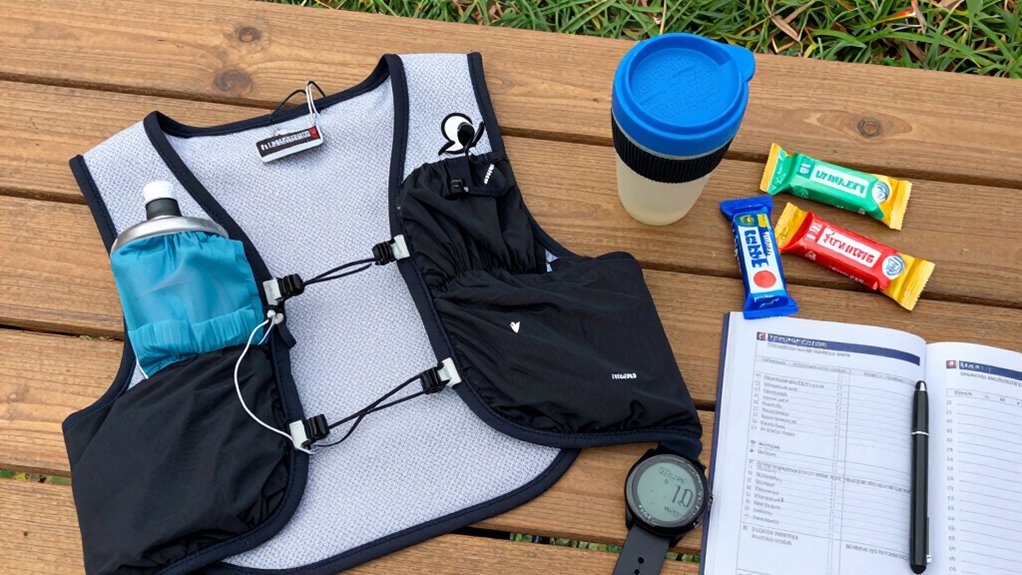
Good visibility and situational awareness get you out the door safely, but keeping performance strong over time means matching the right fluids and fuel to the run.
Choose hydration systems that fit your distance: a Salomon-style vest for long outings keeps fluids secure and prevents bounce, while a Nathan-style handheld suits short efforts and quick access.
Match fueling to intensity and duration; energy gels like Huma deliver concentrated carbs to avoid bonking. Use electrolyte mixes such as Ultima in hot conditions to maintain fluid balance and support function.
Match fueling to effort: take concentrated gels like Huma and use Ultima electrolyte mixes in heat to stay balanced.
Track sweat rate and electrolyte loss with sensors to personalize intake.
- You’ll feel more confident.
- You’ll race fewer energy lapses.
- You’ll recover smarter.
Recovery Running Tech: Rollers, Massage Guns, and Insoles
Recovery tools like foam rollers, massage guns, and supportive insoles can make a measurable difference in how quickly your legs bounce back and how comfortable you feel between sessions.
Use a textured foam roller, such as the Trigger Point GRID Foam Roller, to apply targeted pressure to tight muscles and improve flexibility. A compact massage gun like the Hyperice Hypervolt Go 2 provides percussion therapy that can reach deep tissues and enhance blood flow, reducing soreness.
For everyday recovery, slip into recovery shoes or OOFOS OOahh Slides to lessen foot pressure with added arch support and cushioning. Complement these with foot rollers or massage balls for plantar fasciitis relief, and keep anti-chafing balms like Body Glide on hand to prevent irritation during long recovery routines.
Make Sure Your Apps and Devices Work Together
When your watch, heart-rate strap, hydration sensor, and phone aren’t speaking the same language, you’ll miss important insights and complicate training decisions. So make device compatibility your first check.
You should verify that your GPS watch, heart-rate monitor, and smartphone apps can sync reliably. Prefer devices with Bluetooth connectivity for straightforward pairing and continuous data flow. Choose apps that aggregate metrics so you don’t jump between platforms.
Confirm hydration sensors and smart sunglasses integrate with your watch for live feedback. Test common workflows before committing.
- Feeling confident when data aligns reduces stress.
- Frustration drops when apps sync automatically.
- Motivation rises when devices tell a clear story.
Document supported integrations and prioritize ecosystems that match your training goals.
Try, Maintain, and Troubleshoot Gear for Reliable Use
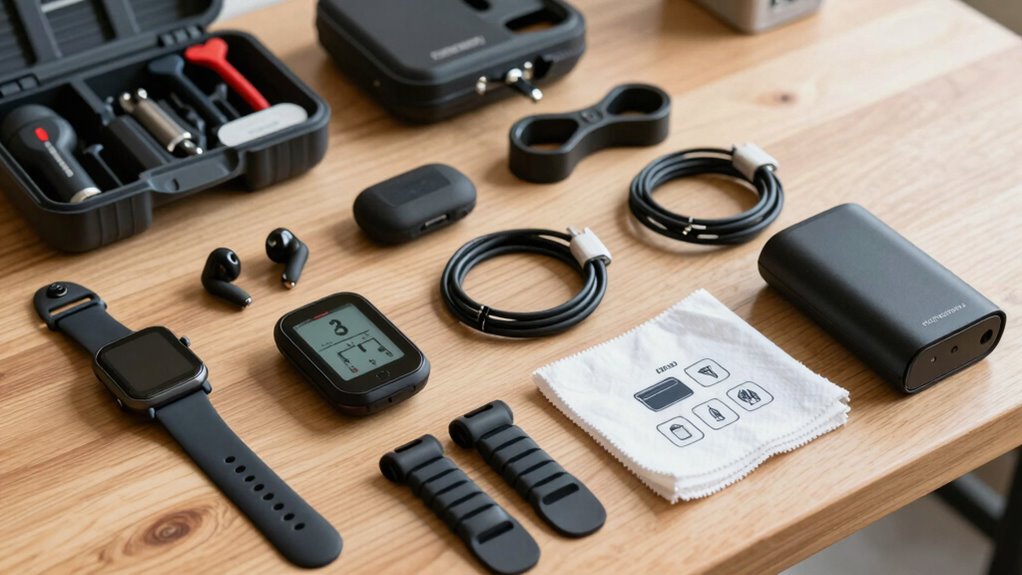
Try on each piece of tech and run with it before you commit: make sure your GPS watch sits comfortably without chafing, heart-rate straps stay in place through varied paces, and headphones or smart glasses don’t shift when you turn your head.
Always try on and test devices in conditions that match your typical runs so fit and function are proven.
Maintain gadgets by cleaning sweat-prone areas, drying contacts, and storing devices safely to extend life. Update firmware and apps regularly to get fixes and feature improvements.
If something fails, troubleshoot methodically: reboot devices, confirm Bluetooth is on and paired, check battery levels, and consult manufacturer guides for common issues.
Routine care and systematic troubleshooting keep your gear reliable.
Wrapping It Up
You’ll make smarter choices when you match gear to your goals, environment, and budget—think of your setup as a toolbox shaped to your mileage and terrain. Prioritize the performance metrics that matter to you, confirm device and app compatibility, and select hydration, fueling, and recovery tools that support your training plan. Test and maintain equipment regularly, troubleshoot issues promptly, and upgrade components strategically so your tech reliably helps you run safer, stronger, and more consistently.