


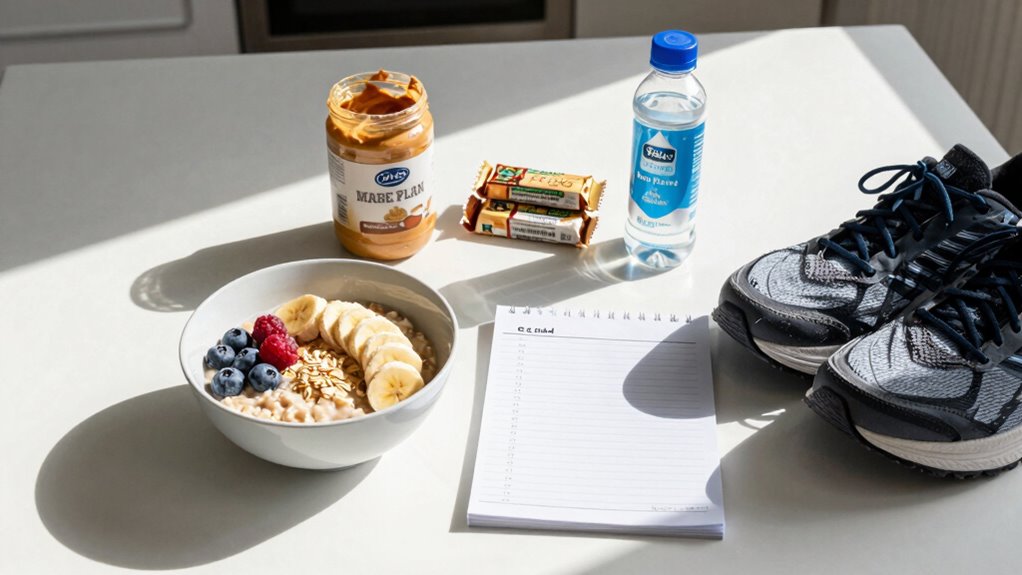
You’ll control training hunger by matching food and fluids to your mileage: eat a carb-rich pre-run, take 50–60 g carbs per hour on long runs, then refuel within 20–30 minutes with 50–100 g carbs plus 20–40 g protein to restore glycogen and curb cravings. Spread calories and 20–40 g protein every 3–4 hours, favor high-fiber snacks, and prioritize hydration so thirst isn’t mistaken for hunger — keep going for practical meal plans and troubleshooting tips.
Beat Postrun Hunger: What to Eat 0–60 Minutes After a Long Run


Because your muscles and glycogen stores are most receptive right after a long run, aim to eat within 20–30 minutes (and no later than two hours) to support recovery and curb postrun hunger.
You should choose post-run snacks that combine carbohydrates and protein to restore glycogen stores and rebuild muscle: target roughly 50–100 grams of carbohydrates and 20–40 grams of protein when possible.
If solid food feels unappealing, have a protein shake or smoothie with blended fruit and greens for rapid absorption.
Also prioritize hydration—water or an electrolyte beverage—to avoid mistaking fluid loss for hunger.
Proper timing and composition of what you eat after runs helps stabilize energy levels and supports long-term athletic performance, reducing overeating later in the day.
Many runners still fall short of daily needs, so plan recovery meals to meet your protein requirements and support repair.
Why Training Hunger Happens (Quick Explainer)
When you log high mileage or push intensely, your body burns far more energy than on rest days, so your appetite rises to refill those energy stores.
At the same time, prolonged exercise ramps up hunger hormones like ghrelin and alters satiety signals, making you feel hungrier even if you’ve eaten.
Understanding these linked drivers—elevated energy needs and hormonal appetite signals—helps you plan smarter fueling and recovery.
Glycogen depletion also contributes to increased hunger as your body signals the need to restore glycogen stores after prolonged or intense workouts.
Elevated Energy Needs
As your weekly mileage or workout intensity goes up, your body ramps up physiological signals to make sure you get enough fuel.
With elevated energy needs during long-distance running, you’ll notice increased calorie burn and a faster metabolism that raises appetite. Depleted glycogen stores trigger cravings as your body seeks to restore muscle and liver carbohydrate reserves after hard sessions.
Your system also increases hunger hormones to promote intake, so feelings of emptiness or urgency can follow workouts.
Pay attention to hydration levels, since mild dehydration often masquerades as hunger and can amplify requests for food.
Psychological associations between training and eating—habitual post-run snacks, for example—also strengthen appetite.
Understanding these drivers helps you plan refueling and manage intake effectively.
Electrolyte losses, particularly sodium and potassium, can also influence appetite and recovery, so monitor and replace electrolyte levels during extended training.
Hormonal Appetite Signals
While training ramps up your energy needs, hormonal shifts play a central role in signaling hunger and steering your appetite toward replenishment. You’ll see ghrelin rise with increased energy expenditure, intensifying cravings and driving post-exercise hunger after long runs deplete glycogen. Cortisol can rise with heavy or prolonged training; that hormonal imbalance alters appetite regulation and may increase overall hunger. Dehydration often mimics hunger, so check hydration before extra snacks. Your psychological association between running and eating also amplifies perceived need to refuel.
| Signal | Effect | Action |
|---|---|---|
| Ghrelin↑ | Stronger cravings | Plan balanced snacks |
| Cortisol↑ | Dysregulated appetite | Monitor load |
| Thirst | Misread as hunger | Hydrate first |
Use this framework to distinguish true physiological need from learned cues. Including adequate amounts of healthy fats in recovery meals can help stabilize appetite and support long-term energy needs.
Spread Calories and Protein Across Your Training Day
Plan your intake so calories and protein are spread evenly across the day, because steady fueling helps you avoid energy dips and supports recovery during high-mileage training.
You should distribute caloric intake across three meals and two to three targeted snacks to keep energy levels stable and prevent chronic low energy availability. Aim for 20–40 grams of protein every 3–4 hours to promote muscle synthesis and repair, and include carbohydrates with each eating occasion to replenish glycogen.
Choose snacks like fruit, nuts, or yogurt to bridge gaps and control hunger between sessions.
Pay attention to meal timing around workouts—eat within 20–30 minutes after a run to enhance nutrient absorption and reduce post-exercise appetite disruption.
Also make sure hydration is part of your plan since proper fluid and electrolyte balance supports performance and recovery, especially during long or intense training sessions.
Practical Meal Templates: High-, Medium-, and Low-Mileage Days
For high-mileage days, you’ll prioritize carbs to replenish glycogen and plan snacks like energy bars or smoothies delivering 50–100 g before long sessions and 50–60 g per hour as needed.
On mid-mileage days, aim for balanced meals with 20–40 g of protein every 3–4 hours and adjust carbohydrates to match workout intensity using whole foods like grains and lean proteins.
Low-mileage days let you emphasize nutrient-dense options and snacks higher in protein and healthy fats while maintaining enough carbs and consistent hydration to support recovery.
High-Mileage Day Plan
Because high-mileage days sharply raise your energy and macronutrient needs, you’ll want a structured eating rhythm that delivers carbs, protein, and healthy fats across 6–8 meals and snacks to sustain performance and recovery.
Plan a pre-run meal 1–3 hours before long runs with easily digestible, carbohydrate-rich foods like oatmeal or a banana to optimize energy needs and reduce mid-run hunger levels.
During runs, target 30–60 g carbs per hour via gels or chews.
Have a post-run meal within 30 minutes that pairs carbs and protein—a fruit-and-protein smoothie is ideal—to replenish glycogen and support repair.
Monitor overall nutrition and hydration so appetite reflects needs, not thirst.
Use this template to schedule consistent fuel and recovery.
- Pre-run: light carbs 1–3 hrs prior
- During: 30–60 g/hr carbs
- Immediate post-run recovery
- Balanced snacks every 2–3 hrs
- Hydration with meals
Mid-Mileage Meal Ideas
Mid-mileage days are where steady fueling pays off, so aim for meals that deliver roughly 50–70% of calories from carbohydrates, 15–25% from protein, and 20–30% from healthy fats to support energy, recovery, and satiety.
Choose balanced meal templates like quinoa bowls with mixed vegetables and grilled chicken, or whole-grain pasta with lean turkey and marinara; both supply carbohydrates for glycogen, protein for repair, and fats for sustained hunger control.
Plan snacks—Greek yogurt with fruit or whole-grain toast with nut butter—for between meals or within 30 minutes post-run to optimize nutrient uptake and muscle recovery.
Prioritize hydration alongside food: water or electrolyte drinks prevent dehydration that can mimic hunger and help maintain performance.
Monitor portions to match your mid-mileage workload.
Low-Mileage Snack Options
On low-mileage days you’ll want snacks that support recovery and satiety without adding unnecessary calories, so prioritize nutrient-dense choices that blend fiber, protein, and healthy fats.
You’ll choose options that preserve muscle, stabilize blood sugar, and keep overall intake appropriate for reduced training stress. Emphasize hydration to help distinguish thirst from hunger and minimize snacking when fluids suffice.
Here are practical examples to use between meals:
- Greek yogurt with berries and a sprinkle of seeds for probiotic support and protein-rich snacks.
- Whole-grain toast topped with avocado or nut butter to combine carbs and healthy fats.
- Raw vegetables with hummus as high-fiber snacks promoting fullness.
- Hard-boiled eggs or cottage cheese for targeted muscle recovery.
- A piece of fruit paired with a few nuts plus water or herbal tea for hydration and balance.
Fueling Long Runs: How Much Carb and When to Prevent Runger
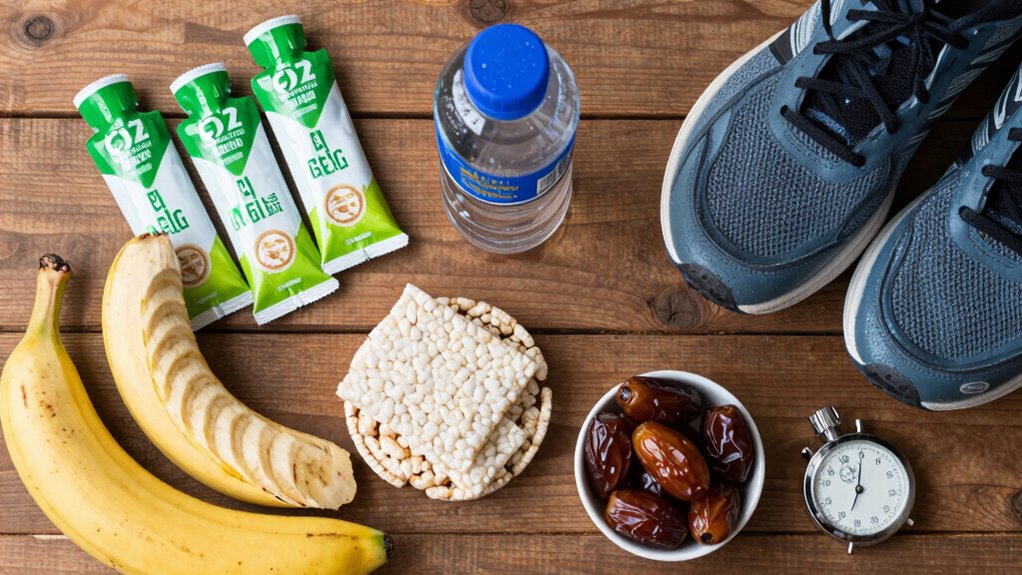
When you’re preparing for a long training run, plan your carbohydrates deliberately so you don’t hit the wall or feel ravished halfway through.
Eat a pre-run meal 1–3 hours before that provides 50–100 grams of carbohydrates—favor complex carbohydrates like whole grains, fruit, or starchy vegetables to steady energy intake and aid fueling your body.
During long runs, consume roughly 50–60 grams of carbohydrates per hour via gels, chews, or sports drinks to maintain pace and prevent glycogen depletion.
After finishing, prioritize postrun snacks that combine carbohydrates and protein within 20–30 minutes to speed recovery.
Pay attention to hydration alongside fueling, since fluids and electrolytes support performance and influence appetite.
These sports nutrition steps help you sustain long runs and reduce runger.
Hydration vs Hunger: How to Tell and What to Drink
Fueling strategies and snack timing can cut runger, but what you drink before, during, and after runs often makes the difference between true hunger and a thirst-driven craving. You’ll often mistake thirst for hunger; prioritize hydration to reduce unnecessary eating.
Hydration often masks as hunger—drink before, during, and after runs to curb unnecessary cravings.
Begin sessions with adequate fluid intake, sip electrolyte solutions during long or hot workouts, and rehydrate afterward to prevent dehydration-induced appetite. Include hydrating fruits and vegetables in meals to boost satiety and water balance.
Monitor bodyweight to estimate losses and aim for about 16–24 ounces per pound lost. Watch thirst cues closely and treat rapid, vague urges with a glass of water first.
- Drink water before short runs
- Use electrolytes in long efforts
- Rehydrate post-run promptly
- Eat hydrating produce regularly
- Track fluid intake daily
High-Fiber Snacks That Actually Keep You Full
Because fiber slows digestion and helps stabilize blood sugar, choosing high-fiber snacks is one of the most practical ways to stay satisfied between runs and workouts.
You’ll benefit from fruits, vegetables, whole grains, legumes, oats, and chia seeds that promote satiety while supporting stabilizing blood sugar and steady energy.
Pair apple slices with almond butter or carrots with hummus to combine fiber with healthy fats for longer fullness and recovery nutrients.
Aim for 25–30 grams daily to support digestive health and meet endurance athletes’ increased caloric needs without constant grazing.
These snack choices blunt rapid glucose swings, boost overall energy levels, and reduce impulsive eating, so you can maintain training intensity and recover more predictably.
Constantly Starving? How to Spot Low Energy (LEA/RED‑S) and Troubleshoot

If you’re feeling constantly hungry despite sticking to a training plan, you may be experiencing low energy availability (LEA), a state where the calories you take in don’t meet the demands of your exercise plus basic bodily functions.
LEA often causes persistent hunger, fatigue, mood shifts, frequent injuries, and can progress to RED-S with hormonal disruption. You should assess intake versus expenditure and track symptoms.
- Signs: persistent hunger, low energy, frequent injuries, mood changes, lost menstrual cycles
- Labs: check hormones, cortisol, and markers of protein status
- Nutrition: increase calories with balanced carbohydrate and protein distribution
- Timing: prioritize post-run carbohydrate and protein to support synthesis
- Recovery: scale back volume while restoring nutrition to reverse RED-S
Act promptly; LEA harms performance and health.
Wrapping It Up
You’ve learned practical ways to manage training hunger: timing postrun carbs and protein, spreading calories and protein through the day, choosing high‑fiber snacks, and watching hydration. Apply the meal templates and adjust carbs for long runs to lower urgent appetite, and monitor for signs of low energy availability. Want to train hard without constant gnawing? Use these strategies consistently, track how your body responds, and consult a sports dietitian if energy or recovery seems off.