


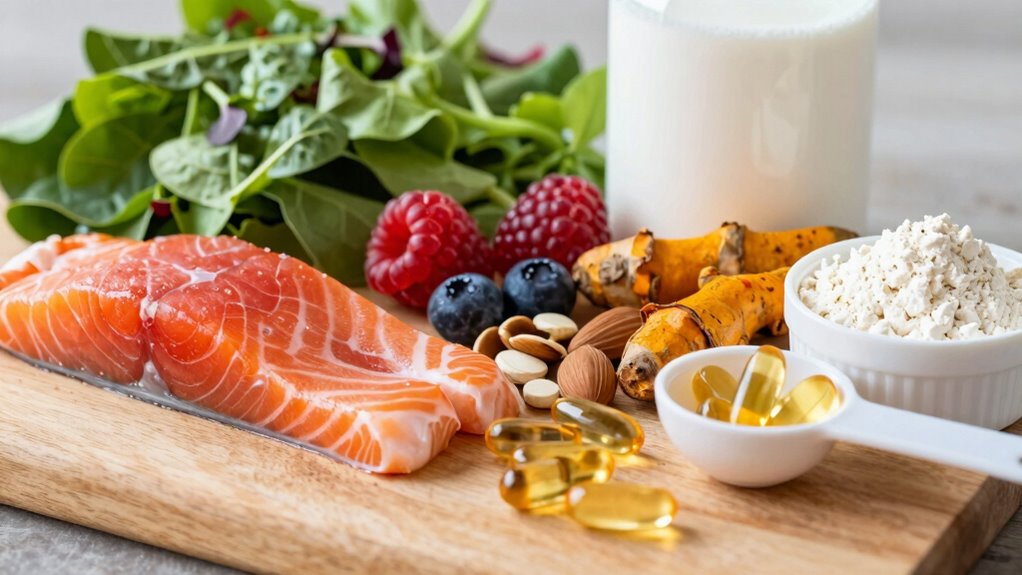
You can reduce injury risk and speed recovery by fueling tissues with adequate protein, anti-inflammatory fats, key vitamins, minerals, and consistent fluids. Aim for 1.5–2 g/kg protein daily split across meals, omega‑3s from fish or flax, vitamin C and zinc for collagen repair, and vitamin D plus calcium for bone health. Hydrate to support muscle function and manage inflammation with berries and leafy greens. Continue below to find practical meal plans, timing strategies, and supplement guidance.
Quick Answer: How Nutrition Prevents Injuries and Speeds Recovery

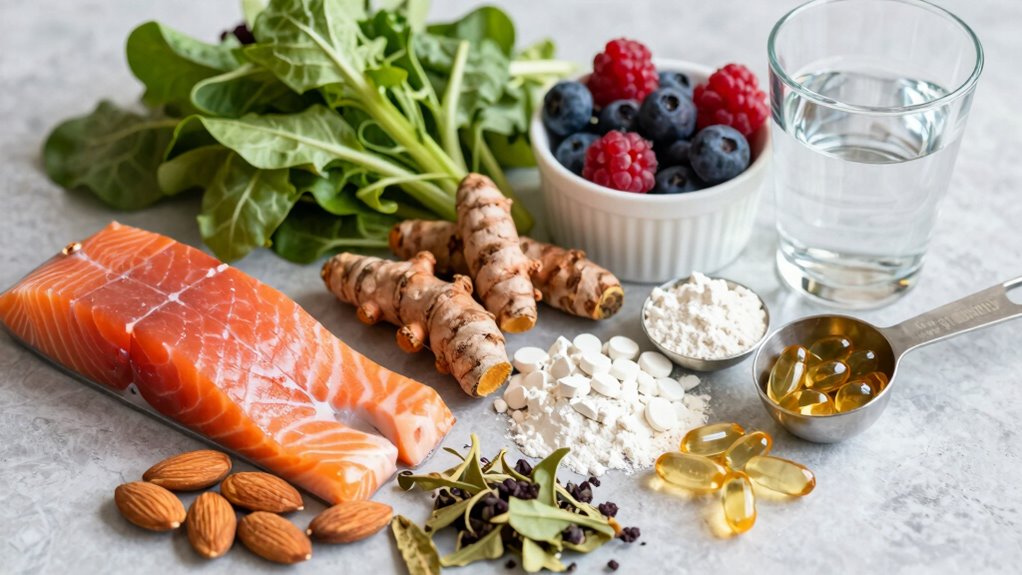
Because what you eat directly affects tissue repair and inflammation, good nutrition is one of the simplest ways to both lower your risk of injury and speed recovery when one occurs.
Good nutrition directly shapes tissue repair and inflammation, making it a simple way to prevent injuries and speed recovery
You should prioritize adequate protein to support muscle repair—aiming for roughly 1.5–2 g per kilogram of body weight—to minimize muscle loss during recovery.
Include sources of vitamin C and antioxidant-rich fruits to promote tissue healing and reduce swelling.
Choose foods with omega-3 fatty acids, like salmon and walnuts, for their anti-inflammatory properties and joint support.
Maintain proper hydration—men 96–144 oz, women 64–96 oz daily—to optimize muscle function and prevent dehydration-related setbacks.
Guarantee sufficient calcium, zinc, and vitamin D for bone health and effective injury recovery.
Carbohydrate timing is also important to replenish glycogen stores and support energy needs during recovery.
Quick-Start Injury Nutrition Plan You Can Use Today
Start by timing your protein so you get 20–40 grams every 3–4 hours, which supports continuous muscle rebuilding and aligns with the 1.5–2 g/kg daily target from sources like chicken, Greek yogurt, and legumes.
Pair those protein servings with anti-inflammatory meals rich in berries, leafy greens, and omega-3s such as salmon or walnuts to reduce inflammation and promote tissue repair.
Also prioritize hydration and consider vitamin D and zinc supplements if your diet falls short, since fluids and these micronutrients help bone health and recovery.
Runners often need individualized targets, typically ranging from 0.5 to 1.0 g per pound of body weight to optimize recovery and performance, so consult a registered dietitian for personalized guidance.
Protein Timing Strategy
While you’re recovering from an injury, timing your protein intake can make a measurable difference in how quickly and effectively your muscles rebuild. Aim to distribute high-quality protein across the day rather than concentrating it in one meal.
Use a protein timing strategy that targets 25–30 grams per meal and 10–15 grams per snack to support the healing process and preserve muscle mass. Aim for total intake of 1.5–2.0 g/kg post-injury, and include foods high in protein like chicken breast, legumes, and Greek yogurt.
Consume protein within 30 minutes after activity when possible. If appetite falls, consider supplements to guarantee adequate protein.
Simple meal ideas: Greek yogurt with fruit, chicken salad, or a legume-based soup with a protein shake.
Electrolyte balance is also important for recovery, so be sure to replenish key minerals like sodium and potassium during extended rehab sessions or prolonged activity to support fluid balance and muscle function (electrolyte balance).
Anti-Inflammatory Meals
If you want to reduce swelling and speed tissue repair, focus your meals on anti-inflammatory whole foods that combine omega-3s, antioxidants, and quality protein.
You’ll build a recovery plan that helps reduce inflammation after an injury by prioritizing omega-3 fatty acids from salmon, walnuts, and flaxseeds, plus antioxidant-rich fruits and vegetables like berries and leafy greens.
Aim for 1.5–2 g protein per kilogram of body weight using chicken, Greek yogurt, or legumes, and include whole grains and legumes for fiber and micronutrients.
Stay hydrated to support muscle function.
- Combine salmon, quinoa, spinach, and avocado for protein, healthy fats, and whole grains.
- Make a yogurt, berry, and flaxseed bowl.
- Prepare lentil salads with walnuts and mixed greens.
- Snack on fruit, nuts, and whole-grain crackers.
For longer or more intense recovery sessions, maintain glycogen stores by consuming carbohydrates at the recommended 3-8 g/kg per day based on training intensity.
Protein, Calories, and Meal Timing for Faster Recovery Nutrition
Because your body needs extra building blocks to repair damaged tissue, prioritizing protein, adequate calories, and strategic meal timing becomes central to faster recovery. You should target 1.5–2.0 g/kg protein, adjust calories to avoid deficits, and plan meals to support muscle synthesis. Spread 25–30 g protein per meal and 10–15 g per snack; include high-quality protein like Greek yogurt, lean meats, and legumes. Meal timing matters: consume protein soon after activity to reduce soreness and speed repair. Make dietary changes that reflect lower activity yet higher repair needs to prevent muscle loss. Monitor weight and strength to fine-tune intake, and consult a professional for individualized nutrition plans to support recovery from injuries. Strength training also supports recovery and reduces reinjury risk by improving muscle balance and resilience, particularly when combined with proper nutrition and targeted exercises.
| Meal | Protein target | Example |
|---|---|---|
| Breakfast | 25–30 g | Greek yogurt |
| Snack | 10–15 g | Protein snack |
| Dinner | 25–30 g | Lean meat |
Anti-Inflammatory Foods, Healthy Fats, and Hydration to Cut Downtime
Now that you’ve addressed protein, calories, and meal timing to support tissue repair, pay attention to the foods and fluids that control inflammation and keep muscles functioning.
Prioritize anti-inflammatory foods—berries, leafy greens, legumes, and fatty fish—to reduce swelling and speed recovery. Include healthy fats like olive oil, avocado, and omega-3 fatty acids from salmon or walnuts to support muscle repair and modulate inflammatory pathways.
Maintain hydration: drink according to needs (roughly 64–144 oz daily depending on sex and activity), sip 2–3 hours before exercise, and rehydrate within 30 minutes after activity to prevent dehydration-related injuries.
Emphasize whole grains and varied nutrients to sustain energy and promote injury prevention through consistent recovery support.
- Anti-inflammatory foods daily
- Omega-3-rich meals
- Hydration strategy
- Whole grains for recovery
Vitamins, Minerals & Supplements for Bone, Tissue, and Muscle Healing
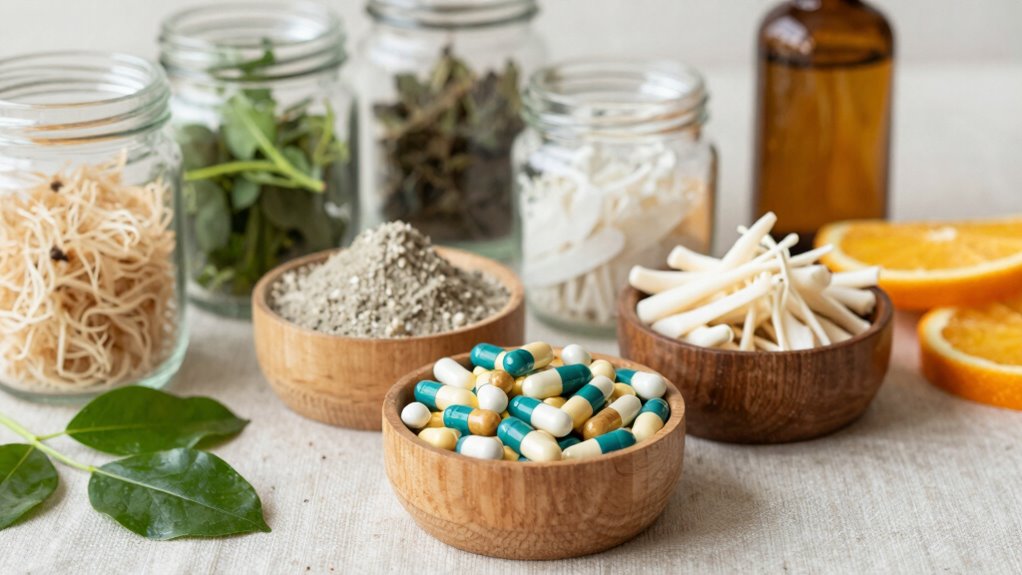
A targeted mix of vitamins, minerals, and selective supplements can substantially speed bone, tissue, and muscle healing by supporting the biochemical processes that rebuild collagen, mineralize bone, and control inflammation.
You should prioritize vitamin C for collagen synthesis and wound healing, aiming for about 500 mg daily to promote tissue growth and repair.
Guarantee adequate vitamin D—1000–5000 IU if sun exposure is limited—to support bone health and immune regulation.
Include calcium (around 1200 mg daily) from dairy or leafy greens to strengthen bone mineralization.
Zinc is vital across wound healing stages; men typically need 11 mg and women 8 mg per day, found in beef, oysters, and lentils.
Add omega-3 fatty acids from salmon or flaxseed to reduce inflammation.
Proper nutrition and targeted supplements support injury prevention and recovery.
Practical Meals & Snacks for Each Recovery Phase (Examples)
As you move through recovery, tailor your meals to each phase:
Phase 1 healing meals should prioritize anti-inflammatory, protein-rich dishes like grilled chicken with quinoa and steamed broccoli to support tissue repair.
For Phase 2 rehab snacks, choose nutrient-dense options such as Greek yogurt with berries or smoothies with spinach and banana to supply vitamins, antioxidants, and fluids that aid rehabilitation and immune support.
Throughout both phases, include protein-packed mini-meals—like salmon with sweet potato, whole grain toast with avocado and poached eggs, or small cottage cheese and fruit plates—to guarantee steady amino acids, omega-3s, and micronutrients that accelerate healing.
Phase 1: Healing Meals
When you’re in the initial recovery phase, prioritize meals that deliver ample protein, vitamin C, zinc, healthy fats, and fluids so your body can rebuild tissue, control inflammation, and maintain immune function.
You’ll aim for roughly 1.5–2 g/kg (about protein per pound of body weight conversions can guide portions) and choose foods that combine lean protein, whole grain carbohydrates, and hydration.
Focus on vitamin C–rich produce, zinc sources, omega-3 fats, and water-rich items to support muscle repair and reduce inflammation.
- Grilled salmon, quinoa (whole grain), and roasted bell peppers for omega-3s, vitamin C, and protein.
- Chicken stir-fry with broccoli, oranges, and a side of lentils for zinc and fiber.
- Greek yogurt parfait with walnuts and berries for protein and antioxidants.
- Beef stew with root vegetables and cucumber salad to boost zinc and hydration.
Phase 2: Rehab Snacks
Having moved from healing meals that rebuild tissue and control inflammation, you’ll now focus on snacks that support ongoing strength gains and functional recovery without overloading your appetite.
Choose options high in vitamin C and antioxidants—berries with Greek yogurt is a simple pairing that helps reduce inflammation and supplies essential amino acids for muscle rebuilding.
Aim for protein at each meal and snack: whole grain crackers with nut butter or a spinach-protein smoothie deliver steady amino acids plus carbs for energy.
Include healthy fats like walnuts or small servings of salmon to support tissue repair.
Prioritize hydration—cucumber or melon snacks and electrolyte drinks help.
These choices fit a balanced diet and practical routine to support your recovery through targeted nutrients.
Protein-Packed Mini-Meals
Because small, protein-focused meals help maintain a steady supply of amino acids for repair and strength gains, planning protein-packed mini-meals is a practical way to support each recovery phase.
You should aim for 25–30 grams of protein per mini-meal to fuel muscle rebuilding and limit catabolism. Time a protein shake post-activity to reduce soreness and enhance synthesis.
Choose nutritious options that combine protein with healthy fats and fiber to control inflammation and support gut health. Consider lean meat or fish servings to meet increased needs, targeting about 1.5–2 g/kg body weight during recovery.
- Greek yogurt with berries — quick, high protein, anti-inflammatory antioxidants.
- Protein smoothie — post-activity, fast amino acids.
- Hard-boiled eggs or nut butter on whole-grain toast.
- Hummus with whole-grain crackers or grilled chicken slices.
How Sports Medicine and Dietitians Build Your Personalized Plan
Although injury recovery and prevention draw on multiple disciplines, sports medicine professionals and registered dietitians work together to build a personalized plan that addresses your specific needs.
They evaluate your injury history, training load, and goals to craft recovery plans integrating exercise, rehabilitation, and nutrition strategies. Your registered dietitian calculates protein targets (commonly 1.5–2 g/kg) to support muscle rebuilding, recommends hydration strategies (about 3–3.75 quarts daily), and identifies supplements like creatine or vitamin D when appropriate.
Sports medicine experts coordinate timing of interventions to optimize tissue repair and the immune system’s role in healing. Through regular consultations, they adjust personalized nutritional interventions, refine meal timing, and monitor progress so you reduce re-injury risk and return to activity safely and efficiently.
Wrapping It Up
You can markedly reduce downtime by prioritizing targeted nutrition—protein, adequate calories, anti-inflammatory foods, hydration, and key micronutrients—while timing meals and using supplements judiciously. Studies show athletes who follow structured nutrition plans recover up to 25% faster, highlighting the impact of diet on healing. Work with sports medicine professionals and a dietitian to personalize intake for your injury phase, goals, and activity level so you regain strength safely and efficiently.