


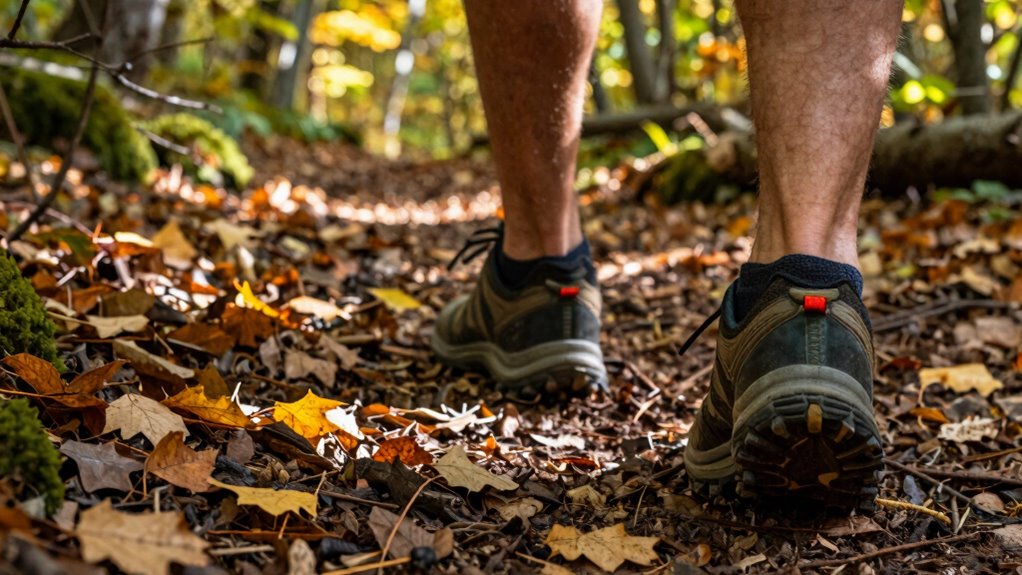
When beginning trail running, choose the right shoe for your terrain, like light trail shoes for maintained paths or technical ones for rocky surfaces. Use moisture-wicking socks to prevent blisters and lubricate hotspots. Maintain traction with quick, short strides, adjusting cadence for inclines. Gradual mileage increases prevent injuries, while cross-training aids recovery. Plan routes according to your skill level, and don’t forget essential gear. Observe trail etiquette to respect the environment—you’ll discover much more soon.
Choosing the Right Shoe for the Terrain


When it comes to trail running, selecting the right shoe for the terrain is essential to your performance and comfort. Different shoe types are designed for specific terrain compatibility, guaranteeing you’re well-equipped for your run.
Light trail shoes are ideal for well-maintained paths with shallow lugs and moderate cushioning, offering a lightweight feel. For more rugged terrain, choose shoes with average lugs and thicker uppers for enhanced stability.
Light trail shoes provide a lightweight feel and moderate cushioning for well-maintained paths.
Technical trail shoes, with deep lugs and reinforced features, handle steep inclines and rocky surfaces expertly. If your run shifts from road to trail, opt for shoes with low-profile lugs and responsive foam.
Matching the shoe type to the terrain guarantees top-notch grip, stability, and protection, enhancing your overall trail running experience.
Foot and Lower-Leg Protection Essentials
To guarantee a safe and enjoyable trail running experience, understanding foot and lower-leg protection essentials is crucial.
First, select appropriate footwear adjuncts like moisture-wicking socks to manage moisture and prevent blisters. Choose anatomical or toe-sock designs to reduce toe friction. Double-layer or liner socks can minimize hot spots by lowering friction at the skin-sock interface.
For skin and blister prevention, apply lubricants on hotspots and use prophylactic taping on common friction points to protect your skin during long runs. Regular toenail care is important to avoid injuries.
Consider lightweight toe caps or rock plates in shoes for debris management. Incorporate ankle-strengthening exercises for better support, and use compression sleeves if you have prior ankle instability. To further reduce injury risk, engaging in strength training focused on knee, hip, and calf muscles can provide necessary joint support and alignment.
Techniques for Maintaining Traction
To guarantee you maintain traction while trail running, focus on ideal foot placement by keeping your feet under your body and using quick, short strides.
Adjusting your cadence with a high turnover helps you handle steeper terrain efficiently, providing better control and stability.
When maneuvering turns, especially on switchbacks, shift your center of gravity smoothly to maintain balance and grip.
Optimal Foot Placement
Effectively mastering ideal foot placement in trail running is vital for maintaining traction and enhancing your stability on varied terrains.
Start by focusing on midfoot striking. This technique guarantees your foot lands under the midline of your hips, maximizing surface area for stability and promoting stride efficiency.
Uphill techniques require leaning forward to match the gradient, using short strides for better terrain adaptation and balance improvement.
For downhill landing, aim to position your body above your hips while landing lightly on the front half of your foot.
Foot awareness and regular foot scanning are important for adapting to changing terrain.
Maintain natural mechanics and proper body alignment to improve balance.
With practice, your confidence and skill in ideal foot placement will grow.
Adjusting Cadence
Mastering ideal foot placement is a key element of trail running, but equally important is how you adjust your cadence to maintain traction on diverse terrains. Start with cadence drills using metronome training on smooth surfaces to develop consistency. Gradually shift to technical trails as you build confidence. Metronome apps help you sync your steps to a target rhythm, enhancing your ability to maintain traction.
| Technique | Purpose | Terrain to Start |
|---|---|---|
| Metronome Apps | Maintain step frequency | Flat, smooth |
| Music Playlists | Make cadence practice engaging | Easy trails |
| Short Intervals | Reduce overload, improve motor learning | Treadmill/road |
| Progressive Targets | Safe cadence increase over time | Gradual shift |
This structured approach guarantees safe adaptation and improves your trail running efficiency.
Navigating Turns
Maneuvering turns on a trail requires a blend of skill and awareness to maintain traction and control. Begin by moderating your speed before entering a turn, especially on loose or uneven terrain, to prevent slipping.
Employ turning techniques like shortening your strides around corners for better control and adjusting your speed on sharp 90-degree turns. When considering cornering strategies, select your line carefully; on wide paths, move gradually towards the inside, while on narrow singletracks, head towards the outside to maintain momentum.
Lean your body slightly from the ankles, like a cyclist, to aid in natural cornering. For ideal foot placement, land on your midfoot with a slight forward lean.
Use your arms dynamically to maintain balance and adjust swiftly as terrain shifts.
Injury Prevention and Recovery Strategies
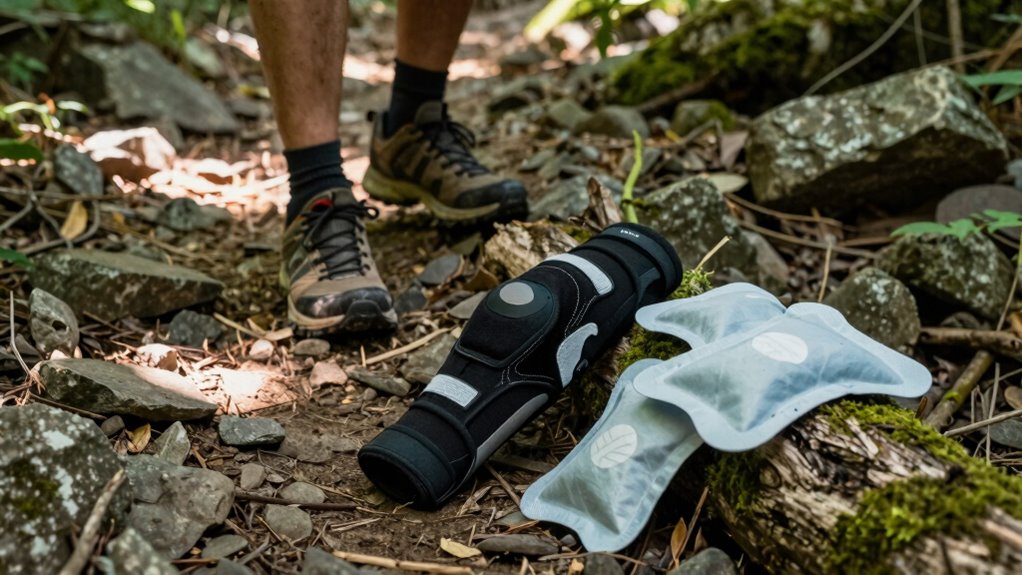
While trail running offers an exhilarating escape into nature, it’s important to prioritize injury prevention and recovery strategies to guarantee a safe and enjoyable experience. Understanding common injury types, such as lower limb and foot injuries, helps you adopt effective recovery methods. Incorporating progressive training plans with gradual mileage increases reduces your risk of overuse injuries. Make sure to warm up properly and avoid rapid training volume increases. Recovery is just as essential; include rest days and consider therapies like massage or stretching to aid muscle repair. To further prevent injuries, engage in cross-training with low-impact activities to maintain fitness and reduce joint strain. Here’s a quick look at some factors impacting injury and recovery:
| Injury Type | Risk Factors | Recovery Methods |
|---|---|---|
| Lower limb | Uneven terrain, overuse | Rest, stretching |
| Foot injuries | Poor footwear, long distances | Blister care, massage |
| Dermatologic issues | Sun, heat, rough terrain | Hydration, ointments |
Stay informed and attentive to your body’s signals for a healthier trail running journey.
Planning and Preparing for Safe Trail Runs
When planning a safe trail run, it’s vital to select a route that matches your current fitness and technical skills, guaranteeing you’re prepared for the terrain and conditions.
Check the weather forecast and pack essential gear like a map, headlamp, and extra layers to stay safe and comfortable.
Always communicate your plan with someone reliable, carry a means of communication, and follow trail etiquette to guarantee a smooth and enjoyable experience.
Route Selection Tips
Selecting the right trail route is essential for a safe and enjoyable running experience, especially as varying terrain and difficulty levels can greatly impact your run.
Start by considering route types, ranging from groomed paths to technical trails. Groomed routes, like packed dirt or gravel, are ideal for beginners, while technical trails with roots and rocks suit more experienced runners.
Evaluate elevation factors carefully; steep climbs increase physical demands and require strong navigation skills. Singletrack trails help develop technical abilities, whereas double-track paths build confidence and pace consistency.
Assess your route’s surface mix and plan your footwear accordingly. Verify exit points are accessible, and check for cell coverage.
Always share your route plan with someone and consider using live-tracking for safety.
Weather and Gear Essentials
As you plan your trail run, it’s important to not only choose the right route but also to contemplate the weather and gear essentials that can greatly influence your experience.
Start by using weather apps to get real-time forecasts and alerts, ensuring you’re prepared for any conditions. For hot weather, choose breathable clothing, sunglasses, and a hydration vest for comfort and protection.
Cold weather calls for thermal layers, a waterproof jacket, and warm accessories like gloves and hats. In rain, a lightweight rain jacket and trail shoes with good grip are essential.
Always consider gear selection for sun and wind protection; photochromic sunglasses and a windproof top layer can make a significant difference.
Remember that effective hydration strategies are crucial for maintaining optimal performance and health during your trail runs.
Prepare wisely to enhance your trail running adventure.
Safety and Communication Plans
Though trail running offers an exhilarating escape into nature, it’s crucial to prioritize safety and establish a thorough communication plan before hitting the trails.
Start by creating a detailed route description, including trail names, junctions, and mile markers, and share this with your emergency contacts. This helps reduce navigation errors and provides clear information in emergencies.
Establish group dynamics by holding a pre-run briefing, discussing pace, regroup points, and exit procedures. Assign leaders and sweepers to manage group cohesion and make certain no one is left behind.
Equip yourself with redundant communication methods, like a smartphone with offline maps and a satellite messenger. Test devices and check in regularly to keep your emergency contacts informed, making sure everyone’s safety on the trail.
Additionally, consider using personal safety devices like alarms and GPS trackers to enhance security during your trail runs.
Trail Etiquette and Environmental Considerations
Steering through trails with respect and responsibility is essential for preserving both the environment and the enjoyment of all users.
Understanding trail etiquette and minimizing environmental impact enhances your trail running experience. Here’s how you can contribute:
Understanding trail etiquette and minimizing environmental impact enriches your trail running adventures.
- Right-of-Way Rules: Equestrians have priority, followed by hikers/runners, then mountain bikers. Uphill runners typically get right-of-way unless it’s unsafe.
- Communication: Announce your approach with clear phrases like “On your left.” Use non-verbal cues when necessary and avoid passing in blind spots.
- Leave No Trace: Stay on designated paths, pack out all trash, and avoid trails in wet conditions to prevent damage.
- Wildlife Awareness: Observe wildlife from a distance, secure food properly, and follow trail regulations regarding domestic animals.
Running in nature not only allows for a physical workout but also enhances well-being and mental resilience by engaging with natural surroundings and reducing feelings of isolation.
Building Confidence and Endurance on Trails
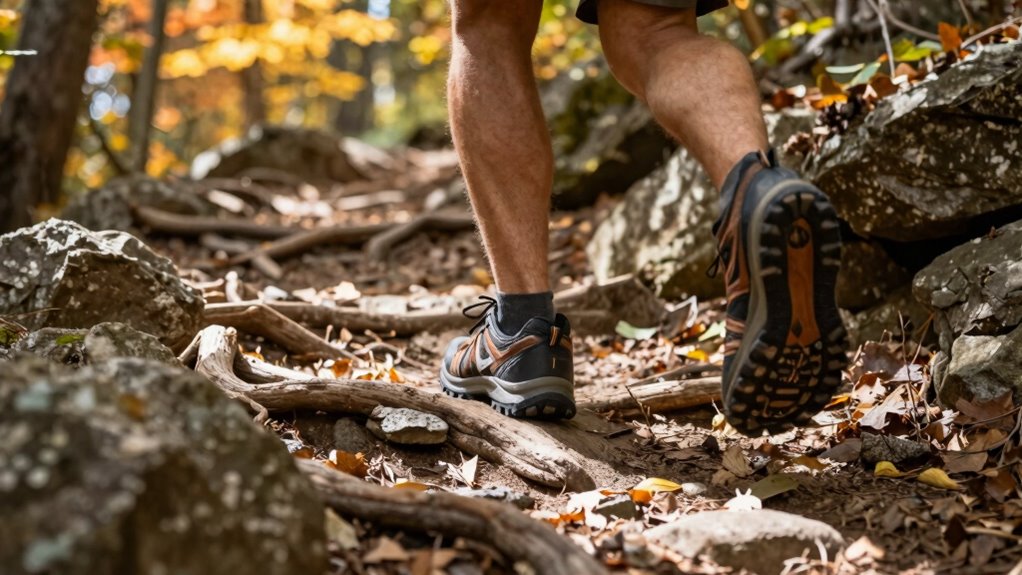
Trail running not only demands respect for the environment but also requires building personal confidence and endurance. Begin with confidence building by tackling easy trails. Gradually progress to more challenging terrains, focusing on endurance training. Practice balance exercises like single-leg stands, and strengthen your ankles with calf raises. Familiarize yourself with trails by visiting them during daylight.
| Physical Prep | Mental Prep | Skill Building |
|---|---|---|
| Balance exercises | Visit trails | Easy to challenging |
| Calf raises | Watch videos | Controlled speed |
| Downhill skills | “Look ahead” | Terrain training |
Use the “look ahead” technique during runs to anticipate obstacles, and incorporate a core routine to stabilize your torso. Remember, smiling every mile boosts mood, enhancing your trail experience. Embrace walking on difficult sections as a strategic choice.
Wrapping It Up
As you lace up and hit the trails, remember that the right gear and preparation can make all the difference. Coincidentally, the principles of traction, protection, and safety align perfectly with fostering confidence and endurance. By understanding your terrain, protecting your feet and legs, and mastering traction, you’re not just preventing injuries—you’re enhancing your trail experience. Respect the environment and fellow runners, and you’ll find that trail running isn’t just a sport; it’s an adventure waiting to unfold.