


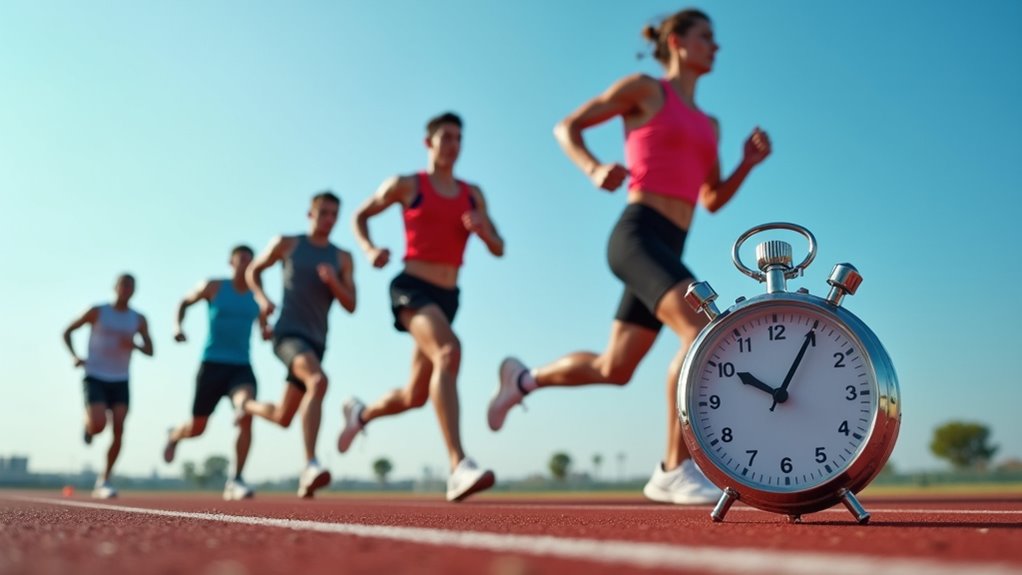
Improving your VO2 max can happen in just 6 to 10 weeks, especially if you’re starting from a lower fitness level or you’re inactive. Genetics, age, and current fitness levels play a crucial role in your improvement rate. You’ll need consistent training, combining both slow runs and high-intensity sessions, to make noticeable progress. Regardless of age, regular training boosts aerobic capacity and endurance. Stay committed, and you’ll discover additional insights and strategies along the way.
The Importance of VO2 Max for Runners


For runners, VO2 max is a crucial component of fitness that can’t be overlooked. It measures how effectively your body uses oxygen during intense exercise, making it an essential indicator of your aerobic capacity and endurance.
A higher VO2 max means you can sustain longer and more intense runs, enhancing your overall performance. This metric is more telling of your fitness than BMI, offering insights into your cardiovascular health and endurance potential.
Regular training can improve your VO2 max, allowing you to push your limits and achieve new personal bests. Understanding and tracking your VO2 max is vital for optimizing your running performance.
Factors Influencing VO2 Max Improvement
Enhancing your VO2 max isn’t just about logging miles and pushing harder; it’s influenced by a variety of factors that merit attention.
Genetics plays a significant role, as some individuals naturally possess a higher VO2 max potential. Age can also impact improvement, with younger individuals typically seeing better gains.
Your current fitness level matters too; those starting from a lower baseline often experience quicker improvements.
Nutrition and hydration are crucial, fueling your body efficiently for better oxygen utilization.
Lastly, consistency in training is vital. Regularly challenging your cardiovascular system with a balanced mix of aerobic and anaerobic exercises can lead to significant improvements. Additionally, incorporating strength training into your routine can enhance your overall performance and running efficiency.
Typical Time Frame for VO2 Max Changes

When you’re aiming to improve your VO2 max, understanding the typical time frame for noticeable changes can guide your training strategy effectively.
Generally, if you’re just starting out or have been inactive, you might see improvements in as little as 6 to 10 weeks. For sedentary adults, studies show significant gains after 8 weeks.
However, if you’re already a seasoned runner, expect smaller changes over a longer period, around three months.
Conversely, remember that VO2 max can decrease relatively quickly without consistent training. After just two weeks of inactivity, you might experience a 5% drop, emphasizing the need for consistency. Additionally, incorporating strength training into your routine can support joint alignment and enhance your overall performance and VO2 max improvements.
The Role of Age and Fitness Level
While it’s true that age and fitness level play significant roles in influencing VO2 max, they also present unique challenges and opportunities for improvement.
As you age, your VO2 max naturally declines, but that doesn’t mean you can’t improve it. Embracing regular training can counteract some age-related declines.
Your current fitness level determines how quickly you can make gains. If you’re starting with a lower fitness base, you might notice more rapid improvements initially. However, if you’re already fit, expect more gradual progress.
The key is consistency and understanding that both age and starting fitness level guide your VO2 max journey.
Effective Training Strategies to Boost VO2 Max
To effectively boost your VO2 max, understanding the right training strategies is crucial.
Start by incorporating a balanced mix of slow, zone 2 runs and high-intensity workouts. Aim for a training ratio of 70% slow runs and 30% high-intensity workouts. This optimal mix enhances capillary development and mitochondrial efficiency, vital for oxygen delivery and energy production.
Avoid the common pitfall of running too fast too often, which can hinder progress. Instead, focus on gradually increasing your training volume and intensity.
Consistency is key; regular training sessions with this balanced approach can lead to significant VO2 max improvements over time.
Monitoring Progress and Adjusting Training
As you strive to improve your VO2 max, it’s crucial to monitor your progress and adjust your training plan accordingly. Regularly track your VO2 max to understand how your body responds to your current regimen.
Use fitness apps or a heart rate monitor to gather data, ensuring you’re training within the right intensity zones. If your improvements plateau, reassess your routine: tweak workout intensity, duration, or frequency.
Listen to your body; rest is equally vital for recovery and progress. Stay flexible and adapt your plan as needed, staying attentive to both performance gains and any signs of overtraining or fatigue.
Leveraging Resources and Community Support
Monitoring your progress and adjusting your training plan is key to improving your VO2 max.
But don’t underestimate the power of leveraging resources and community support. Join running groups or subscribe to newsletters that offer training tips and motivation.
Utilize tools like VO2 max testing available at gyms to track your improvements. Online forums can connect you with like-minded runners, sharing experiences and advice.
Local running clubs often provide structured training sessions, enhancing your routine.
Conclusion
Improving your VO2 max is a rewarding journey that requires consistency and dedication. By understanding the factors that influence your progress, you can set realistic goals and tailor your training effectively. Remember, noticeable changes can happen within weeks, especially for beginners, while seasoned athletes might experience slower progress. Consistent training, monitoring your progress, and leveraging community support are key to success. Stay committed, adjust your strategies as needed, and you’ll see improvements in your aerobic capacity and endurance.