


Competition in youth running helps you build fitness, sharpen technique, and develop mental resilience while learning teamwork and sportsmanship. When it’s age‑appropriate—short, playful races for 6–8, structured goals for 9–12, and PB‑focused strategy for 13–16—it reinforces healthy habits and reduces injury risk with targeted strength work. Set clear personal goals, track progress, and prioritize effort over results so setbacks become learning moments. Follow practical coaching and parental guidance to keep competition positive, and you’ll find actionable strategies ahead.
Why Competition in Youth Running Matters (Physical, Mental, and Social)

Although competition can feel intense, it plays a constructive role in youth running by shaping physical, mental, and social development in measurable ways.
You’ll see Competition in Youth Sports improve physical fitness through regular training and racing, boosting cardiovascular health, endurance, and muscular strength.
As you set and pursue goals, competitive environments foster mental resilience and personal growth, teaching you to cope with pressure and overcome setbacks—life lessons that transfer beyond the track.
Skill development occurs through structured practice and feedback, refining technique and tactical awareness.
Social skills emerge as teammates and rivals create opportunities for sportsmanship, camaraderie, and teamwork.
Recognition for effort builds confidence, and consistent involvement encourages lifelong habits of activity and well-being that support long-term health.
Running also contributes to mental wellness by promoting mood enhancement and reducing stress through regular physical activity.
Age-Appropriate Competition: What Healthy Racing Looks Like at 6–8, 9–12, and 13–16
When children move through development stages, the shape of healthy competition should change with them, matching physical ability, attention span, and emotional maturity.
At 6–8, age-appropriate competition centers on fun and participation: short, playful races that teach basic skills and make running enjoyable so you nurture a lasting interest rather than fixating on winning.
From 9–12, you introduce structured races and modest goals that promote teamwork, sportsmanship, and personal growth, helping kids track improvement and learn cooperative behaviors.
At 9–12, introduce structured races and modest goals to build teamwork, sportsmanship, and personal growth.
Between 13–16, athletes handle more competitive settings, focusing on personal bests, strategy, and disciplined practice while coaches emphasize resilience and constructive responses to setbacks.
Across all ages, maintain a supportive atmosphere that values effort, frames losses as learning, and defines healthy racing by development, not just results.
Include age-appropriate strength training and gradual progression in training to reduce injury risk and support long-term development, highlighting planned progression as a key prevention strategy.
Set Age-Appropriate Running Goals and Track Progress Beyond Winning
Goal-setting gives young runners a clear way to measure progress that isn’t tied only to podium finishes, and you should shape those goals to match each child’s age and development.
Use age-appropriate goals that emphasize personal improvement and a growth mindset. Track progress with measurable milestones—distance, time, technique—and record them regularly so kids see tangible gains.
Keep priorities on fun and participation to reduce pressure and encourage lifelong enjoyment.
- Set simple, achievable benchmarks (e.g., consistent practice, distance increases).
- Use coach feedback to refine goals focused on effort and skill, not just placement.
- Celebrate milestones like first race completion or personal bests to reinforce perseverance.
This approach promotes confidence, sustained interest, and balanced development.
Mindful running can be integrated into youth training to enhance focus and reduce anxiety, supporting mental clarity and resilience.
Plan Practices & Races That Balance Fun, Skill Growth, and Competition
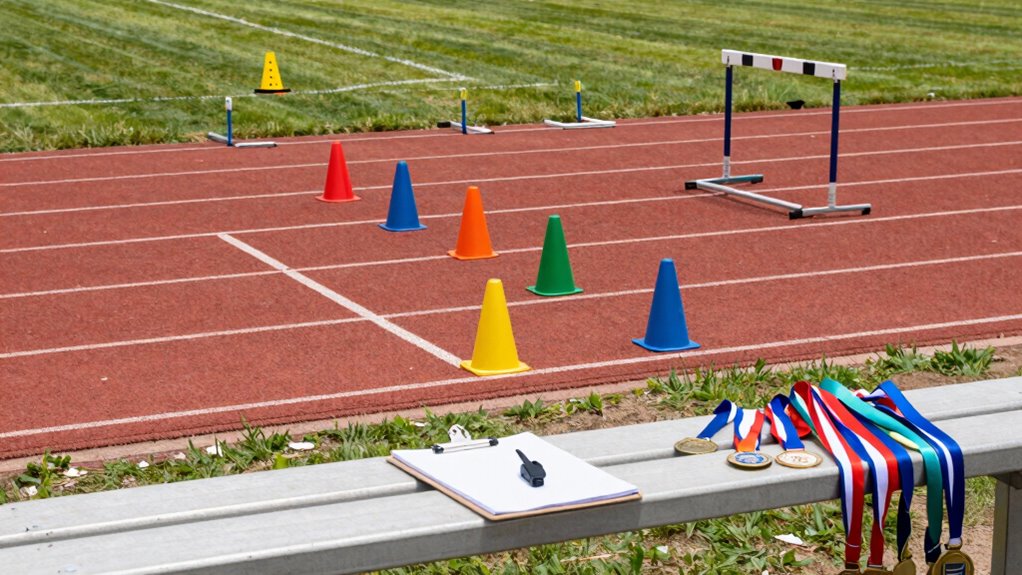
To plan practices and races that balance fun, skill growth, and competition, design each session with clear objectives that mix playful, engaging activities and targeted drills so athletes stay motivated while improving technique.
You should structure practices with varied drills and games that promote skill development and teamwork, keeping fun in sports central. Use age-appropriate race distances and formats so young athletes experience competition without undue stress.
Include friendly challenges like time trials and relays to boost motivation and camaraderie while focusing on personal growth over placing.
Include fun time trials and relays that build camaraderie and celebrate personal progress over podiums.
Regularly ask for athlete feedback to adjust sessions, maintaining a supportive environment that fosters improvement, enjoyment, and steady progression in both individual abilities and team dynamics.
Incorporate themed running games and obstacle courses to enhance imagination and team coordination during training.
Coach & Parent Actions to Keep Competition Positive and Inclusive
You should establish clear behavior standards that outline respect, effort, and fair play so every athlete knows what’s expected and why it matters.
Create inclusive opportunities by offering varied events, rotating roles, and tailored goals so kids of different abilities can participate meaningfully and feel valued.
Regularly communicate these standards and opportunities with parents and athletes to reinforce consistency and support positive competition.
Set Clear Behavior Standards
When coaches and parents set clear, age-appropriate behavior standards before the season begins, they create a predictable environment where respect and sportsmanship are expected and reinforced.
You should clearly outline expectations so every athlete knows acceptable conduct, consequences, and rewards. Use consistent language to emphasize teamwork and personal growth over results, and model respectful interactions with officials and competitors.
Implement a “Circle of Affirmation” to publicly reinforce positive choices and build a supportive atmosphere. Hold regular conversations about resilience and cooperation so kids internalize those values.
- Define specific, age-appropriate rules and consequences.
- Communicate expectations to families and review them regularly.
- Recognize and reward behaviors that reflect sportsmanship and teamwork.
Consistent running routines can also help young athletes manage stress and build emotional resilience that supports positive behavior.
Foster Inclusive Opportunities
Although competition can drive performance, fostering inclusive opportunities means designing programs where every child can participate and feel valued.
You should foster a love of running by creating an environment in youth athletics that welcomes varied abilities and reduces pressure on young athletes. Offer a wide range of distances and formats so kids find challenges that match their development, and run mixed-ability sessions so they learn the importance of teamwork and mutual support.
Communicate expectations clearly and use positive reinforcement to emphasize personal improvement over winning. Celebrate individual and team milestones to show that effort matters, and rotate roles like pace leader or cheer captain so everyone contributes.
These steps help you build inclusive, competitive experiences that educate, motivate, and sustain young runners.
Help Kids Bounce Back: Teaching Resilience After Losses, Injuries, and Plateaus
Because setbacks are an inevitable part of athletic growth, teaching young runners how to respond to losses, injuries, and performance plateaus should be an intentional part of coaching and parenting.
Because setbacks are inevitable, teach young runners to respond with resilience, learning, and steady emotional regulation.
You’ll help them build resilience by framing setbacks as learning moments that support a growth mindset, encouraging perseverance rather than avoidance. Teach emotional regulation so they can manage disappointment and return to training more effectively.
Use concrete strategies:
- Debrief losses and plateaus with specific questions to identify controllable improvements.
- Create gradual return plans after injuries that prioritize recovery, confidence, and measurable progress.
- Share stories of athletes who overcame adversity to normalize struggle and inspire persistence.
Regular reflection and consistent encouragement make coping skills habitual, improving long-term performance and life skills.
Wrapping It Up
You’ll see how thoughtful competition builds fitness, confidence, and teamwork when you prioritize age-appropriate goals and recovery. Remember: children who regularly participate in sports are 15% more likely to maintain active lifestyles into adulthood, so your guidance matters long-term. Set attainable targets, mix skill-focused practices with fun races, and model resilience after losses or injuries. By keeping competition safe, inclusive, and developmentally appropriate, you help kids grow athletically, mentally, and socially.