

To prevent running injuries as you age, focus on strategic recovery and targeted strength training. Incorporate active recovery sessions, foam rolling, and low-impact cross-training activities like swimming or cycling. Protect your joints through essential exercises like clamshells, bridges, and squats 2-3 times weekly. Maintain proper form with dynamic warm-ups and appropriate shoe selection. This foundational approach to injury prevention will help you discover the most effective ways to sustain your running journey.
Rest and Recovery Strategies for Mature Runners
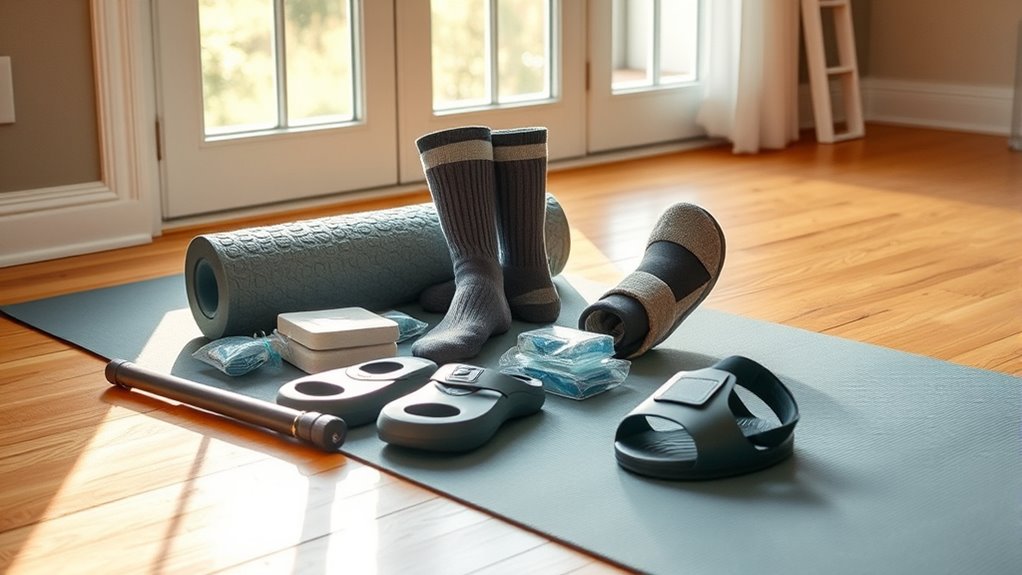
While many runners focus primarily on training intensity, proper rest and recovery become increasingly vital as you age. Your body needs more time to repair and rebuild muscle tissue between workouts, making strategic recovery critical for injury prevention. Incorporate active recovery sessions into your routine by engaging in gentle runs after challenging workouts. This practice helps maintain blood flow and reduces muscle stiffness. You’ll also benefit from cross-training with low-impact activities and regular foam rolling sessions to release tension in tight muscles. Remember that quality recovery isn’t just about rest—it’s about smart, purposeful activities that help your body bounce back effectively. Additionally, regular strength training can support joint alignment and reduce injury risk as you age.
Essential Strength Training for Joint Protection
A well-rounded running program must include targeted strength training to safeguard your joints from the repetitive impact of running.
To maintain joint health and prevent injuries, focus on exercises that strengthen key muscle groups while respecting your body’s limits.
- Perform clamshells, bridges, and side-lying leg lifts to build hip stability and protect your knees during weight-bearing activities.
- Incorporate squats and single-leg exercises to enhance lower body strength and improve balance.
- Schedule 2-3 weekly strength training sessions, separating them from your runs to prevent overexertion.
Remember to progress gradually, starting with bodyweight exercises before adding resistance to guarantee ideal joint protection. Additionally, consistent strength training improves overall performance and reduces the risk of injuries, making it essential for all runners.
Smart Cross-Training to Maintain Fitness
Smart cross-training serves as an essential cornerstone for maintaining peak running fitness without overtaxing your joints and muscles.
When you’re recovering from high-volume weeks or managing minor discomfort, you’ll find significant cross-training benefits through low-impact alternatives. Swimming and cycling help preserve your cardiovascular fitness while giving your joints a break, while rowing strengthens your entire body for better running form.
Mix up your activity variety with paddleboarding or elliptical sessions to improve balance and core stability. You’ll maintain your endurance while reducing injury risk, ensuring you can keep running strong for years to come. Incorporating a mix of aerobic, strength, and flexibility workouts can further enhance your performance and health.
Mobility Work and Dynamic Movement Patterns
Proper mobility work and dynamic movement patterns serve as essential foundations for injury prevention in older runners.
You’ll want to focus on dynamic flexibility exercises that prepare your body for the specific demands of running while improving stride mechanics. Replace static stretches with movement-based activities that target running-specific muscle groups.
- Incorporate leg swings, high knees, and arm circles before runs to activate key muscle groups
- Practice lunges and squats with proper form to enhance hip mobility and knee alignment
- Maintain a cadence of 170-180 steps per minute to reduce overstriding and minimize injury risk. Additionally, engaging in regular strength training exercises can significantly enhance muscle support and joint stability, further aiding in injury prevention.
Equipment Selection and Biomechanical Adjustments
Selecting the right equipment and making key biomechanical adjustments can greatly reduce injury risks for older runners.
Start with proper shoe fitting, ensuring a snug heel and adequate toe room. You’ll want to focus on models with moderate cushioning and stability features like DYNAMIC DUOMAX™ technology. Additionally, consider investing in shoes with effective cushioning to absorb impact and reduce joint strain.
Proper-fitting running shoes with the right stability features create a solid foundation for injury prevention in older athletes.
Consider using tools like the Stick and Theragun Mini for muscle recovery.
Professional gait analysis can help optimize your running form. Aim for 180 steps per minute to reduce impact forces, and maintain your natural foot strike pattern.
Remember to increase your weekly mileage gradually, incorporating walk breaks when needed to prevent overuse injuries.
Conclusion
Like a well-maintained garden that continues to bloom through the seasons, your running journey doesn’t need to fade with age. You’ll find that implementing these preventive strategies – from balanced rest periods to targeted strength work – creates a sustainable foundation for your running practice. Just as a wise gardener adapts their techniques to changing conditions, you’re now equipped to adjust your training approach, protecting your body while preserving your passion for the sport.
I’m 58 and I’ve been doing a short easy run the day after my long run because I hate feeling like I’m losing fitness, but my legs stay heavy and my calves are always tight. Should I cut that run and use the day for walking, cycling, or just foam rolling instead?
Cutting that next-day run is usually the smarter move if your legs are staying heavy and your calves are tight. An easy run still adds impact, while walking, cycling, or another low-impact recovery session can keep blood moving without piling on more stress. If you want to keep some movement, make it truly light and pair it with foam rolling and a dynamic warm-up before your next quality run. The main goal is to finish recovery days feeling fresher, not more fatigued.