


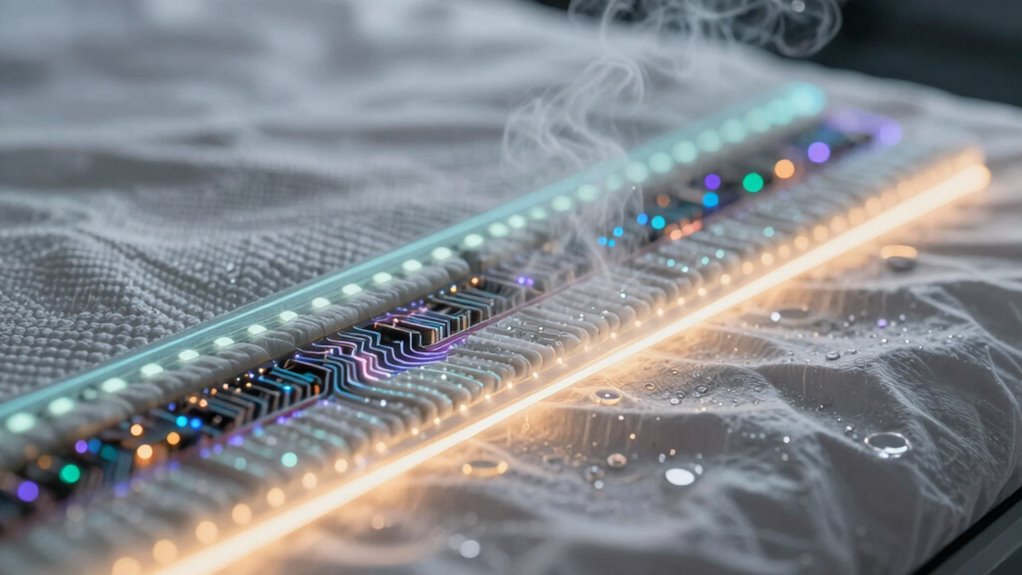
Smart fabrics and wearables let you manage body temperature by using phase-change materials, conductive fibers, and embedded sensors to absorb, store, or release heat as conditions change. You can choose low-maintenance passive textiles for everyday comfort or active systems with PCMs and controls for sports, medical, or sleep applications. Evaluate performance through thermal and wash tests, check sustainability and care instructions, and confirm safety certifications. Keep exploring to learn specific product features, limits, and maintenance needs.
What Temperature-Regulating Smart Fabrics Do

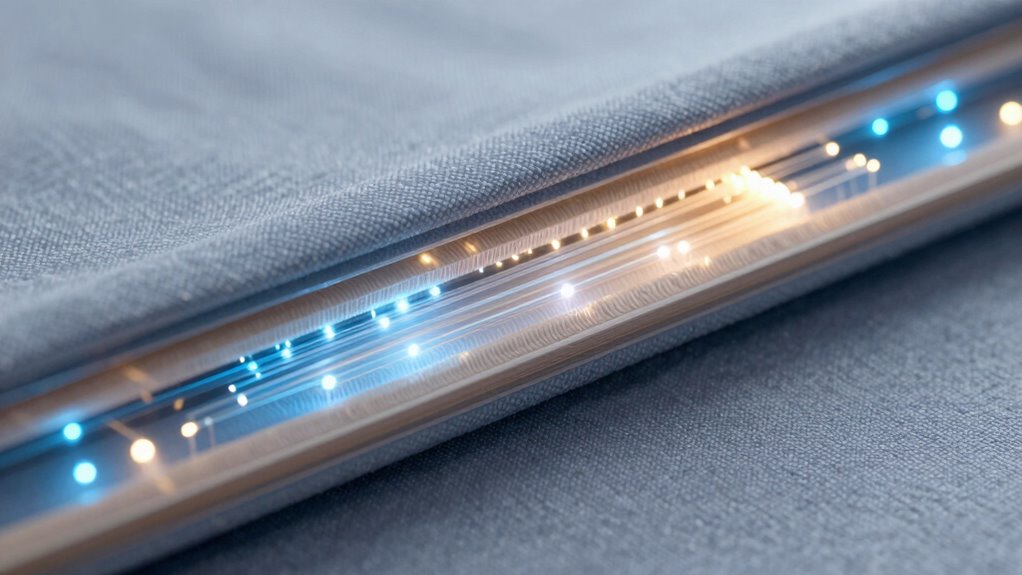
When you wear temperature-regulating smart fabrics, they actively manage heat by using embedded phase-change materials (PCMs) that absorb excess warmth and release stored heat as temperatures drop.
You’ll notice how smart fabrics respond dynamically: the microencapsulated wax derived from sustainable rapeseed oil melts to absorb surplus body heat when you get warm and solidifies to retain warmth as you cool down.
Microencapsulated rapeseed-wax melts to absorb excess heat and solidifies to lock in warmth as you cool.
This Temperature Regulation works without external energy sources, maintaining a stable comfort range and reducing sweat production—Outlast® technology can cut sweating by up to 48%, improving hygiene and comfort in clothing and bedding.
You can rely on these textiles across sportswear, medical gear, and bedding to moderate thermal swings and support consistent comfort using passive and active mechanisms tied to your body heat.
Passive vs. Active: Which Temperature Tech Should You Choose?
Although both passive and active smart textiles aim to improve comfort, they do so in fundamentally different ways, so choosing the right option depends on your needs and use case.
If you want reliable, low-maintenance performance for everyday outdoor wear, passive smart textiles are a solid choice: they offer UV protection, moisture-wicking, and breathability without electronics or user input.
If you need dynamic temperature regulation for sports, medical use, or variable conditions, active smart textiles deliver by responding to environmental changes and user needs. Many active systems incorporate phase-change materials to absorb and release heat, cutting sweat and thermal spikes.
Consider durability, maintenance, cost, and the degree of real-time control you require when selecting between passive comfort and active, adaptive solutions.
How PCMs, Conductive Fibers, and Sensors Work (Practical Mechanisms)
After choosing between passive and active temperature strategies, it’s helpful to look at how the core components—phase-change materials, conductive fibers, and embedded sensors—actually work together in a garment.
You rely on PCMs to absorb excess heat when you’re warm and release it as you cool, smoothing temperature swings without external energy.
Conductive fibers, often coated with carbon nanotubes, interact with infrared radiation and shift insulation properties as humidity and temperature change; fiber spacing opens to release heat in hot conditions and closes to trap warmth when it’s cold.
Integrated sensors monitor your skin temperature and moisture in real time, enabling responsive adjustments.
Together, these elements support precise temperature regulation, reduce sweat production, and improve comfort and hygiene in practical applications.
Temperature-Regulating Fabrics in Sports, Bedding, Seating, and Medical
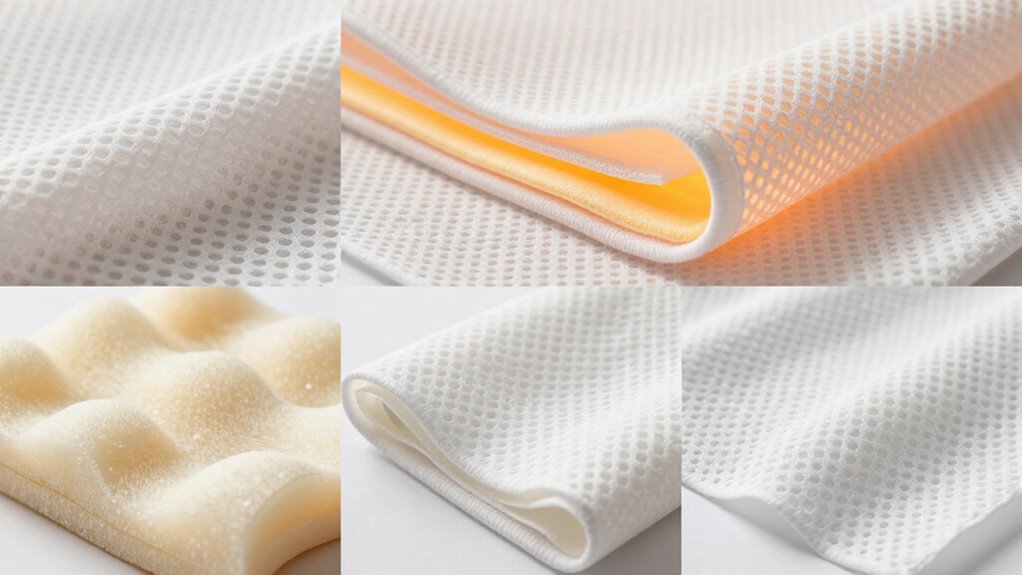
Because temperature-regulating fabrics actively balance heat and moisture at the point of contact, they’re especially well suited to sports, bedding, seating, and medical uses where comfort and microclimate control matter most.
You’ll find temperature-regulating fabrics in sportswear that use phase-change materials to reduce sweat production by up to 48%, so athletes stay drier and perform longer during high-intensity activity.
In bedding applications, these textiles stabilize the sleep environment, minimizing temperature peaks to improve sleep quality and reduce disorders.
For seating—office chairs and car seats—they maintain a balanced microclimate to prevent discomfort during prolonged use.
In medical products, smart textiles reduce overheating and moisture that can cause blisters and wounds, improving patient comfort in wheelchairs and medical seating without external power.
Evaluate & Integrate: Performance Tests, Durability Limits, Standards
When you evaluate and integrate temperature-regulating smart fabrics, start with quantitative performance tests that measure thermal stability, moisture transport, and user-level outcomes such as sweat reduction and skin microclimate. These metrics tell you whether a fabric’s phase-change materials and moisture-management technologies deliver the claimed benefits (for example, reducing sweat production by up to 48%) under realistic activity and environmental conditions.
Start with quantitative tests—thermal stability, moisture transport, and real-world sweat and skin microclimate outcomes.
You should then assess durability limits through wash-cycle trials and mechanical wear tests to confirm long-term function without charging needs. Follow evolving standards to verify electronic safety, moisture management, and thermal regulation for specific applications.
Use lab and field data to guide integration into sportswear, bedding, seating, or medical gear.
- Lab thermal cycling and moisture transport
- Wash and abrasion durability limits
- Field user-level outcome trials
- Compliance with current standards
Safety, Sustainability, and Maintenance: What to Ask Manufacturers
When you evaluate smart fabrics, start by asking manufacturers for safety certifications and test reports that address material risks—especially for coatings like carbon nanotubes that are still under review.
Also question their environmental footprint and material choices, including use of natural, recycled, or low-impact inputs and resource-friendly dyes.
Finally, get clear care instructions and durability data showing how electronic components and textiles hold up through washing and drying to guarantee long-term performance.
Check whether manufacturers support sustainable farming practices and avoid exploitative labor in their supply chains.
Safety Certification And Testing
Start by demanding clear evidence of safety and testing from any smart fabric manufacturer you’re considering: certifications like OEKO-TEX® or GOTS, documented dermatological testing, and published test protocols for thermal and moisture regulation show that a product has been evaluated for harmful substances, skin compatibility, and functional performance.
You should also ask for formal testing protocols that quantify temperature regulation, moisture wicking, and long-term durability. Verify dermatological reports to confirm skin compatibility and reduce allergic risks. Confirm that listed certifications meet recognized environmental standards.
Finally, request maintenance guidelines and independent lab reports to guarantee results hold after repeated washing.
- Request safety certification documents.
- Review published testing protocols.
- Check dermatological skin compatibility results.
- Ask for maintenance and independent lab reports.
Environmental Impact And Materials
Before you commit to a smart fabric, ask specific questions about the materials and their environmental footprint so you can assess both safety and long-term sustainability.
Ask whether the temperature-regulating elements use biodegradable PCMs like rapeseed-based wax and whether fabrics incorporate recycled polyester or Lyocell to reduce water use.
Confirm use of eco-friendly dyes and request data on chemical treatments or coatings.
Probe safety for coatings such as carbon nanotubes and demand testing results that address health risks.
Verify durability to guarantee functionality survives repeated washing.
Finally, clarify end-of-life options: can components be recycled, composted, or returned via a manufacturer take-back program?
These questions help you choose safer, more sustainable wearables.
Care Instructions And Durability
Because smart textiles combine functional materials and traditional fibers, you should get clear, specific care instructions from manufacturers to preserve both safety and performance.
Ask whether Outlast® and carbon nanotube coatings tolerate machine washing, what temperatures are safe, and which detergents to avoid.
Confirm any recommended drying methods and limits on dyeing or ironing, since improper handling can reduce temperature regulation and durability.
Also inquire about sustainable materials like recycled polyester and natural dyes to guarantee eco-friendly maintenance.
- Verify manufacturer care instructions for washing temperature and cycle.
- Avoid harsh chemicals and high-heat drying that can degrade coatings.
- Confirm colorfastness and dyeing compatibility for long-term use.
- Ask about repairability, expected lifespan, and warranty coverage.
Wrapping It Up
You’ll think you can just buy “smart” fabric and forget the rest, and wouldn’t that be convenient — except temperature regulation still depends on choices you make. Match passive or active systems to use, check PCM ranges, conductive fiber limits, sensor accuracy, and durability claims. Ask about wash cycles, recycling, and safety certifications. Doing that due diligence won’t be glamorous, but it’ll keep your gear honest and your body comfortable when it matters most.