
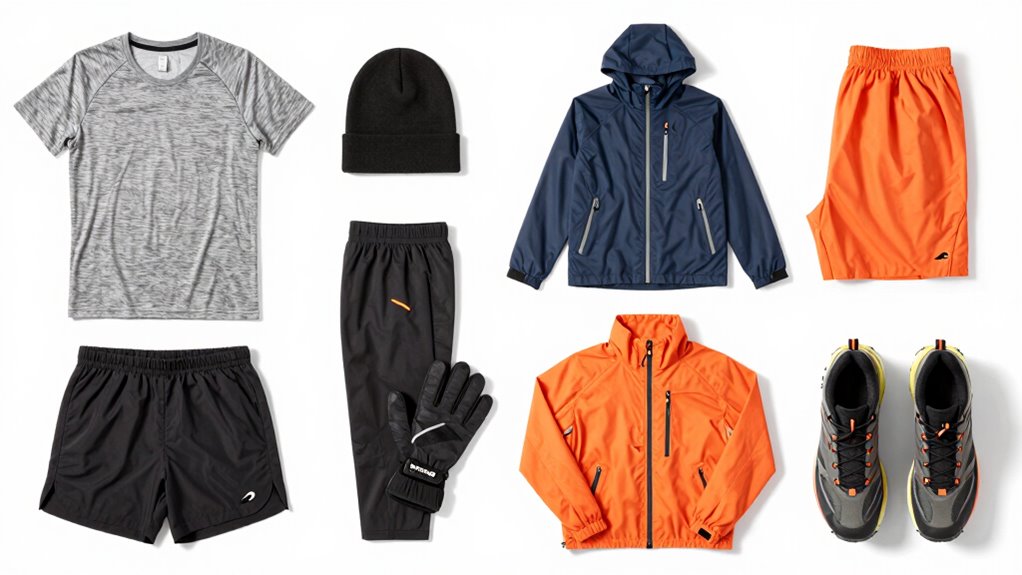
You’ll choose layers and gear based on temperature and activity: wear a lightweight tank and breathable shorts near 70°F, moisture-wicking tees and capris around 60°F, light tights or capris at 50°F, a long-sleeve with a lightweight jacket near 40°F, and thermal base layers with a windproof shell below 30°F. Prioritize moisture-wicking fabrics, wind resistance, proper shoes, and reflective items for low light. Keep adjustments simple, and continue for specific temp-by-temp outfit templates and gear suggestions.
Quick Outfit Cheatsheet: What to Wear By Temperature (70°F to <20°F)

Start by matching your layers to the temperature so you can stay comfortable and perform well across a wide range of conditions.
At 70°F (21°C), choose a lightweight tank and breathable shorts to stay cool and let sweat evaporate.
Around 60°F (15°C), pick a moisture-wicking tank or tee with shorts or capris to keep wicking sweat away while retaining comfort.
Near 50°F (10°C), wear a short-sleeve moisture-wicking shirt with lightweight running tights or capris for balanced warmth and ventilation.
At 40°F (4°C), add a long-sleeve top and a lightweight jacket over tights or leggings to block chill without trapping moisture.
Below 30°F (-1°C), prioritize insulation: thermal long-sleeve layers, a running jacket, and full-length tights to retain warmth on colder runs.
Also consider carrying hydration or nutrition solutions like a running belt or vest to maintain performance and recovery on longer outings and in varying temperatures, especially when planning extended training runs or races with hydration systems.
Layering Strategy for Running: Build and Adjust Layers Mid-Run
Although weather and effort can change quickly on a run, you can stay comfortable by planning layers you can add or shed without stopping for long.
Use a clear layering strategy: start with a moisture-wicking base layer to keep sweat away from your skin and prevent chill when you cool down.
Begin with a moisture-wicking base layer to move sweat away and prevent chills as you cool down.
Add an insulating mid-layer for warmth that you can unzip or remove as your effort raises body temperature.
Top with a lightweight, windproof outer layer that protects from gusts yet packs small when you don’t need it.
Carry compact accessories—gloves, a hat—that are easy to stow or pull on.
Practice adjusting layers on short runs so you learn when to shed or add items, maintaining comfort throughout varied conditions.
Tailor your layering and hydration to conditions and effort, accounting for individual sweat rate differences so you can adjust fluids and electrolytes as needed.
Best Fabrics & Tech: Wicking, UV Protection, and Wind Resistance
Once you’ve practiced adding and shedding layers on the run, the next consideration is the materials those layers are made from and the fabric technologies that make them perform.
Choose moisture-wicking synthetics like polyester or nylon to pull sweat away from skin, keeping you drier and more comfortable across seasons.
For sunny conditions, prioritize garments with UV protection and a UPF 30+ rating to reduce harmful exposure without slowing performance.
When temperatures drop or wind picks up, wind resistance matters: tightly woven synthetic shells block drafts and help retain heat while remaining lightweight.
Aim for breathable constructions that balance ventilation and insulation.
Combining branded tech for moisture control with insulated or windproof outer layers creates a versatile, weather-ready kit.
Consistent training and recovery practices improve comfort and performance in all weather, so pair your gear choices with periodization in your training plan.
Footwear & Socks for Running: Weather and Terrain Choices
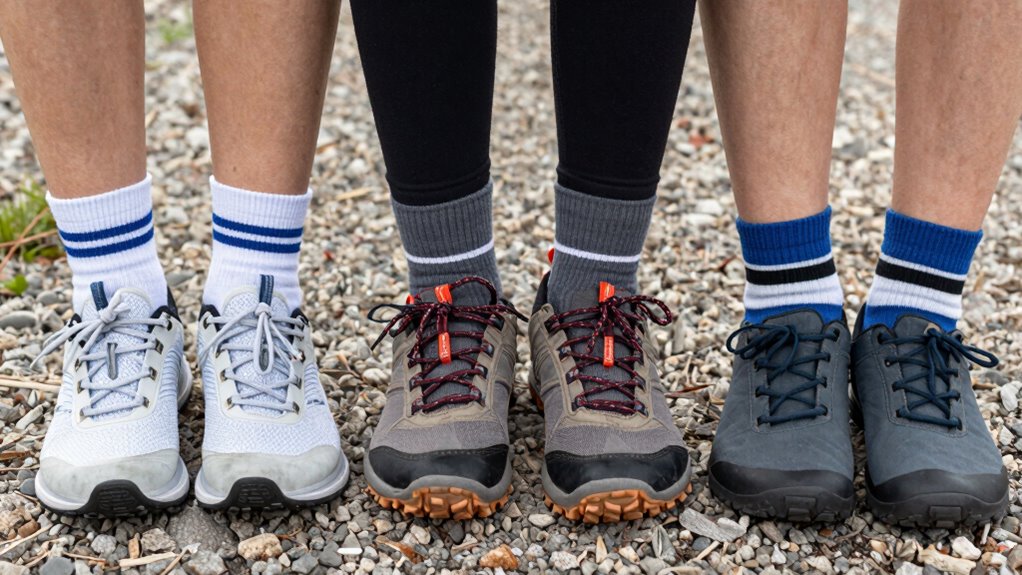
When you pick footwear and socks for running, think about how weather and terrain change the demands on your feet and the gear you’ll need to stay safe and comfortable. Choose shoes with appropriate traction and insulation for wet or cold conditions—technologies like Nike Shield help repel water and retain warmth. In warm temperature, favor lightweight, breathable footwear that enhances moisture-wicking to keep feet dry. For trails, pick rugged outsoles and protective uppers to handle rocks and uneven ground. Always wear moisture-wicking socks; thicker, cushioned pairs suit rocky trails, while thinner options reduce bulk on roads. Consider your arch type and pronation when selecting shoes to ensure proper stability needs and reduce injury risk.
| Condition | Shoe Type | Sock Choice |
|---|---|---|
| Wet/Cold | Insulated, water-resistant | Moisture-wicking, medium |
| Hot/Road | Lightweight, breathable | Thin, moisture-wicking |
Accessories That Matter: Hats, Gloves, Hydration, and Eye Protection
You’ll want a hat that shields you from sun and rain while staying breathable and adjustable for a secure fit.
Choose gloves that keep your hands warm without trapping moisture and offer touch-screen compatibility so you can use devices on the go.
Carry hydration that’s easy to access and pair it with reflective or brightly colored gear to boost your visibility in low light.
Pick a lightweight cap with a built-in sweatband to improve moisture management and comfort on longer runs.
Hat And Sun Protection
Although it’s easy to overlook headwear and eye protection, they play a direct role in comfort, safety, and performance on every run. You should choose a hat made from moisture-wicking fabric that offers reliable sun protection; it shades your scalp, keeps sweat out of your eyes, and improves visibility.
For hot days, select a lightweight, breathable cap or visor that promotes airflow while shielding your face. In cooler conditions, pick an insulating, moisture-wicking option to retain warmth without trapping perspiration.
Sunglasses with polarized lenses reduce glare and block UV rays, protecting long-term eye health. Bring hydration gear for hot runs so you stay hydrated and maintain performance.
- Lightweight, breathable caps
- Insulating, sweat-managing hats
- Visors for airflow
- Polarized sunglasses
- Hydration belt for access to water
Gloves And Warmth
Because extremities lose heat quickly, gloves and companion accessories are a simple but critical way to keep runs safe and comfortable as temperatures drop.
You should choose gloves that balance warmth and dexterity; lightweight, weatherproof options perform well below 40°F (4°C) and let you maintain grip and feel.
Look for touch-screen compatible fingertips so you can use your device without exposing your hands.
Pair gloves with a moisture-wicking hat to retain core heat while preventing sweat buildup that chills you when activity levels change.
Consider liner gloves for added insulation and easier layering.
Prioritize materials that resist wind and moisture while providing breathability.
Properly selected gloves and related pieces extend run time, reduce cold-related numbness, and help you stay focused on form and safety.
Hydration And Visibility
When you plan your run, don’t overlook two essentials that keep you safe and performing well: hydration and visibility. You’ll want a hydration belt for longer outings so you can sip water and electrolytes without interrupting pace, preventing dehydration and preserving performance.
Choose hats with moisture-wicking fabric to keep you dry and shield you from sun or rain. Sunglasses with polarized lenses reduce glare and block UV, improving comfort and visual clarity. Reflective elements on vests, jackets, or accessories increase your visibility to drivers and pedestrians in low light, enhancing safety.
- Hydration belt: easy access to fluids for steady performance
- Moisture-wicking hat: keeps you dry and protects from UV
- Lightweight gloves: retain dexterity, touchscreen-ready
- Polarized sunglasses: cut glare, protect eyes
- Reflective elements: boost nighttime visibility
Safety & Visibility Gear: Reflective, Waterproof, and Heat-Rated Clothing
Start with a few key pieces of safety gear and you’ll dramatically reduce your risk outdoors: reflective elements, waterproof layers, and heat-rated fabrics each serve a specific purpose in keeping you visible, dry, and comfortable across seasons. You should choose garments with reflective strips or panels and pair them with bright colors to maximize visibility during dawn, dusk, or low-light urban runs. Waterproof shells with breathable membranes like Gore-Tex keep you dry without trapping sweat, and heat-rated shirts wick moisture and promote cooling in hot conditions. Layering lets you adapt to weather changes efficiently. Consider these visual cues as essential safety tools, and prioritize fit and breathability so your gear performs when conditions shift unexpectedly.
| Item | Benefit |
|---|---|
| Reflective striping | Visibility |
| Bright color | Noticeability |
| Waterproof shell | Dryness |
| Heat-rated tee | Cooling |
Special-Case Outfits: Trail Runs, Deep-Winter Runs, and HIIT Sessions
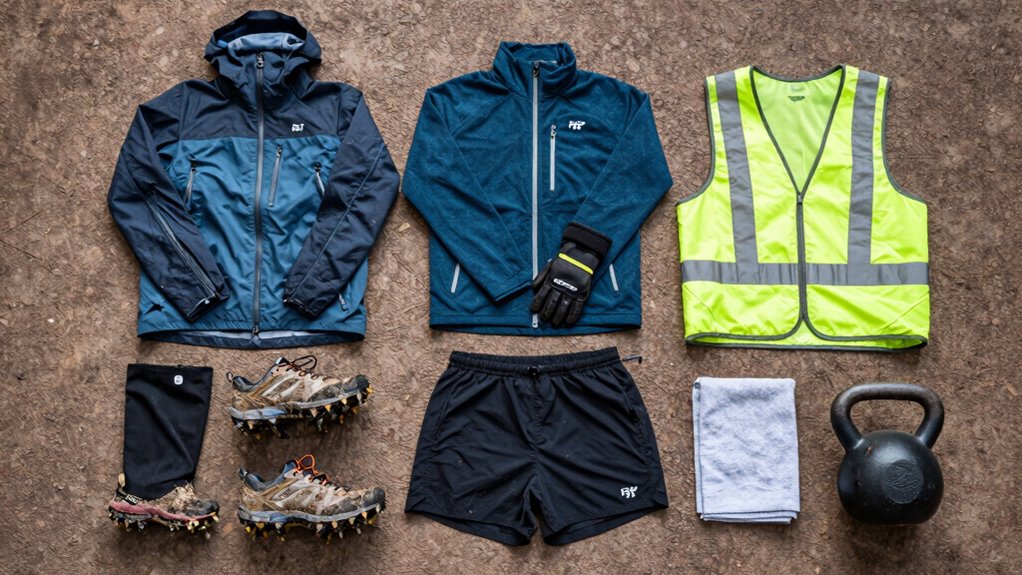
For specific running scenarios—trail routes, deep-winter outings, and high-intensity interval sessions, you should tailor your clothing and footwear to the demands of the activity rather than relying on a one-size-fits-all kit.
Choose items that address terrain, temperature, and intensity to stay safe and perform well. Consider these targeted recommendations:
- Trail runs: wear trail-specific shoes with enhanced grip and protective uppers, plus moisture-wicking base layers and a weather-resistant jacket.
- Deep-winter runs: use thermal base layers, insulated jacket, windproof shell, warm gloves, hat, and thermal socks.
- HIIT sessions: select lightweight, moisture-wicking tops and breathable shorts or leggings to maximize mobility.
- Layering: combine base, insulating mid-layer, and breathable waterproof outer shell for variable conditions.
- Accessories: guarantee footwear traction and include a neck gaiter for extreme cold.
Ready-Made Templates & Go-To Gear Picks for Every Temperature
Although weather can change quickly, having a set of temperature-based templates makes gear decisions simple and reliable, so you can focus on the run rather than guessing what to wear. Use these ready-made picks to match the temperature outside and confirm you grab the right gear quickly.
| Temperature | Go-to gear |
|---|---|
| 50–60°F | Moisture-wicking tank, lightweight shorts, packable windbreaker |
| 40–50°F | Long sleeve shirt, running shorts, light jacket, hydration belt |
| 30–40°F | Thermal long sleeve, full-length tights, light jacket, gloves |
| Below 30°F | Thermal base layer, mid-weight jacket, wind-resistant pants, gaiter |
| Below 20°F | Insulated layers, warm tights, windproof jacket, traction spikes |
Follow these templates, adjust for intensity, and you’ll be prepared for varied conditions.
Wrapping It Up
You’ll leave the gear debate knowing how to dress by temperature, layer smart, and pick fabrics and footwear that match conditions. Think of your kit like a Swiss Army knife: one runner I coached beat a cold snap by layering as if accessing tools—zipper, glove, hat—each added or removed as needed. Use that same modular approach on every run; it keeps you comfortable, safe, and focused on performance, not on what you’re wearing.
I head out before sunrise when it’s under 30°F, but I end up feeling too hot once the route starts climbing and I pick up the pace. Would a light shell I can peel off mid-run make more sense here, or should I stay with a warmer base layer and adjust the rest of the outfit?
A light shell is usually the better first thing to try if you warm up fast after the first mile or two. That lets you start protected from the cold, then back off a layer before you get sweaty. If the base layer feels too heavy at the start, it can leave you damp later, which is usually more uncomfortable than starting a little cool.