

Assistive technology is revolutionizing adaptive running through innovations that enhance athletic performance and accessibility. You’ll find smart prosthetics equipped with IoT sensors, vision-assist systems with tactile feedback, and wearable devices that monitor biomechanical data in real-time. These technologies provide essential support for athletes with diverse physical abilities, allowing them to train effectively and compete at high levels. The integration of AI-driven systems and custom equipment continues to expand the possibilities for adaptive athletes.
Revolutionizing Para-Athletics Through Smart Prosthetics
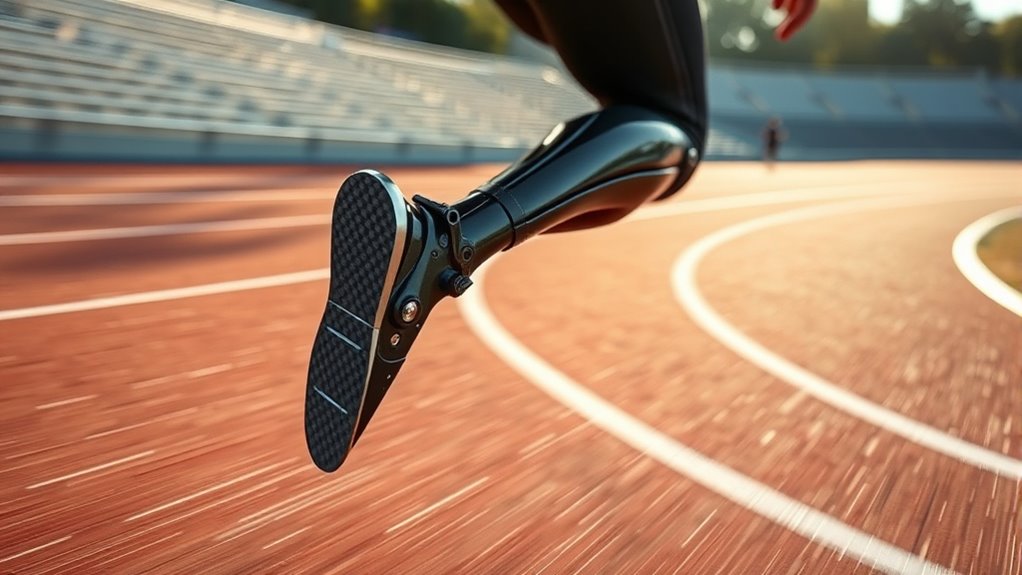
As technology continues to reshape the landscape of para-athletics, smart prosthetics have emerged as game-changing innovations that are transforming how athletes compete and train.
You’ll find these advanced devices equipped with IoT sensors that provide smart feedback on your biomechanical performance, allowing for immediate adjustments during competition.
Through AI-driven learning systems, your prosthetic adapts to your unique movement patterns and preferences, while making dynamic adjustments based on terrain conditions.
AI technology transforms prosthetics into intelligent companions, learning and adapting to each athlete’s unique movements and environmental challenges.
With Bluetooth connectivity, you can fine-tune settings through mobile apps, ensuring peak performance whether you’re sprinting on tracks or maneuvering cross-country trails.
Vision-Assist Systems for Track Navigation
Modern vision-assist systems for track navigation combine tactile lane boundary alerts with AI-powered visual guidance to help para-athletes maintain ideal positioning during races.
You’ll find these systems integrate seamlessly with guide runner communication methods, creating an all-encompassing support network that enhances athlete independence and performance.
Through real-time sensor fusion and adaptive feedback mechanisms, these technologies can process environmental data and deliver precise navigational cues through various sensory channels, allowing athletes to respond quickly to changing track conditions.
Tactile Lane Boundary Systems
While vision-impaired runners have faced numerous challenges in track navigation, tactile lane boundary systems now provide revolutionary guidance through sophisticated touch-based feedback mechanisms.
You’ll experience precise lane tracking through strategically placed tactors on your shoulders or vest that deliver intuitive directional cues.
When you drift too close to lane boundaries, the system creates distinct tactile feedback patterns to guide you back on course.
The technology integrates dynamic cue adjustments based on your running speed and position, ensuring you maintain ideal alignment within your lane through continuous, responsive touch-based signals.
AI-Powered Visual Navigation
Building upon tactile feedback innovations, AI-powered visual navigation systems represent a groundbreaking advancement in adaptive running technology.
You’ll experience unprecedented accuracy and safety through AI navigation that combines GPS, visual tracking, and real-time obstacle detection.
These vision-assist systems deliver three key benefits:
- Real-time obstacle detection with 98% accuracy
- Adaptive visual cues that adjust to changing environments
- Reduced cognitive load through personalized route guidance
The system’s multi-modal data fusion continuously analyzes your surroundings, providing context-aware feedback that helps you maintain ideal running form while avoiding obstacles.
You’ll benefit from dynamic localization that seamlessly shifts between indoor and outdoor environments.
Guide Runner Communication Methods
Effective guide runner communication relies on a sophisticated combination of physical tethering and standardized verbal cues.
You’ll find various tether options to match your running style, from flexible cloth or rubber leads spanning 18-30 inches to rigid PVC pipes for enhanced control. Waist-to-waist tethers offer hands-free mobility for experienced teams.
Your guide’s verbal cues provide critical navigation through standardized phrases and countdown alerts. They’ll use clear commands like “Step up” or “Duck,” while offering terrain descriptions and distance updates.
This coordinated system of physical connection and verbal guidance guarantees safe, efficient adaptive running for visually impaired athletes.
Wearable Sensors and Performance Monitoring
As adaptive running technology continues to evolve, wearable sensors have become essential tools for monitoring and optimizing athletic performance. Through advanced sensor integration and data analytics, you’ll gain precise insights into your running mechanics and physiological responses.
- GPS sensors and IMUs track your speed, distance, and movement patterns, helping optimize your training routes and technique.
- Heart rate monitors and sweat sensors evaluate your metabolic demands and hydration status in real-time.
- Force and pressure sensors detect potential injury risks by analyzing joint stress and stride patterns.
These technological innovations enable you to train smarter, prevent injuries, and achieve your performance goals more effectively.
Adaptive Running Gear and Custom Equipment
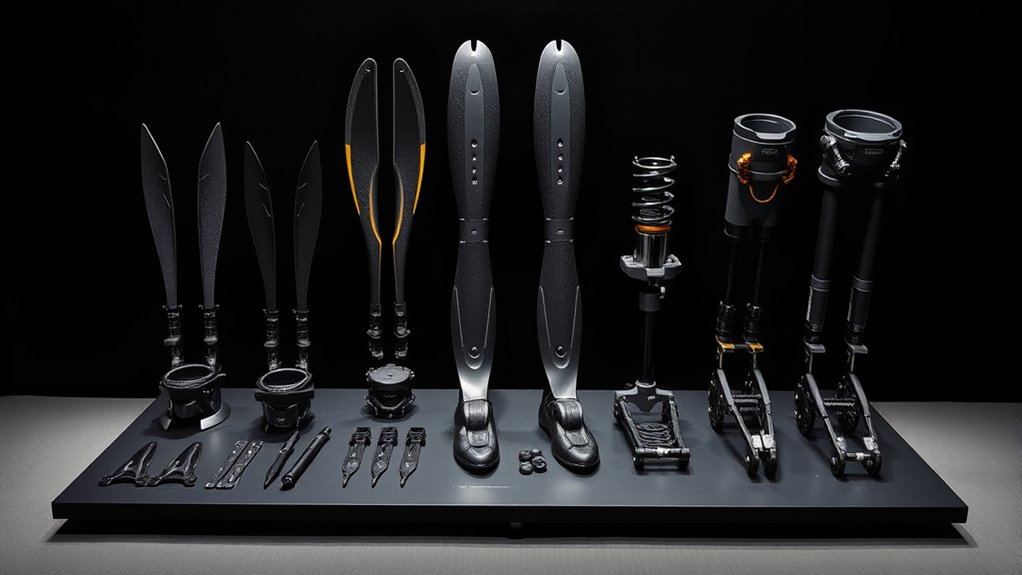
Modern adaptive running gear offers you unprecedented levels of personalization through advanced fitting solutions and smart technology integration.
You’ll find that custom-fitted prosthetics and specialized equipment, from carbon fiber running blades to 3D-printed components, can match your unique biomechanical needs while maximizing performance potential.
These personalized solutions work alongside smart monitoring tools that track your movements, adjust to different terrains, and provide real-time feedback to enhance your running experience.
Personalized Gear Fitting Solutions
The success of adaptive running often hinges on the precise customization of mobility and stability equipment to meet each runner’s unique needs.
Custom orthotics and personalized accessories must be carefully fitted to guarantee peak performance and comfort.
When seeking personalized gear solutions, focus on these key areas:
- Get a professional assessment for 3D-printed insoles that match your exact foot structure.
- Consider carbon fiber prosthetics with adjustable components to maximize energy return.
- Select stability aids, like AFOs or trekking poles, that accommodate your specific mobility patterns.
These tailored solutions help prevent injury while enhancing your running experience.
Smart Performance Enhancement Tools
Smart performance enhancement tools have revolutionized adaptive running through innovative sensor technology and AI-driven analytics.
You’ll find sensor integration in everything from smart insoles to wearable apparel, tracking essential metrics like joint loads and stride patterns. These devices sync with performance analytics platforms such as Flit Run and Humango, offering real-time feedback and personalized training adjustments.
The technology’s impact is significant, with AI-powered soles showing 30% increased athlete availability and 10% performance improvements.
When you’re using these tools, you’ll benefit from automated data aggregation across multiple devices, creating a thorough view of your running metrics and training progress.
Digital Training Platforms for Para-Athletes
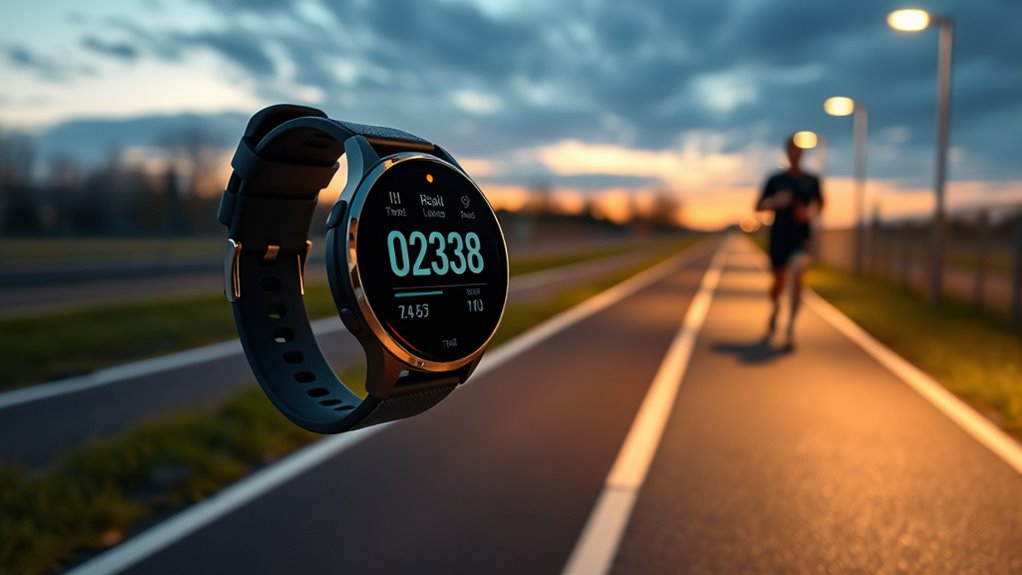
Digital training platforms have revolutionized how para-athletes prepare for competition, combining sensor-driven feedback systems with AI-powered analytics to create highly personalized training experiences.
These digital coaching platforms integrate seamlessly with virtual training environments to enhance performance and prevent injuries.
Your training experience will be optimized through:
- Real-time motion analysis that tracks your biomechanical data and provides instant feedback
- AI-driven customization that adapts your training regimen based on fatigue levels and recovery rates
- Virtual reality simulations that let you practice on different terrains without physical travel
These technologies guarantee you’ll receive precisely tailored guidance while maintaining peak performance safely and effectively.
Mobility Enhancement Technologies
Modern advancements in mobility enhancement technologies have transformed adaptive running, enabling athletes with diverse physical abilities to participate in competitive sports with unprecedented freedom and capability.
You’ll find cutting-edge mobility aids like lightweight prosthetic limbs crafted from titanium and carbon fiber, specifically designed for running activities.
Advanced assistive devices now include smart wheelchairs with terrain-adaptive features and exoskeletons that provide essential support for various mobility needs.
These technologies integrate IoT systems for real-time performance tracking, while GPS and haptic feedback systems guarantee safer navigation during training and competition.
Future Innovations in Adaptive Running Support
Building upon today’s mobility technologies, revolutionary innovations are reshaping the future of adaptive running support.
Advanced biofeedback systems will transform your running experience through real-time monitoring and biomechanical adjustments.
Here’s what you’ll see in upcoming adaptive running tech:
- AI-powered virtual coaches that analyze your form and provide instant feedback
- Smart footwear with dynamic support structures that adapt to your unique gait
- Electroactive fabrics that sync with your muscle movements to enhance performance
These innovations aren’t just improving performance – they’re creating a more inclusive future where adaptive runners can train with unprecedented precision and support.
Conclusion
You’ve witnessed how assistive technology continues to transform adaptive running, but you might wonder if these innovations truly level the playing field. As smart prosthetics, vision systems, and digital platforms evolve, they’re not just enabling participation – they’re empowering athletes to push beyond perceived limitations. While technology won’t eliminate all barriers, it’s proving instrumental in creating more inclusive and competitive opportunities for para-athletes worldwide.
I’m entering my first adaptive 5K season and I can only justify one upgrade right now. Should I start with a smart prosthetic setup with sensor feedback, or would wearable performance sensors give me more useful progress first?
If your current prosthetic fit and alignment are already solid, wearable performance sensors are usually the better first step because they can show you how you move before you spend on a bigger device change. If the leg itself is limiting your stride, stability, or comfort, then a smart prosthetic upgrade makes more sense. The best choice is the one that removes the biggest bottleneck in your training right now. A coach or prosthetist can help you test both options against the same workouts.
I split my runs between a track and rough paths, and my current setup feels smooth on the track but clunky on uneven pavement. If I can only tune one thing first, should I prioritize terrain-adaptive prosthetic settings or switch to more flexible running gear?
Prioritize the setting or component that helps the roughest surface first, because a setup that is only perfect on the track will still fail you when the footing changes. If your prosthetic allows different profiles, a terrain-sensitive adjustment can be the fastest fix. If the issue is more about shoe, socket, or accessory mismatch, more flexible running gear may solve it better. The key is to test the same route on both surfaces and see whether the problem is stability, impact, or stride control. You may also find this helpful: Wheelchair Racing: Training and Competing.
I’m visually impaired and I’ve started doing structured track workouts, but I keep second-guessing whether a guide runner is enough or if I should invest in a vision-assist system with tactile feedback first. What would you pick if your main issue is staying lined up in lane work
If staying lined up is the main issue, a tactile vision-assist system is often the better first investment because it can give you constant orientation cues during lane work. A guide runner is still very useful when you need pacing, confidence, and human adjustment on the fly, especially in more complex sessions. If possible, try the guide runner for your first structured workouts and see whether the remaining problem is direction, timing, or both. That usually makes the next purchase much clearer.