
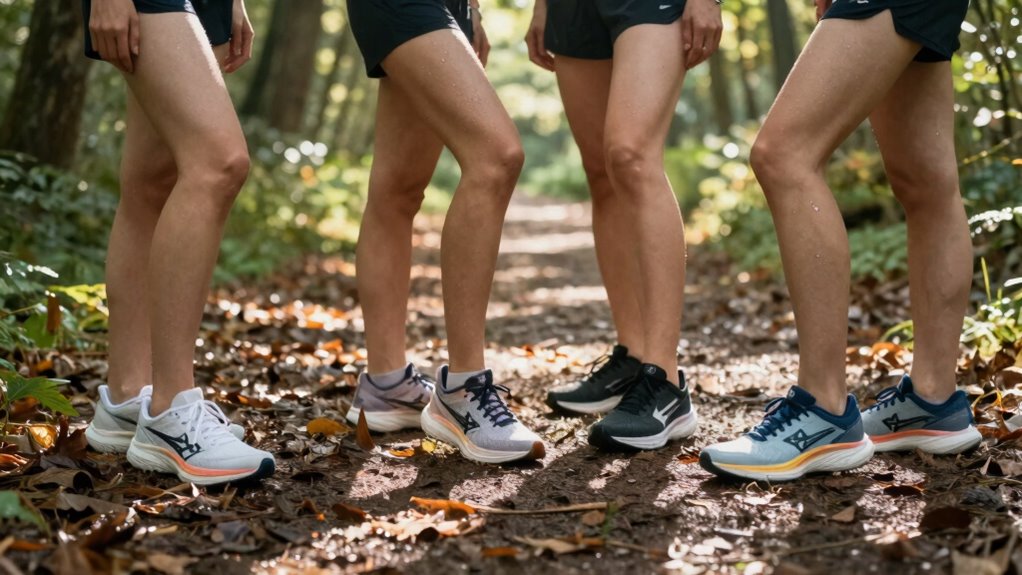
The four best low-drop options for 2026 are the Adidas Women’s Questar 3, New Balance Fresh Foam Roav, Under Armour Charged Assert 10, and Adidas Women’s Run Falcon 5 Trail. Expect 0–6 mm drops, all-around comfort, and stable setups with responsive foams or cushioning. Questar 3 and Run Falcon 5 Trail offer breathable uppers and solid traction, while Fresh Foam Roav provides long‑lasting comfort and Roav’s removable insole. Charged Assert 10 delivers a lightweight, rebound ride, all priced around $100–$140. If you want more details, you’ll find practical fit tips and traction insights ahead.
| adidas Women’s Questar 3 Running Shoes |  | All-Around Comfort | Purpose: On track / treadmill / open road | Cushioning Technology: Full-length Bounce cushioning | Upper Material Type: Breathable mesh upper | VIEW LATEST PRICE | See Our Detailed Review |
| New Balance Women’s Fresh Foam Roav Running Shoe |  | Cushioned Longevity | Purpose: Daily running / long runs | Cushioning Technology: Fresh Foam cushioning | Upper Material Type: Bootie construction (mesh/knit fabric implied) | VIEW LATEST PRICE | See Our Detailed Review |
| Under Armour Women’s Charged Assert 10 Shoes | Flexible & Responsive | Purpose: Neutral versatile | Cushioning Technology: Charged Cushioning midsole | Upper Material Type: Lightweight breathable mesh upper | VIEW LATEST PRICE | See Our Detailed Review | |
| adidas Women’s Run Falcon 5 Trail Running Shoes |  | Trail-Ready Durability | Purpose: Off-track trail running | Cushioning Technology: Cloudfoam cushioning | Upper Material Type: Water-repellent design with trail-ready construction | VIEW LATEST PRICE | See Our Detailed Review |
More Details on Our Top Picks
adidas Women’s Questar 3 Running Shoes
The adidas Women’s Questar 3 is a strong pick for runners seeking all-around comfort with a low-drop feel. You’ll enjoy flexible, full-length Bounce cushioning and a breathable mesh upper that stays comfy through miles on track, treadmill, or open road. The outsole provides a grippy, stable ride, helping you feel confident on varied surfaces. This model is built by Adidas India Marketing Private Ltd., with practical support and available contact options from the company. If you want light, steady cushioning and steady traction, the Questar 3 is worth a closer look for 2026 distance runs.
- Purpose:On track / treadmill / open road
- Cushioning Technology:Full-length Bounce cushioning
- Upper Material Type:Breathable mesh upper
- Outsole Type:Grippy outsole
- Fit/Support Feature:Stable ride
- Weight or Kickoff Comfort Reference:Not specified (lightweight/miles-friendly)
- Additional Feature:Flexible, full-length Bounce cushioning
- Additional Feature:Breathable mesh upper
- Additional Feature:Grippy outsole
New Balance Women’s Fresh Foam Roav Running Shoe
The New Balance Women’s Fresh Foam Roav stands out for runners who want a cushioned longevity in a low-drop design, offering a balanced blend of comfort and support. You get Fresh Foam cushioning that cushions each step, plus an ultra heel design that supports long runs. The bootie construction wraps your foot in comfort, while the removable arch support insole works with your unique foot shape. It’s built for everyday wear and serious mileage, with durable sneaker tech. This shoe delivers a secure fit and personalized comfort, making it a practical choice for daily training and long sessions.
- Purpose:Daily running / long runs
- Cushioning Technology:Fresh Foam cushioning
- Upper Material Type:Bootie construction (mesh/knit fabric implied)
- Outsole Type:Durable running outsole
- Fit/Support Feature:Removable arch support insole
- Weight or Kickoff Comfort Reference:Built for long mileage daily wear
- Additional Feature:Bootie construction
- Additional Feature:Removable arch support insole
- Additional Feature:Ultra Heel design
Under Armour Women’s Charged Assert 10 Shoes
Under Armour Women’s Charged Assert 10 Shoes stand out for runners who want a flexible, responsive ride with reliable everyday cushioning. You get a neutral profile, flexible fit, and versatile performance for daily runs and errands alike. The lightweight mesh upper with synthetic overlays adds durability and support, while the 8.9 oz weight keeps pace comfortable. A soft EVA sockliner brings step-in comfort, and the Charged Cushioning midsole offers rebound and durability. The solid rubber outsole targets high-impact zones for durability with less weight, and the heel-to-toe offset is about 10 mm. Overall, a solid, affordable option.
- Purpose:Neutral versatile
- Cushioning Technology:Charged Cushioning midsole
- Upper Material Type:Lightweight breathable mesh upper
- Outsole Type:Solid rubber outsole
- Fit/Support Feature:Neutral profile with stable support
- Weight or Kickoff Comfort Reference:8.9 oz
- Additional Feature:Neutral profile flexibility
- Additional Feature:EVA sockliner comfort
- Additional Feature:10 mm offset
adidas Women’s Run Falcon 5 Trail Running Shoes
Looking for a trail-ready option that won’t break the bank? The adidas Women’s Run Falcon 5 Trail is designed for rugged conditions and off-track runs. It features a water-repellent design, so light rain and damp trails won’t slow you down, and it’s suited for park trails and uneven terrain. Cloudfoam cushioning provides plush support, helping you stay comfortable mile after mile. A lugged Adiwear outsole delivers reliable grip on varied surfaces, keeping you stable. The shoe uses a women’s-specific fit and trail-ready construction, making it a practical choice for adventurous, low-drop runners. Overall, solid value for durability.
- Purpose:Off-track trail running
- Cushioning Technology:Cloudfoam cushioning
- Upper Material Type:Water-repellent design with trail-ready construction
- Outsole Type:Lugged Adiwear outsole
- Fit/Support Feature:Women’s-specific fit
- Weight or Kickoff Comfort Reference:Trail-ready durability (implied supportive for rugged use)
- Additional Feature:Water-repellent design
- Additional Feature:Cloudfoam cushioning
- Additional Feature:Lugged Adiwear outsole
Factors to Consider When Choosing Low-Drop Running Shoes for Women
When choosing low-drop shoes, start by checking the foot-drop distance and how it feels from heel to toe, since differences like 4mm vs 8mm change your stride. Consider the shoe’s cushioning and how the midsole compresses under your weight, along with the sole’s flex grooves for the kind of movement you prefer, whether steady runs or faster workouts. Also weigh the overall weight and agility, since lighter models around 6–9 oz per shoe can boost speed, but you might trade a bit of cushioning for that gain.
Foot‑Drop Distance Basics
Have you ever wondered how foot-drop distance, or drop, affects your run? Foot-drop distance is the height difference between the heel and forefoot, usually measured in millimeters. Low-drop shoes typically sit at 0–6 mm, which encourages a midfoot or forefoot landing. A smaller drop can change how your calf and Achilles tendon load during each step, potentially increasing strain if your transition is abrupt. Some runners notice a shift in cadence and gait when they switch to low-drop shoes, so expect adjustments. Gradual adaptation helps; start with shorter runs to help the lower drop feel more comfortable and to reduce injury risk. If you’re new to low-drop footwear, consider a gradual, 2–4 week transition.
Heel-To-Toe Translation
Heel-to-toe translation matters more than you might think when choosing low-drop running shoes for women. A small heel-to-toe differential, typically 0–8 mm, places your foot in a flatter position during stride, which changes how you move. This can alter ankle, calf, and Achilles demands and may increase load on the forefoot as you adapt gradually. Translation affects gait mechanics, promoting a midfoot or forefoot strike, which influences propulsion and landing impact. Proper fit and cushioning distribution are critical in low-drop designs to keep even pressure across forefoot and heel. Shoe geometry, including stack height and midsole firmness, interacts with drop to affect stability and the feel of a smooth transition. Consider these factors when evaluating options and price ranges.
Cushioning Preference
Cushioning preference matters in low-drop shoes because the amount and placement of padding can change how you land and feel on your feet. You’ll notice that low-drop designs use midsole foams labeled plush or responsive to balance cushioning with a lower drop, aiding a smoother forefoot landing. The amount of cushioning can alter weight perception and energy return, affecting comfort on long runs. Cushion thickness may vary across the forefoot and heel; a low-drop design often shifts cushioning focus toward the midfoot to maintain stability. Personal preference and injury history can determine whether you prioritize firmer, more responsive cushioning or softer, more absorptive cushioning in low-drop shoes. Consider your stride, experience, and comfort when choosing.
Flexibility And Grooves
Flexibility and grooves play a key role in how low-drop shoes feel and perform, so look for models that bend easily at the forefoot while keeping midfoot stiffness to a minimum. You’ll notice a flexible forefoot zone and reduced midfoot rigidity that help with a smoother toe-off. Grooves in the outsole and midsole channeling aid forward propulsion and adapt to uneven surfaces, supporting a steady stride from heel to toe. A flexible upper paired with a pliant midsole lets your foot flex without adding rigidity that cuts stride length. The combo of low drop and deliberate groove patterns can influence pronation control and overall stability during midstance and push-off. Prioritize models showing clear flexibility tests and defined groove layouts within your budget and fit.
Weight And Agility
Lighter shoes can boost your pace and keep you moving smoothly, especially when you’re racing tempo runs or tackling quick intervals. Weight matters because lighter shoes reduce energy cost and can improve turnover, aiding quicker cadence and sprint initiation. Low-drop designs often pair with lighter overall weight to enhance ankle dorsiflexion and midfoot striking efficiency. A shoe’s weight per foot directly influences acceleration potential during tempo runs and intervals. Drag from heavier footwear can impact agility on technical trails or crowded paths, especially over long distances. Ultra-light materials in low-drop models may trade durability for speed; balance weight with expected mileage and terrain. Consider grams per shoe, fit, and how the weight feels during your typical workouts and races.
Arch Support Needs
When you pick low-drop shoes, arch support matters just as much as outsole grip or weight, because a secure fit helps keep your foot from sliding and your arch from collapsing during runs. Low-drop models still offer arch support through structured insoles or supportive midsole geometry that keeps your foot aligned. Some pairs include removable arch inserts so you can customize support for high, neutral, or low arches. Arch support impact depends on midsole foam density and how the insole meets your arch region, so test both fit and feel. A secure upper and lockdown strap help prevent arch collapse by reducing interior movement. For flat feet or high arches, seek guidance features or a firmer midfoot to stabilize the arch without adding drop.
Terrain And Traction
Terrain and traction matter more than you’d think in low-drop shoes. You’ll notice outsole patterns vary to grip different surfaces, from smooth pavement to rough trails. Traction on off-road surfaces depends on lug depth, spacing, and material durability, which helps prevent slipping on loose dirt or wet rocks. Trail-specific low-drop models mix rugged tread with protective elements to balance grip and stability on technical terrain. Midsole and outsole geometry also influence how traction distributes during heel-to-toe transitions on sloped or uneven surfaces. A secure fit and responsive outsole compound keep contact with the ground, improving traction during fast terrain changes. Look for wider lugs, durable rubber, and a snug upper to match your planned routes and budgets. Prices commonly range from $100 to $140.
Frequently Asked Questions
How Do Low-Drop Shoes Affect Achilles Tendon Health?
Low-drop shoes can affect your Achilles tendon by increasing load on the tendon and calf muscles due to less heel height. If you switch gradually, your tendon adapts, reducing injury risk. Start with a 6–8 mm drop and wear for short runs, then extend sessions as comfort allows. Look for models with firm foam and a stable heel, around $100–$140. If you feel sharp pain, ease back and consult a clinician. Track soreness and progress weekly.
Are Low-Drop Shoes Suitable for Beginner Runners?
Low-drop shoes can be suitable for beginner runners, but start slowly to adjust your calves and Achilles. Begin with 1–2 miles, 2–3 days a week, then add 0.5–1 mile as comfort grows. Look for 4–8 mm heel-to-toe drop, flexible midsoles, firm yet forgiving foam, and a snug toe box. Expect prices around $90–$120; try models with wide widths and removable insoles for inserts. Listen to your body and progress safely.
Do Low-Drop Models Impair Stability on Trails?
Low-drop models don’t inherently impair trail stability, but you’ll notice differences. If you hike rocky sections, choose shoes with solid midsole support, a grippy outsole, and a wider base. Look for 4–8 mm drops, sturdy lugs, and a secure heel counter. In rocks, they feel more responsive, yet you may need extra ankle awareness. Test on varied terrain, and pick a model around $120–$160 with a comfortable, snug fit.
Should I Size up or Down in Low-Drop Shoes?
You should size up a half to a full size in low-drop shoes, especially if you have wide feet or plan long runs. Try 4–8 mm heel-to-toe drop, check a roomy toe box, and ensure your forefoot isn’t squeezed. If you’re between sizes, go up. Consider socks, lacing, and brand width differences. Return policies help, so test at home; go with a model that fits across midfoot and heel securely.
What Maintenance Extends Low-Drop Shoe Lifespan?
To extend a low-drop shoe’s life, rotate pairs, clean and dry after runs, and store away from heat. Replace insoles every 3–6 months, laces when frayed, and check outsole tread every 500 miles for wear. Keep midsole cushioning intact by avoiding washing with harsh detergents; avoid machine drying. Clean mud with soft brush, air-dry fully, and avoid stepping in sharp debris. Replace shoes after 600–800 miles or when support declines noticeably.
Wrapping It Up
You want a quick wrap-up that helps you decide. These low-drop shoes keep heel-to-toe drop small, usually 6–8 mm, with responsive foams and stable uppers for everyday runs. The adidas Questar 3 and Run Falcon 5 Trail offer solid grip and cushioning, the New Balance Fresh Foam Roav blends comfort with a smooth ride, and the UA Charged Assert 10 gives value at an accessible price. Check sizes, weights, and exact drops to choose what fits your budget and needs.
I have a pair that keeps my heel secure, but my toes feel cramped on longer runs. Between the New Balance Fresh Foam Roav and the Adidas Questar 3, which one is more likely to give a little more room up front without feeling sloppy in the back?
If toe room is the main issue, the Fresh Foam Roav is the better place to start because it’s often the more forgiving-feeling option up front. The Questar 3 sounds a bit more structured and balanced, which can help if heel hold matters a lot, but it may not feel as roomy in the toe box. If you can try both on, check for a secure heel and a little wiggle room for your toes while standing and walking, since that usually tells you more than the label does.