
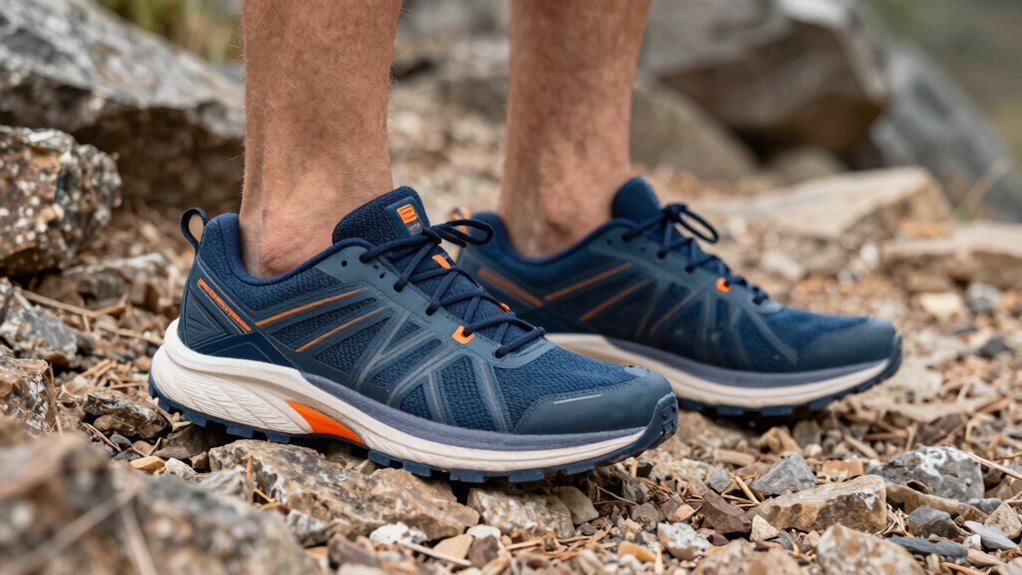
Heavier runners need shoes that prioritize durability and cushioning. Look for options with robust outsoles featuring carbon-infused or proprietary rubber compounds to resist abrasion. A thick midsole with a minimum shock absorption rating of 120 SA offers essential protection. Choose models with wide platforms and thicker rubber layers, ensuring stability and shoe longevity. Opt for high-density midsole foams for a durable, cushioned stride. Embracing these features can greatly enhance your running experience. Explore further to find more tailored options.
Cushioning and Midsole Design
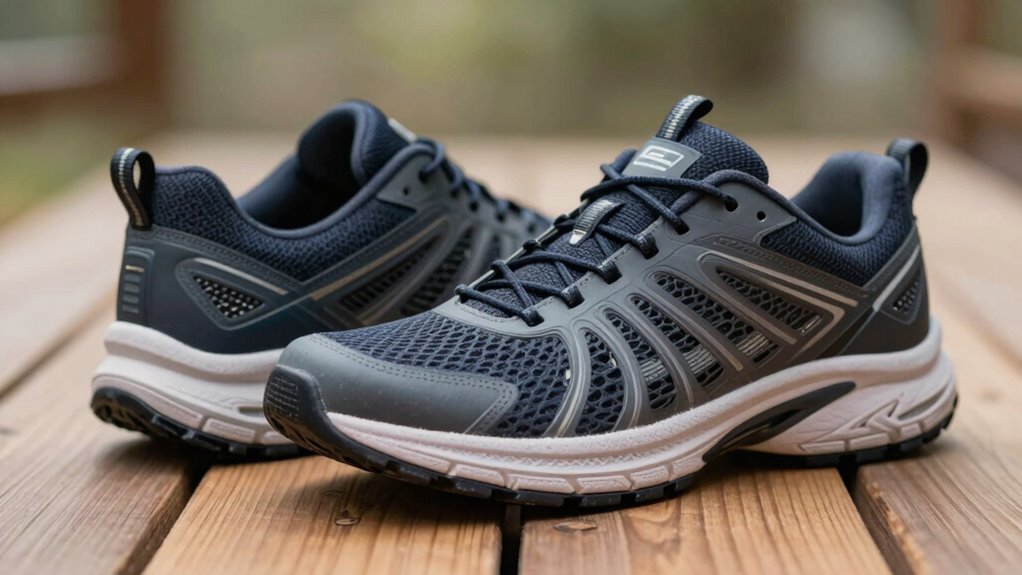
When you’re a heavier runner, choosing the right running shoes is essential, and it starts with understanding the importance of cushioning and midsole design. The impact forces you experience are greater, requiring shoes that excel in cushioning performance.
Look for models like the ASICS Gel Nimbus 27, boasting a 136 SA shock absorption rating, which provides top-tier protection. Midsole technology, such as Brooks’ DNA Tuned dual-density foam, offers a balance between soft landings and firmer responses.
Effective shock absorption in the midsole reduces stress on your legs, preventing muscle fatigue and foot pain. Shoes with reinforced midsoles and plush cushioning, like those with a max-stack design, deliver a comfortable ride, crucial for your running comfort and injury prevention. Consider shoes with an increased stack height for additional impact absorption, as seen in the HOKA Mens Bondi 9, which enhances both comfort and performance.
Outsole Durability and Rubber Compounds
Selecting the right running shoes involves more than just cushioning; understanding outsole durability and rubber compounds is equally important.
When examining outsole material, consider options like carbon-infused rubber, which offers increased abrasion resistance compared to standard rubber. Brands often develop proprietary compounds, such as Continental or ASICSGRIP, that marry durability with excellent traction.
For alternative choices, look for non-rubber blends like graphene-infused options that boast superior abrasion resistance.
Rubber thickness also plays an essential role in longevity. Shoes with thicker rubber layers, around 4 mm or more, tend to last longer than those with thinner layers.
Full-length rubber outsoles offer better protection and durability by covering more area, preventing midsole exposure and reducing wear.
Prioritize these features to guarantee your shoes withstand the miles. Consider traction and outsole design to ensure stability and minimize slip risks on various surfaces.
Stability and Platform Geometry
Stability is an essential factor for heavier runners seeking reliable support and injury prevention, and the geometry of a shoe’s platform plays an important role in delivering this stability. Choosing shoes with a wide platform stability offers geometry advantages, such as a broader midsole that provides steady landings. For instance, the ASICS Gel Nimbus 27 features wider base measurements than average, offering secure footing. Midsole sidewalls enhance rigidity, preventing excessive lateral movements. Saucony Hurricane 24 combines a wide platform with higher sidewalls to guide your stride effectively. Torsional rigidity is another key aspect, with models like Saucony integrating dual-density foams for enhanced control. This platform stability reduces ankle injury risks and guarantees a stable push-off, making it vital for your running comfort and safety. Effective cushioning absorbs impact, reducing joint strain and contributing to the overall stability and comfort needed by heavier runners.
Sizing, Fit, and Upper Construction
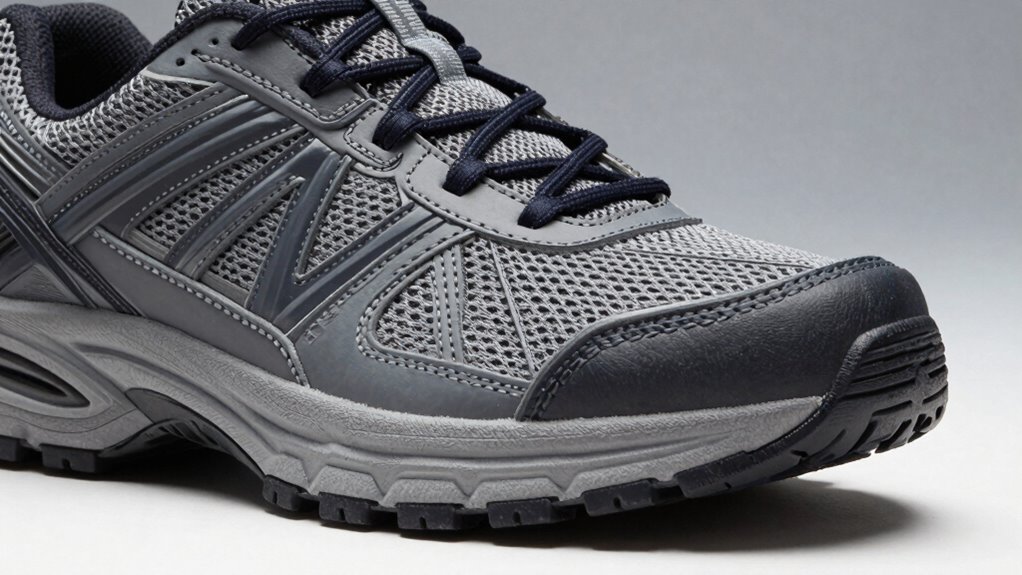
For heavier runners, getting the right sizing, fit, and upper construction in your running shoes is essential for comfort and performance.
Start with a thorough fit assessment, considering foot volume and last shape. With larger body mass, you may need higher-volume lasts to avoid compression and hotspots.
Wider forefoot and deeper toe-box designs can help reduce irritation from bunions or neuromas. When choosing upper materials, opt for multi-layer uppers with bonded overlays, which offer breathability and support.
Reinforced heel counters or molded heel cups enhance rearfoot lockdown, preventing slippage. Guarantee the heel-to-toe length leaves a thumb-width gap to allow forefoot expansion.
Try multiple brands and width options to find the best fit, as manufacturing tolerances vary. Consider shoes with a spacious toe box that allows natural foot movement, as this can enhance comfort and reduce the risk of discomfort or blister formation.
Recommended Shoe Features and Specs
When you’re on the hunt for the best running shoes as a heavier runner, focusing on specific features and specifications can make all the difference in your comfort and performance.
Prioritize shock absorption with a minimum 120 SA rating at the heel and forefoot to protect against impact. Look for stack heights of 42.7/34.4 mm or higher to prevent bottoming out, and consider high-density foams like nitrogen-infused for lasting cushioning.
Focus on shock absorption with a 120 SA rating and stack heights of 42.7/34.4 mm for optimal impact protection.
Midsole durability is essential; aim for a firmness of at least 20 HA on the durometer. EVA-based foams offer longevity, while PEBA foams extend lifespan in models like the Saucony Triumph 22.
Thicker midsoles with reinforced construction guarantee they withstand high mileage without breaking down.
Wrapping It Up
When you’re choosing running shoes as a heavier runner, it’s vital to prioritize durability and support. Investigate the theory that more cushioning always equals better comfort. You’ll find that while cushioning is essential, the right midsole design, outsole durability, and stability features truly define a shoe’s performance. Guarantee a perfect fit with a well-constructed upper and consider shoes with robust rubber compounds for longevity. By focusing on these aspects, you’ll enhance your running experience and reduce injury risks.
I’m a heavier runner and my current shoes start slipping at the heel once they get a few weeks old, even though the outsole still looks okay. Should I be focusing more on the upper fit and heel hold than on the rubber when I’m picking a new pair from this list?
Yes, heel hold and upper lockdown should be a real priority if the outsole still looks fine but the back of the shoe starts shifting. A secure heel counter, a snug midfoot, and a lacing setup that keeps the upper from stretching out too much matter a lot for avoiding that loose feeling. You can still look for durable rubber, but if the upper is the weak point, the shoe will feel tired even before the bottom wears down.
I’m deciding between a wider, more stable shoe and a lighter one that feels quicker, because the stable pair seems better for my weight but I’m afraid it’ll feel clunky on shorter runs. How do I tell which direction makes more sense for everyday road miles?
For everyday road miles, the more stable shoe is usually the safer bet if you already know you prefer a wider base and steadier landing. A lighter shoe can feel nice for short runs, but if it makes you work harder to stay balanced, that quicker feel stops mattering pretty fast. I’d lean toward the shoe that feels smooth and controlled at an easy pace, not just the one that sounds fast on paper.