
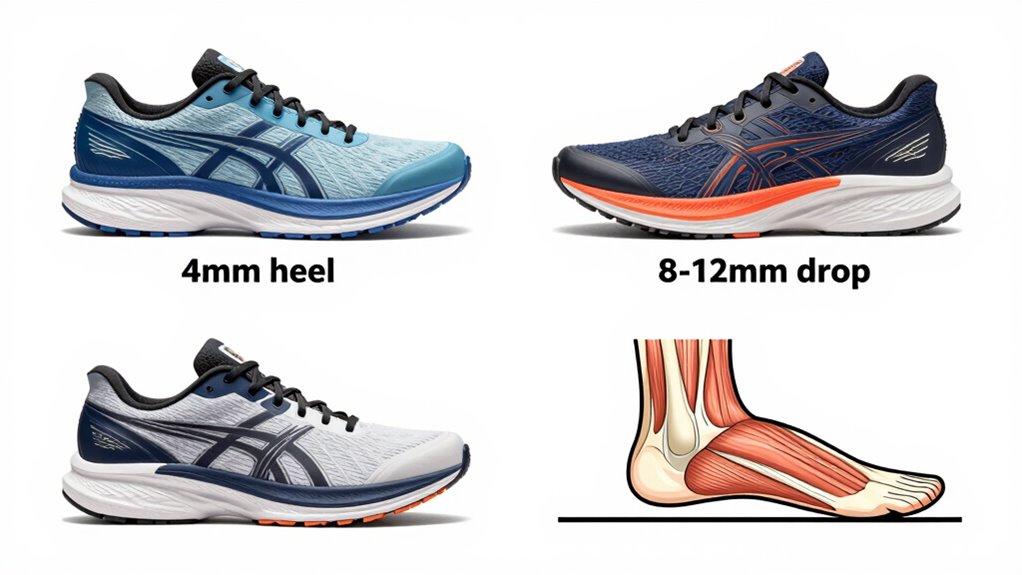
A 4mm drop shoe might make your calves work harder and feel more strain, promoting a forefoot or midfoot strike and enhancing stride efficiency. In contrast, shoes with an 8-12mm drop reduce stress on calves and the Achilles tendon, ideal for heel strikers. Changing between drops requires gradual adaptation to prevent injury and enhance strength. Choosing the appropriate drop is essential for comfort and running performance, and discovering more could perfect your running mechanics.
Understanding Heel-to-Toe Drop Variations
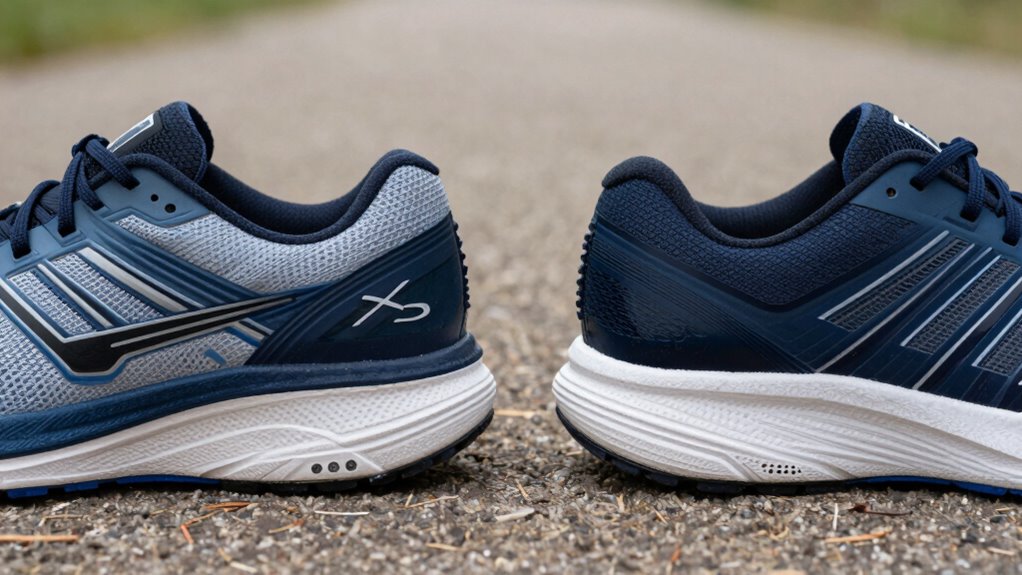
When it comes to understanding heel-to-toe drop variations, knowing the basics can greatly impact your shoe selection and running experience.
Heel-to-toe drop measures the height difference between the heel and forefoot in millimeters, influencing drop preferences. Shoes with a zero drop offer a level platform, often appealing to those favoring minimalist designs, while higher drops promote a steeper slope, elevating the heel.
Your choice should align with your running style and comfort needs. Consider shoe flexibility as well; a flexible shoe accommodates natural foot movement, enhancing comfort across different terrains.
Align your shoe choice with your running style and prioritize flexibility for enhanced comfort on diverse terrains.
Incorporating strength training exercises into your routine can further support your biomechanics and reduce the risk of injury, providing a more comprehensive approach to running performance.
Whether you prefer a low or high drop, recognizing these variations helps you select shoes that match your running habits and support your biomechanics effectively.
Impact on Running Stride and Biomechanics
Understanding heel-to-toe drop variations provides insights into how these differences can affect your running stride and biomechanics.
A lower drop, like 4mm, encourages a shift in footstrike patterns, promoting a forefoot or midfoot strike, which can increase your stride efficiency by potentially shortening your stride and increasing cadence. This change can lead to a more energy-efficient running style.
In contrast, higher drops, such as 8-12mm, tend to result in a longer stride due to the forward push-off shift facilitated by stiffer soles.
These variations also affect joint kinetics, with lower drops increasing ankle moments and higher drops impacting knee extension moments.
Older runners may need to consider that musculoskeletal changes can impact how different heel-to-toe drops affect their running mechanics and comfort.
Ultimately, choosing the right drop can influence your overall running mechanics and performance.
Calf and Achilles Tendon Considerations
While choosing the right shoe drop can enhance your running performance, it also considerably impacts the stress and strain on your calf muscles and Achilles tendon.
Opting for a 4mm drop increases the vertical loading rate on your ankle, requiring greater calf flexibility and ankle mobility. This can lead to significant pressure and strain, especially for forefoot strikers, as more time is spent at the end range of calf motion.
Conversely, an 8-12mm drop provides relief by reducing stress on the calves and unloading the Achilles tendon, vital for Achilles health. This higher drop is particularly beneficial for heel strikers and those with chronic Achilles issues, as it lessens tendon stretch and supports pain-free running.
A gradual intensity increase in your training regimen can help prevent injuries related to changes in shoe drop, as it allows your body to adjust to new stress levels and build necessary strength and flexibility.
Transitioning Safely Between Drops
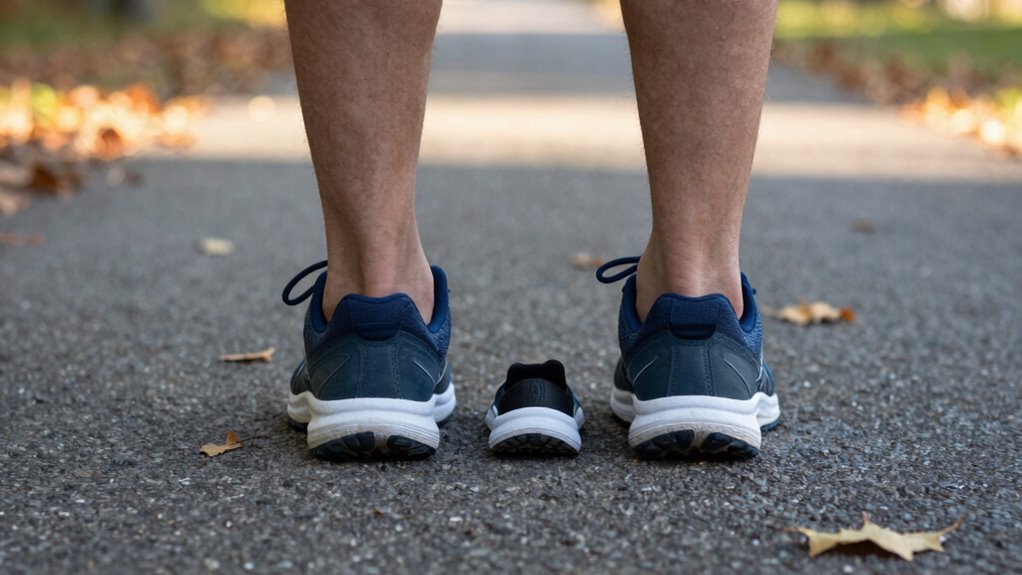
Shifting safely between shoe drops is essential to avoid injury and enhance your running experience. Start with pre-change assessments to confirm your body is ready. Use change strategies, incorporating a gradual exposure plan over 10 to 12 weeks, focusing on injury prevention. Incorporate exercises like single-leg hops and calf stretches to build strength and mobility. Monitor for soreness and adjust as needed. Remember that proper nutrition and hydration are essential for muscle repair and recovery during transitions. Here’s a simplified guide:
| Assessment | Criteria | Action |
|---|---|---|
| Single Leg Balance | 30 seconds, eyes closed | Stretch and strengthen if failed |
| Ankle Dorsiflexion | 20-25 degrees | Confirm flexibility |
| Big Toe Dorsiflexion | 30 degrees with ankle dorsiflexed | Improve gait cycle |
| Gradual Exposure | 10-week plan, start minimal use | Increase progressively |
| Strength Exercises | Lateral bounds, single-leg hops | Perform regularly |
Shoe Recommendations for Different Drop Preferences
As you consider adjusting your running footwear, selecting the right shoe drop can greatly impact your performance and comfort. For those preferring a 4 mm or lower drop, shoe types like trail models, minimalist lines, and racing flats cater to runner profiles favoring agility and proprioception. These shoes encourage mid/forefoot striking patterns, promoting natural biomechanics. High-stack options such as certain Hoka models also provide cushioning without a pronounced heel lift. On the other hand, if an 8–12 mm drop suits your running style, traditional road trainers and maximal-cushion shoes are ideal for heel strikers seeking comfort and shock absorption. These shoe types are often recommended for beginner runners or those managing injuries, aligning with profiles needing extra heel support and stability. A well-cushioned midsole contributes to smoother transitions from heel to toe, enhancing overall stability and comfort.
Wrapping It Up
Choosing between a 4mm or 8–12mm heel-to-toe drop isn’t just about comfort—it’s about optimizing your run. Studies show that a lower drop can increase calf muscle activation by up to 15%, potentially enhancing your running efficiency. However, shifting takes time to prevent injury. Assess your biomechanics and consider your goals before making a switch. Always prioritize gradual adjustments and consult with a professional if needed. With the right choice, you can enhance your running experience considerably.
I switched from a 12mm daily trainer to a 4mm pair for shorter runs, and my calves are still tight two days later. Should I back off and go back to the higher drop for now, or is this just the normal adjustment phase?
Back off for now and let the calves settle before pushing the 4mm pair again. A lower drop can ask more of your lower legs, so if the tightness is lingering, it’s usually smarter to shorten the runs, alternate with your higher-drop shoe, and build up gradually instead of forcing the change all at once.