
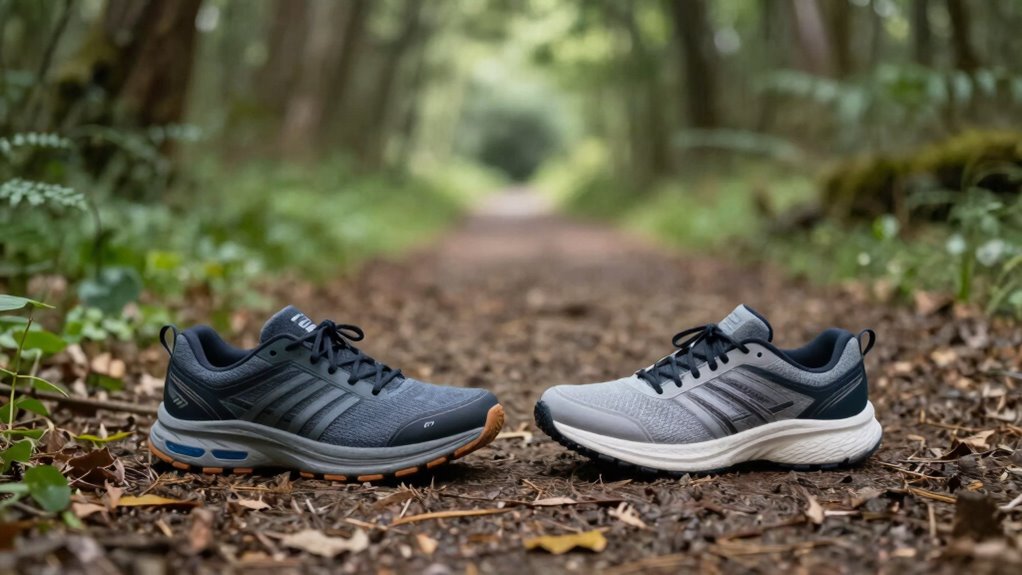
Selecting between max and moderate cushion shoes can considerably impact how your legs feel during a run. Max-cushioned shoes increase leg stiffness and can lower muscle fatigue, making them ideal for hard surfaces or those with higher BMI. Moderate-cushioned shoes offer better proprioceptive feedback and flexible movement, suiting technical trails or faster speeds. Your choice depends on running style, surface, and personal comfort. Explore more to find what best suits your needs.
Leg Stiffness and Impact Attenuation
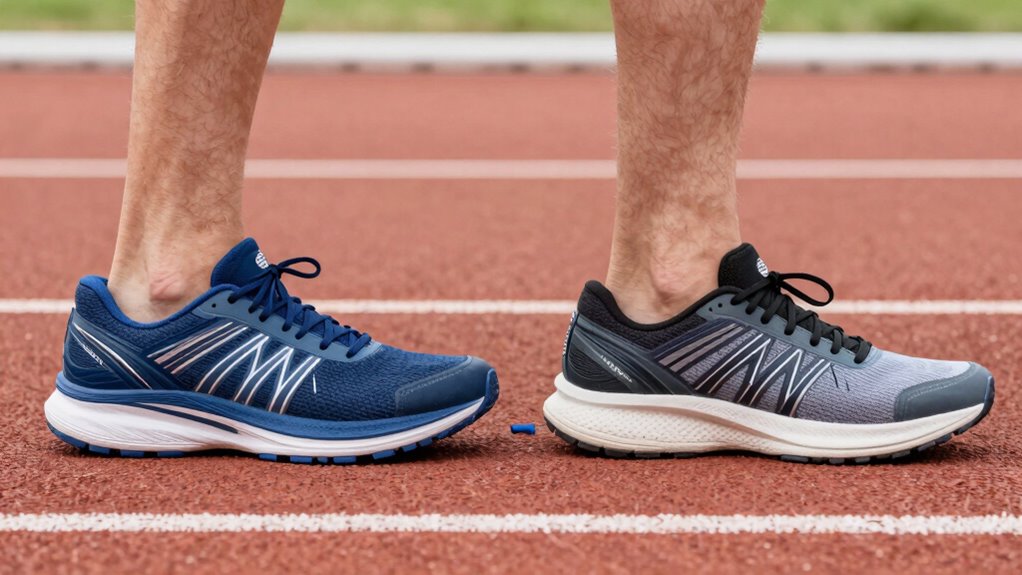
When it comes to leg stiffness and impact attenuation, understanding how different levels of shoe cushioning affect your running experience is essential.
Max-cushioned shoes increase leg stiffness during landing, especially at faster speeds, due to reduced midsole compression. This stiffer limb behavior can shorten contact time but may amplify impact peaks, despite the cushioning effects.
Max-cushioned shoes lead to increased leg stiffness at faster speeds, potentially amplifying impact peaks despite added cushioning.
On the other hand, moderate-cushioned shoes allow for more compliant landing mechanics, with greater joint flexion and effective distribution of loading across joints and soft tissues.
At higher speeds, the difference in leg stiffness between max and moderate cushioning becomes more pronounced. These rapid adaptations in leg stiffness can alter expected impact attenuation outcomes, emphasizing the need to choose the right shoe based on your running speed and style. Additionally, integrating strength training exercises can enhance muscle strength and endurance, further supporting safe and efficient running mechanics.
Stride Mechanics and Ground Reaction Forces
Although often overlooked, your stride mechanics play an essential role in how ground reaction forces (GRFs) are distributed during running.
When considering stride frequency and foot placement, the impact on GRFs becomes clear:
- Footstrike Location: Heel strikes create a distinct early impact peak in the vertical GRF, while midfoot/forefoot strikes produce a smoother force distribution.
- Stride Frequency: Increasing stride frequency reduces peak impact forces and vertical loading rates by shortening contact time and bringing foot placement closer to your center of mass.
- Foot Placement: Greater anterior foot placement increases braking forces and peak horizontal GRFs.
- Cushioning Interaction: Thicker shoe cushioning can reduce early impact peaks for heel strikers, yet it has less influence on active-phase forces.
Incorporating proper footwear selection can help mitigate injury risks by providing adequate support and reducing stress on the body. Understanding these elements helps optimize your running efficiency.
Proprioceptive Feedback and Stability
Proprioceptive feedback is essential for maintaining stability while running, as it allows you to sense your body’s position in space and adapt to different terrains.
When you engage in proprioceptive training, your ability to detect landing force and terrain changes improves, enhancing your overall stability.
Wearing max cushion shoes can dampen this sensory adaptation, making it harder to feel the ground and respond appropriately. Thick foam in max cushion shoes compresses unevenly, leading to joint misalignment and instability.
On the other hand, moderate cushion shoes provide firmer support, preserving proprioceptive feedback and aiding in the detection of landing forces. This sensory preservation allows your body to adjust naturally, promoting stability and efficient movement.
Enhanced proprioception from moderate cushioning aids in maintaining proper alignment and reducing excess motion.
Impact Forces and Knee Loading
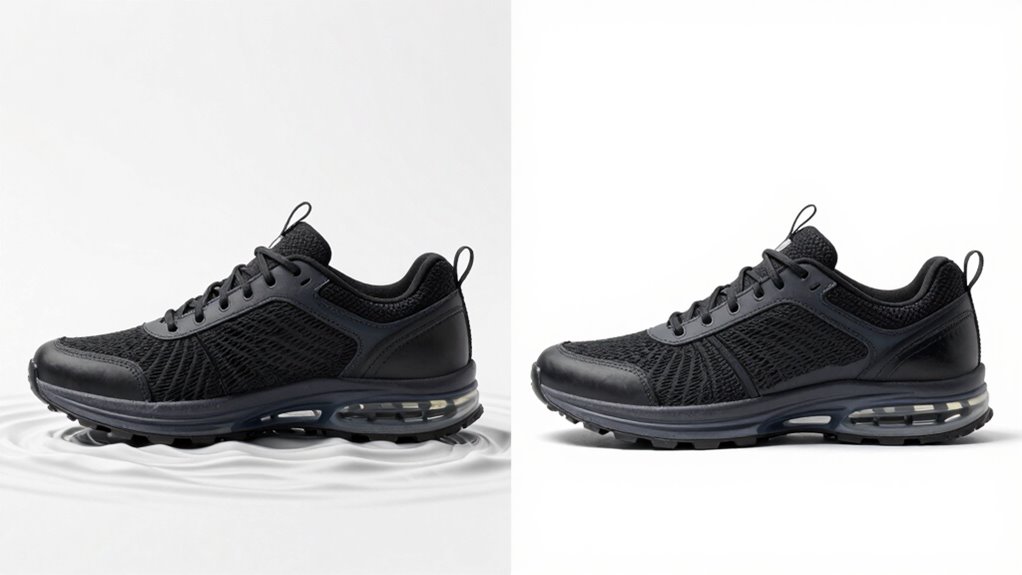
Understanding the impact forces and how they affect knee loading is essential for runners when selecting the right footwear. Different shoes influence the impact peak and loading rate, affecting your joints in unique ways. Here are some insights to take into account:
- Impact Peak: Maximalist shoes sometimes fail to reduce impact peaks effectively, even increasing them under certain conditions.
- Loading Rate: Softer soles can lower measured loading rates mechanically, but runners might experience unchanged or increased rates.
- Speed Influence: Running speed raises impact peaks across shoe types, with cushioning effects diminishing at higher speeds.
- BMI Effects: Higher BMI can lead to increased impact peaks, with cushioning offering more benefits for those with a higher BMI.
In addition to selecting appropriate footwear, strengthening exercises for knee stability can help mitigate the effects of impact forces on your knees.
Choose shoes bearing in mind these factors to support your knees effectively.
Muscle Fatigue and Energy Return
When selecting running shoes, considering muscle fatigue and energy return is essential for enhancing performance and comfort. Highly cushioned shoes can minimize oxygen cost, thereby improving running economy by about 3%, which aids muscle recovery. However, cushioning preferences vary among runners, affecting your individual performance. Maximal cushioning may decrease fatigue-related performance decline by reducing loading rates and peak plantar pressures. Stability in running shoe selection relies on effective cushioning technologies like EVA and gel systems for impact absorption.
| Cushion Type | Benefits |
|---|---|
| Highly Cushioned | Improves running economy, reduces muscle fatigue |
| Moderate Cushioned | Balances energy return and muscle support |
| Advanced Foams | High energy return, lowers net muscular work |
| Maximal Cushioning | May increase stabilizer muscle demand, affecting fatigue |
Energy-efficient midsole materials enhance mechanical work while cushioning can influence perceived effort, depending on your specific biomechanics and running style.
Footstrike Patterns and Joint Mechanics
While cushioning plays an essential role in reducing muscle fatigue and enhancing energy return, how your foot strikes the ground greatly influences joint mechanics and overall running efficiency.
Understanding footstrike variations helps you adapt your running style:
- Rearfoot Strike Mechanics: Initiates contact on the heel, increasing vertical loading rates and exerting greater loads on knee and patellofemoral joints.
- Forefoot Strike Mechanics: Begins with the ball of the foot, reducing vertical loading rates but increasing demands on the ankle and Achilles tendon.
- Midfoot Strike Mechanics: Combines rearfoot and forefoot contact, balancing ankle dorsiflexion and minimizing braking forces.
- Joint Load Distribution: Rearfoot strikes elevate knee loads, while forefoot strikes shift the stress to ankle structures, impacting overall joint mechanics.
To maintain endurance while minimizing injury risk, engage in activities like swimming and cycling, which preserve cardiovascular fitness and reduce joint strain.
Contextual Factors and Runner Characteristics
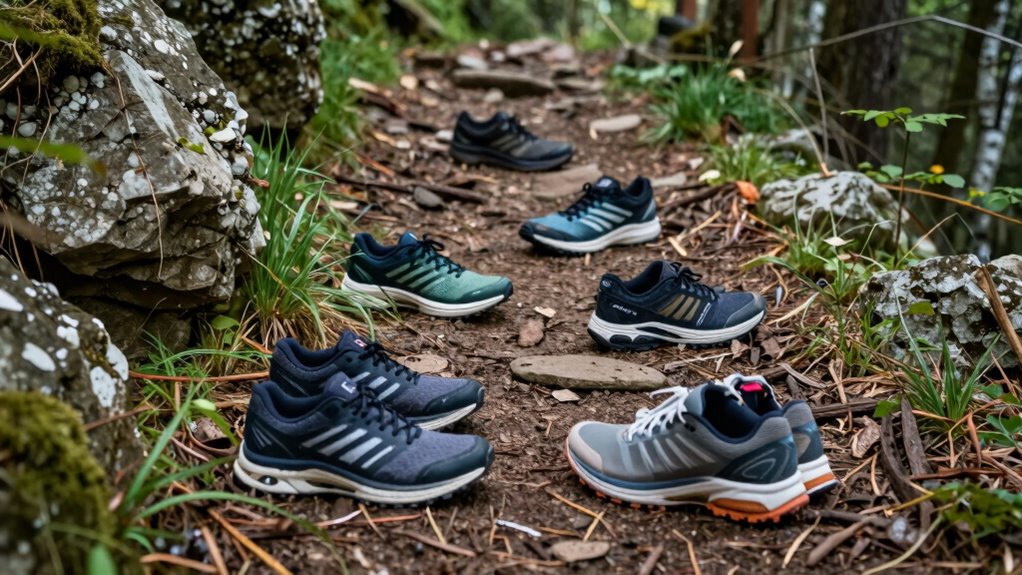
When choosing the right cushioning, consider how your running speed, body mass, and the surfaces you frequent affect your shoe preference.
Faster paces often benefit from moderate cushioning, providing the responsiveness you need for efficient turnover, while heavier runners might find that maximal cushioning offers better shock absorption.
Additionally, the terrain plays a significant role; harder surfaces can amplify the cushioning benefits, whereas softer trails mightn’t require as much padding.
Speed Influence on Cushioning
Understanding the interplay between speed and cushioning is essential for optimizing both performance and injury prevention in runners.
At faster paces, the cushioning performance of your shoes can greatly affect impact loading. Highly cushioned shoes tend to amplify impact at higher speeds, such as 14.5 km/h, resulting in increased impact peak and loading rate.
Here’s how speed effects influence cushioning:
- Impact Loading Increases: At fast speeds, cushioned shoes can elevate impact forces, which may increase injury risk.
- Leg Stiffness: Maximal cushioning can lead to increased leg stiffness at higher speeds.
- Tibial Shock: Greater tibial shock is noted in cushioned shoes at speeds of 3.0 m/s to 6.0 m/s.
- Biomechanical Adjustments: Cushioning affects biomechanics, altering effective leg length and stiffness.
Runner Body Mass Impact
Runner body mass greatly influences how cushioning in shoes impacts injury risk and running performance. In different weight categories, lighter runners face a higher risk of injury with hard shoes, while soft cushioning greatly aids in injury prevention for them.
Despite expectations, heavier runners don’t experience a notable cushioning effect. This lack of impact suggests that for heavier individuals, other factors might play a more essential role in injury risk. Maximalist shoes can increase leg stiffness, which mightn’t be beneficial for everyone.
If you’re a lighter runner, opting for shoes with greater shock absorption could be vital for reducing injuries. Meanwhile, heavier runners mightn’t need to prioritize shoe cushioning as much, focusing instead on other aspects of their running regimen for injury prevention.
Surface Compatibility Factors
- Hard Surfaces: Maximal-cushion shoes excel with taller stack heights and larger midsoles, reducing peak impact forces and pressure spikes.
- Technical Trails: Moderate-cushion shoes offer better proprioceptive feedback, aiding foot placement on uneven terrains like roots and rocks.
- Compliant Surfaces: On treadmills, both shoe types perform similarly in impact attenuation, but moderate-cushion shoes feel livelier for quick turnover.
- Aggressive Trails: Maximal-cushion shoes need reinforced midsoles to handle puncture risks and maintain control on rough, varied terrains.
Wrapping It Up
When you’re deciding between max and moderate cushion for your running shoes, imagine the ground beneath your feet as a dance partner, each step a choreographed move. Max cushioning offers plush comfort, cradling your legs and reducing impact forces, while moderate cushioning provides a more grounded feel, enhancing proprioceptive feedback and stability. Your choice should align with your stride mechanics and personal comfort, guiding you to a harmonious run that suits your unique rhythm and needs.
On my recovery days, I’m not sure whether the max-cushion pair is actually helping my legs more or just making them feel different afterward. If I already have a moderate pair that feels fine, is it worth keeping both in the rotation for longer runs and easy days?
If your moderate pair already feels fine on easy days, the max-cushion shoe is usually worth keeping for the runs where your legs need a little more help absorbing repeated impact. Many runners use max cushion for longer or recovery outings and keep moderate cushion for days when they want a more connected feel. The main thing to check is whether the softer shoe feels stable enough once you settle into your normal pace.