


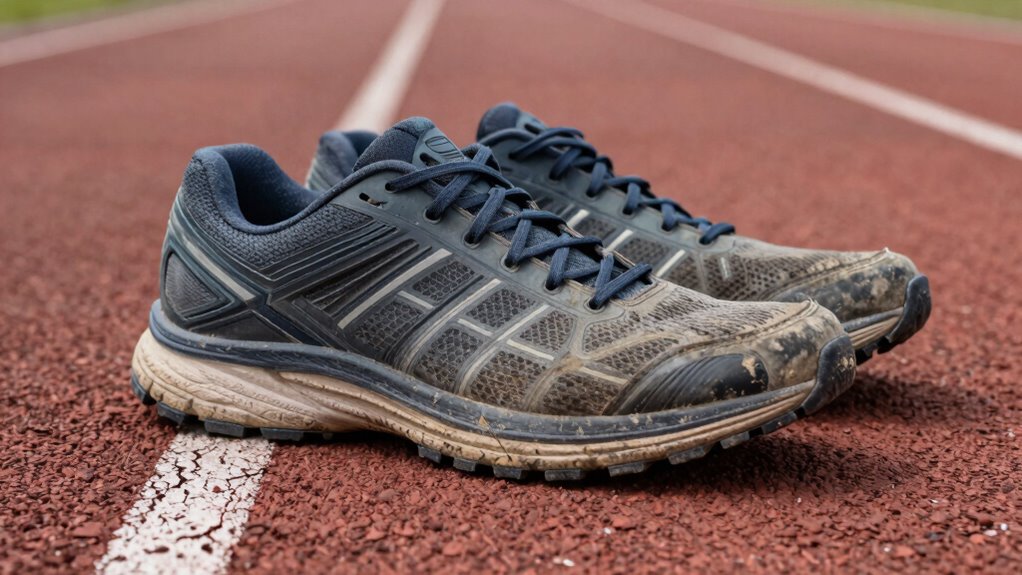
Running shoe durability hinges on outsole rubber type, foam lifespan, and mileage. Durable carbon rubber in outsoles, especially black, outlasts softer variants. Full coverage and thick layers boost wear resistance, while midsole foam’s performance diminishes with miles. Environmental factors like UV exposure and humidity accelerate wear. Replace your shoes every 300-500 miles, or when you notice signs like outsole wear or midsole creases. Knowing this helps you pick footwear wisely and uncover more insights.
Understanding Outsole Rubber Longevity

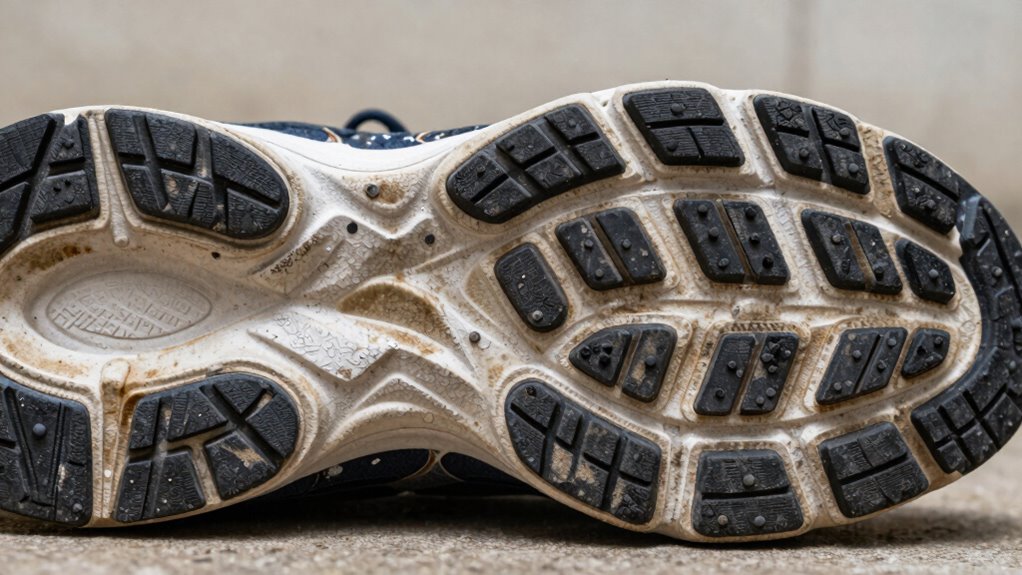
When it comes to understanding outsole rubber longevity, knowing the type of rubber used in your running shoes is essential. The choice of outsole materials greatly impacts durability.
Rubber compounds like carbon rubber excel in high-wear areas, offering superior longevity compared to blown rubber. Black carbon rubber stands out for its durability, whereas colored blown rubber tends to wear faster.
If you’re a heel striker, blown rubber might suffice for the forefoot, but it won’t last as long in other areas. Ensuring full rubber coverage and thicker layers can prevent premature wear, especially if the midsole is exposed.
Deep tread patterns also enhance longevity by adding material volume, and established brands often provide better quality control for their rubber compounds.
Evaluating Midsole Foam Lifespan
When evaluating midsole foam lifespan, you’ll notice foam compression patterns and shock absorption decline as key indicators of wear.
Over time, environmental factors like temperature and humidity can accelerate these changes, impacting the foam’s performance and durability.
Foam Compression Patterns
In the domain of running shoe design, understanding foam compression patterns is essential for evaluating midsole foam lifespan. Compression cycles play a key role in how cushioning properties evolve over time. Rapid densification during these cycles leads to noticeable changes, as less stress is required for deformation. This process includes multiple densification phases, each contributing to the gradual loss of cushioning properties.
Foam microstructure greatly impacts these patterns. High-porosity foams, while initially offering excellent cushioning, show faster damage kinetics due to their structure. The use of micro-sized mineral fillers enhances specific mechanical properties during initial compressions.
Additionally, a uniform microstructure may excel early but deteriorates quickly under repeated loads. Understanding these elements helps in designing midsoles that balance performance with durability.
Shock Absorption Decline
As you evaluate midsole foam lifespan, understanding shock absorption decline is vital for ensuring ideal performance and comfort. Shoes initially retain 80% shock absorption after 150 miles, but this drops to 70% at 500 miles. Performance metrics reveal a significant decline in cushioning, with heel cushioning decreasing by 16-33% after 480 kilometers. Midfoot peak pressure rises by 50% after 430 miles, emphasizing the impact of reduced shock absorption on foot comfort. Advanced compression-molded EVA and supercritical foams offer better performance, with the latter retaining resiliency longer. Despite this, EVA midsoles eventually lose all cushioning around 800-900 kilometers. Regular runners should consider replacing their shoes every 300-500 miles, as performance metrics suggest ideal shock absorption is vital for maintaining comfort and efficiency. Furthermore, a well-developed supplementation plan can enhance training efficacy, particularly when considering the demands of endurance running and the need for proper electrolyte management.
Environmental Aging Factors
Though often overlooked, environmental factors play an essential role in the lifespan of midsole foams in running shoes. Oxidation effects from air exposure gradually degrade the polymers, losing elasticity and strength over time. Oxygen-induced yellowing of EVA foams signals this degradation. UV exposure from sunlight further damages midsole polymers, breaking molecular chains and causing embrittlement. UV-induced color changes often warn of impending cushioning loss.
Here’s a quick overview:
| Factor | Effect on Foam Lifespan |
|---|---|
| Oxidation | Weakens structure, causes yellowing |
| UV Exposure | Breaks molecular chains, embrittles |
| Temperature Changes | Accelerates degradation, alters stiffness |
| Humidity and Water | Promotes breakdown, affects rebound |
| Chemical Exposure | Causes surface pitting, adhesive loss |
Understanding these factors can help you extend your running shoe’s lifespan.
Impacts of Shoe Type and Construction
When choosing running shoes, the type and construction greatly impact their durability and performance. Different shoe types and construction methods determine how well a shoe holds up over time. For example, road trainers like the Asics Nimbus 27 have a full-length AHAR rubber outsole, enhancing longevity. Here’s a breakdown of how construction influences durability:
- Road Trainers: Use robust outsoles and firm midsoles for high wear resistance. Examples include the Nike Structure 25 with High Abrasion Green rubber.
- Super Shoes: Incorporate resilient midsoles and premium rubber outsoles, such as the Adidas Adizero Adios Pro 4.
- Trail Shoes: Feature rugged outsoles and protective uppers for challenging terrains like the Salomon Speedcross 5.
- Lightweight Race Shoes: Offer minimal cushioning for speed, sacrificing some durability, such as the Nike Pegasus 41.
In the context of running shoes, the cushioning technology plays a crucial role in determining both comfort and the longevity of the shoe.
Assessing Variability in Real-World Mileage

Understanding the durability of running shoes involves more than just examining their construction; it requires evaluating how they perform over time under real-world conditions. Your runner experience and mileage tracking reveal that shoe lifespan varies widely. While typical road trainers are often cited to last 300–500 miles, real-world mileage can differ markedly due to factors like body mass, running pace, and strike pattern. Abrasive surfaces and intense workout routines can accelerate wear. Shoe construction, including foam type and outsole material, further influences durability. Variability also stems from differing methodologies in mileage estimation, whether consumer reports or lab tests. By considering these aspects, you can better assess your shoes’ longevity and make informed choices about when they need replacing. Additionally, proper footwear selection can significantly impact injury prevention, as it provides the necessary support to reduce stress on the body.
Identifying Practical Signals for Replacement
How do you know when your running shoes have reached the end of their useful life? Look for specific visual cues and performance indicators. These signals help you decide when it’s time to replace them:
- Outsole signs: Bald spots and uneven wear can cause your shoes to lean or not sit flat, signaling structural imbalance and the need for new shoes.
- Midsole foam degradation: A “dead” feel or visible creases indicate cushioning loss, affecting your running comfort and performance.
- Structural and upper integrity: Flexible heel counters, torn uppers, or sidewall creasing compromise support and fit security.
- Functional tests: Shoes that twist easily or rock on a flat surface suggest lost torsional rigidity and asymmetric wear, reducing stability and energy return.
- For runners susceptible to injuries like plantar fasciitis, monitoring early warning signs can help prevent discomfort and ensure timely shoe replacement.
Leveraging Manufacturer Guidance and Lab Data
Even though personal experiences can vary widely, leveraging manufacturer guidance and lab data provides a solid framework for determining when to replace your running shoes. Manufacturers generally recommend replacing shoes every 300–500 miles, considering factors like terrain and individual runner biomechanics. These recommendations focus on midsole cushioning and outsole wear, offering a proxy for shoe longevity. Lab data supports this by highlighting how different foam types, such as EVA and PU, degrade under repeated stress. Newer foams, like PEBA, show improved durability. Outsole rubber durability also varies based on compound hardness and tread design, affecting wear patterns. The premium foam midsole in the HOKA Mens Bondi 9 enhances cushioning and energy return, contributing to both comfort and performance for runners.
Wrapping It Up
You’ve got your work cut out for you when it comes to understanding running shoe durability. By considering outsole rubber longevity, midsole foam lifespan, and real-world mileage, you can make informed decisions about when to replace your shoes. Pay attention to wear patterns and manufacturer guidance to keep your feet happy. While different shoe types and constructions may affect durability, staying alert to these factors guarantees you get the most out of every mile.