
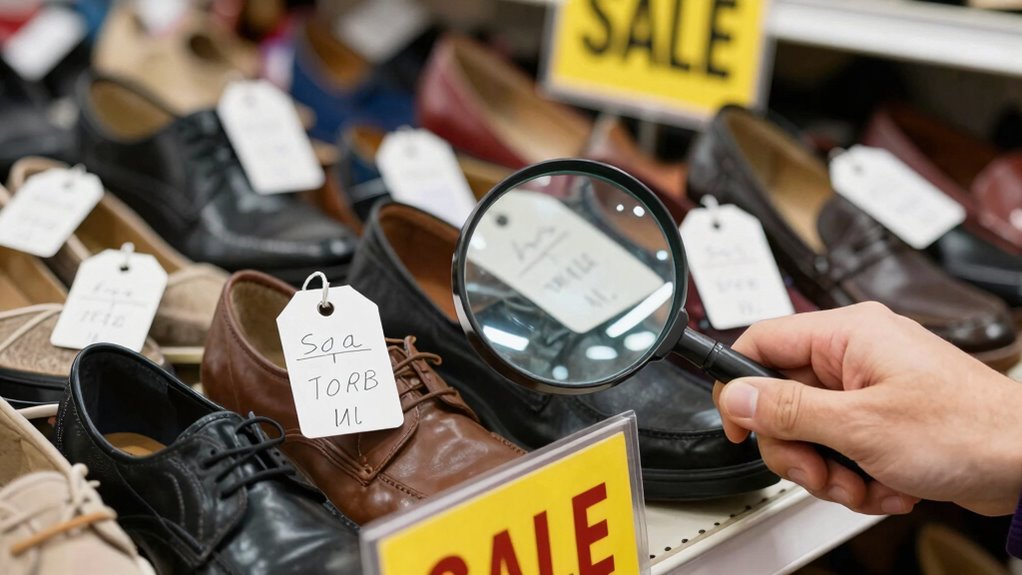
To avoid overpaying for shoes, measure your feet regularly, wearing the socks or inserts intended for the shoes, especially in the evening for accuracy. Identify your arch type and gait: flat feet need stability, high arches benefit from cushioning. Scrutinize the materials and construction for quality and durability. When buying online, review shipping policies and customer feedback. By paying attention to these factors, you’ll find the perfect pair without spending too much. Learn more about these essential tips.
Measure Your Feet Regularly
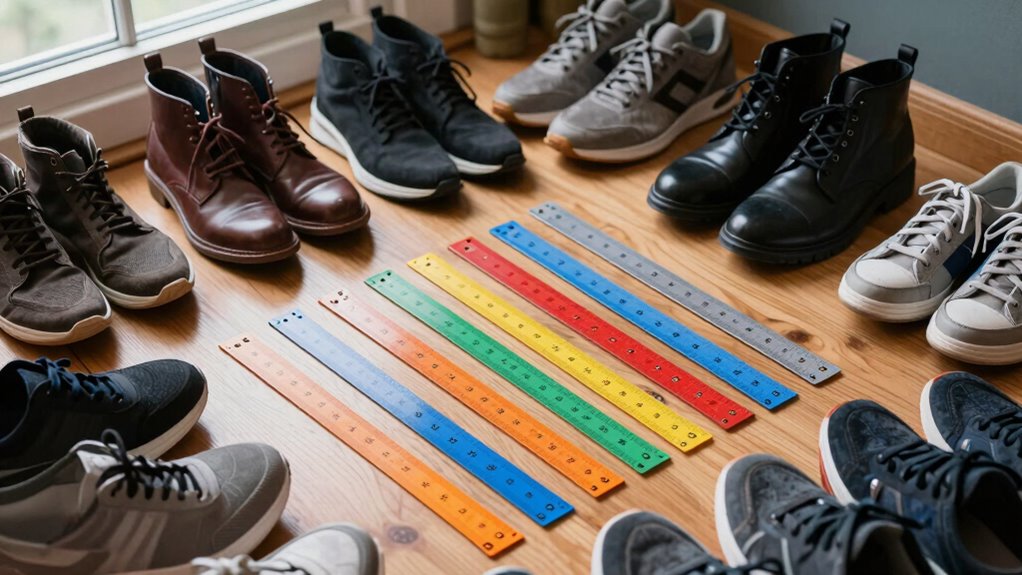
Although it might seem unnecessary, regularly measuring your feet is essential for ensuring a proper shoe fit. Foot measurement should be an annual routine due to changes from age, weight shifts, and activity levels.
Accurate fitting techniques prevent purchasing ill-fitting shoes that can lead to discomfort or foot issues. Measure both feet, as they often differ in size, and fit shoes to the larger one. This practice avoids compression injuries like corns and bunions.
Measure in the evening when feet are most swollen to capture their largest size, ensuring a comfortable fit throughout the day. Document these measurements to help navigate different sizing across brands, ensuring you choose appropriate shoe width and depth, ultimately reducing returns and enhancing comfort.
Test Shoes With Intended Socks or Inserts
Once you’ve accurately measured your feet, the next essential step in finding the perfect pair of shoes is to test them with the socks or inserts you plan to use.
Sock thickness plays a significant role in how your shoes fit. Always try on shoes with the exact sock type you’ll wear regularly. This guarantees accurate fit and proper toe space, preventing pressure points or slippage.
Similarly, insert the intended insole or orthotic before evaluating the shoe’s fit. An insole fit can impact interior volume, turning a seemingly perfect fit into a tight squeeze.
Walk or run briefly to check for changes in arch support, heel cup depth, and overall comfort. Confirm that both the sock and insole allow natural toe splay and provide adequate toe clearance.
Consider Your Arch Type and Gait
Understanding your arch type and gait is essential in selecting the right pair of shoes for comfort and performance.
To identify your arch type, try the wet test: wet your foot, step onto a surface, and check your footprint. Flat feet will show a full imprint, indicating a need for stability shoes with arch support. Neutral arches show partial visibility and suit balanced shoes, while high arches reveal little imprint, requiring cushioned footwear to improve shock absorption.
Your gait, or how you walk, also influences shoe choice. Overpronation in flat feet means increased inner ankle roll, while high arches result in forefoot landing. Gait analysis can help determine these patterns, guiding you to shoes that enhance comfort and prevent injuries. Additionally, strength training is vital for preventing common running injuries by strengthening often-overlooked muscles critical for running.
Evaluate Shoe Construction and Materials
A well-constructed shoe is crucial for both comfort and longevity, making it essential to evaluate shoe construction and materials before making a purchase.
Start by inspecting shoe materials: leather requires tests for tensile strength and flexibility, while fabric needs assessments for seam slippage and abrasion resistance. Certifications like OEKO-TEX guarantee safety from harmful substances.
Leather demands tensile strength tests; fabrics need seam slippage assessments. OEKO-TEX ensures materials are free from harmful substances.
When examining construction techniques, pay attention to the following:
- Sole Construction: Look for Goodyear-welted soles, which enhance support and water resistance.
- Stitching and Adhesives: Confirm quality through proper thread selection and adhesive application.
- Interior and Lining: Check for smooth, durable leather linings that prevent odor and enhance comfort.
These steps help you choose shoes that offer durability and performance, confirming value for your investment.
Pay Attention to Online Buying Details
When buying shoes online, paying attention to details can save you from common pitfalls that many shoppers encounter. First, scrutinize shipping policies to avoid unexpected costs that inflate your final price. Some sites offer free domestic shipping, while international rates can vary widely. Additionally, diving into customer reviews is essential. These reviews often highlight fit issues or quality concerns not evident in product photos, helping you make informed decisions. Consistent running can contribute to mental readiness that is as important as physical training.
| Aspect | Considerations |
|---|---|
| Shipping Policies | Check for free domestic options |
| Verify international shipping costs | |
| Customer Reviews | Look for fit and quality insights |
| Trust reviews with numerous ratings |
Wrapping It Up
By understanding your foot’s unique characteristics and shopping with purpose, you’ll dodge common pitfalls and avoid overpaying for shoes. Regularly measure your feet, test shoes with your usual socks or inserts, and consider your arch type and gait. Evaluate the shoe’s construction and materials, and scrutinize online buying details, so you don’t end up with a white elephant. With these strategies, you’ll make informed decisions, ensuring comfort and value with every step you take.
My left foot is a little longer than my right, and that’s usually where I end up with the tight spot. Should I be measuring both feet first and buying to the longer one, or is there a better way to handle that without wasting money on the wrong size?
Measure both feet and fit the shoe to the larger one. If one foot is consistently a little longer, that’s usually the safer starting point, especially if the pair will be worn for longer periods. It also helps to measure later in the day and with the socks you’ll actually use, since that can change the fit more than people expect. If you’re between sizes, checking the return policy before ordering can save you from getting stuck with the wrong pair.
I keep trying on shoes with thin socks in the store, but the thicker socks I wear at work make them feel totally different. Should I be sizing up for the socks, or is there a smarter way to judge the fit before I pay?
Try them on with the same socks you plan to wear most often. If the shoes only feel right with thin socks, sizing up can help, but it’s worth checking whether the fit becomes too loose in the heel or through the midfoot. For work shoes, the better test is usually the actual sock setup you’ll use day to day, since that gives a much truer feel than a quick try-on with light socks.