
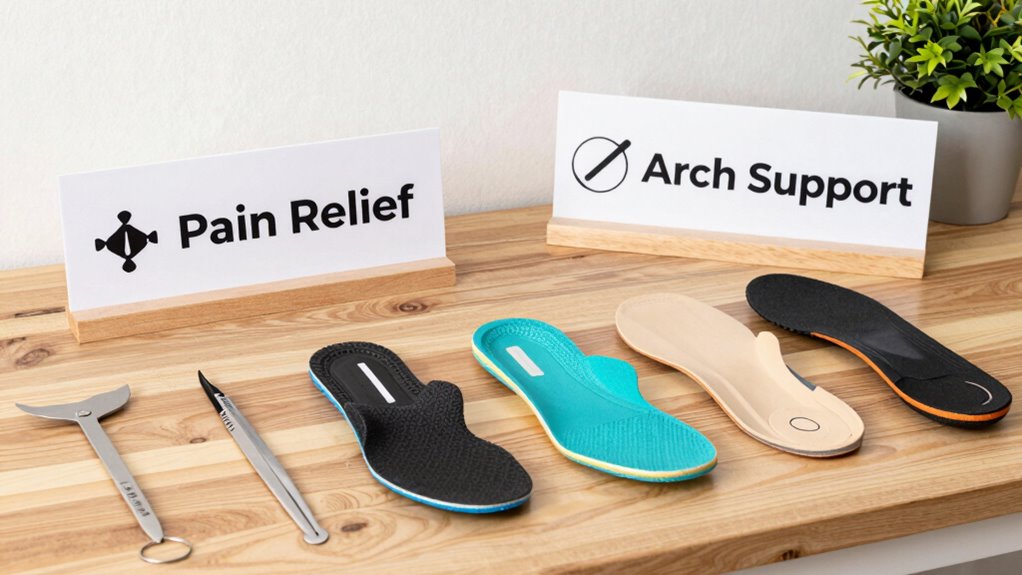
If you’re experiencing discomfort, overpronation, or balance issues from flat feet or high arches, insoles might help. They alleviate heel pain and improve stability in daily activities. Consider that custom orthotics can be expensive, and adapting might take time, but the right choice could enhance foot health. Persistent pain or neuropathic symptoms may require professional help. Recognizing these signs early aids in selecting effective solutions tailored to your needs, helping you take informed next steps.
Recognizing the Signs: When Insoles Could Benefit You

How do you know when it’s time to get insoles? Pay attention to your foot structure. If you have flat feet, you might notice your feet rolling inward during walking, leading to discomfort and potential pain in various body parts. This overpronation can cause plantar fasciitis, tendonitis, or even knee and back pain. Insoles with arch support can be essential here, as they absorb shock and improve your foot’s functionality. On the other hand, high arches often result in insufficient shock absorption. You may experience corns, calluses, and balance issues. Insoles help by providing cushioning and necessary support. Recognizing these signs early can prevent further complications, ensuring your feet receive the support they need for a healthier, more comfortable stride. Additionally, moderate cushioning and firm midsoles are recommended to support natural foot movement and reduce tension on the plantar fascia.
Objective Evaluations: Clinical Indicators for Insole Use
Recognizing the signs that insoles might benefit you is just the beginning. Understanding clinical indicators through gait analysis and plantar pressure measurements can provide clear insights.
When you walk, deviations in gait parameters like stride velocity and stance time might signal the need for insoles. These tools assess plantar pressure distribution, helping identify potential issues such as diabetic foot ulcers or abnormal gait patterns.
By evaluating peak pressures and strain patterns, insoles can pinpoint areas of concern, especially for those with underlying conditions like neuropathy. Smart insoles track walking speeds and activity in older adults, identifying frailty or mobility issues.
Reliable and accurate, these evaluations support long-term health monitoring, ensuring you stay informed about your foot health.
Evidence of Effectiveness: Proven Benefits of Insoles
You might find relief from heel pain and reduced forefoot pressure with the right insoles, as studies show they can greatly enhance comfort and support.
They also improve balance, which is particularly beneficial for older adults or those with foot-sole sensation loss.
Heel Pain Relief
While heel pain can be a frustrating and persistent issue, insoles have proven to be an effective tool for relief, especially when addressing plantar fasciitis. Studies highlight that contoured full-length insoles are more effective than simple heel cups for plantar fasciitis treatment. These insoles, crafted from specific insole materials, help redistribute rearfoot plantar pressures. This redistribution reduces peak forces under the heel bone, aiding in pain relief. Research shows meaningful pain reductions within weeks, with significant improvements noted at three to six months. Combining insoles with other treatments, like exercise or night splints, can enhance these benefits. Although the effectiveness varies, many find relief from plantar fasciitis symptoms, making insoles a valuable component of your treatment strategy. Additionally, maintaining regular stretching routines can prevent tight or weak muscles, further aiding in the management of heel pain and supporting overall foot health.
Forefoot Pressure Reduction
Moving from heel pain relief to addressing forefoot pressure, insoles offer significant benefits in reducing discomfort and preventing injuries.
Understanding forefoot biomechanics is essential, as incorrect pressure distribution can lead to discomfort and long-term issues.
PORON insoles, known for their effectiveness, have demonstrated a 51.1% reduction in forefoot mean peak pressure (MPP), outperforming rigid materials.
Soft insoles like PORON 4708 and Nora Lunalastik EVA excel in reducing MPP by up to 51.14%, making them ideal for redistributing pressure. They help balance the load, reducing the risk of injuries.
Custom shape-plus-pressure insoles further enhance forefoot unloading by reducing peak pressure by 32% and decreasing force-time integral by 40%, ensuring maximum comfort and support.
Such innovations highlight the importance of selecting the right insoles for your needs.
Balance Improvement
Achieving better balance can greatly enhance your quality of life, especially if you face challenges like diabetic neuropathy or age-related sensory loss.
Balance training often incorporates insoles designed to improve sensory integration. Studies show textured insoles can reduce postural sway in diabetic neuropathy patients by enhancing static stability. They provide tactile stimulation to your feet, boosting proprioceptive feedback, which is essential for postural control.
In older adults, facilitatory insoles improve lateral gait stability and reduce fall risks. Vibrating insoles also enhance dynamic balance, mitigating fatigue effects. These insoles enhance sensory input, reducing reliance on visual and vestibular systems.
With consistent use, they offer sustained benefits, aiding in effective balance training and improving overall stability in everyday activities.
Weighing the Tradeoffs: Limitations and Potential Downsides

Considering insoles often requires evaluating evidence concerns and variability, as not all insoles suit every foot or activity, leading to inconsistent results.
The costs can also be significant, especially with custom orthotics, and adapting to new insoles may bring discomfort or require a period of adjustment.
These factors highlight the importance of evaluating personal needs and potential downsides before committing to insoles as a solution.
Evidence Concerns and Variability
While insoles are often recommended for alleviating low back pain (LBP), the evidence supporting their effectiveness isn’t as robust as one might hope.
Evidence variability and methodological limitations greatly affect the reliability of findings. A systematic review highlights insufficient evidence, as the small number of trials and moderate methodological quality limit the strength of conclusions.
High heterogeneity in trials further reduces result reliability, with a meta-analysis showing a non-significant 22% risk reduction in LBP. Despite some trials reporting statistically significant improvements, only two out of four demonstrate meaningful results.
Real insoles show greater LBP pain intensity reduction compared to placebo, but inconsistencies remain.
Cost and Adaptation Challenges
When it comes to insoles, cost and adaptation can present significant challenges. Custom orthotics can set you back $400–$600, and they’re often not covered by insurance. The high cost acts as a major restraint, making budget-friendly and medium-priced insoles more appealing to many.
Cost considerations are essential when choosing insoles, but don’t overlook the adaptation strategies needed for comfort and effectiveness. Custom insoles mightn’t always be cost-effective, sometimes even increasing pain during activity. Adapting to these insoles can require education on sizing and fit, especially for medium-priced options.
Smart insoles, however, offer savings and lower health risks long-term, making them a compelling choice. Understanding these tradeoffs can help you make an informed decision.
Choosing the Right Insole: Practical Selection Criteria
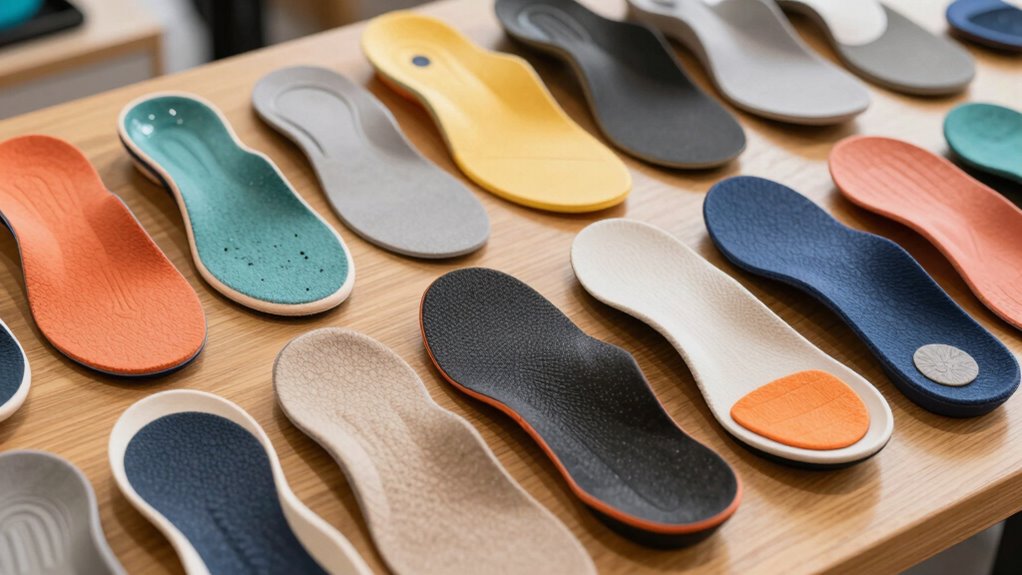
- EVA Foam: Lightweight with good shock absorption, making it ideal for everyday use.
- Gel: Provides localized impact protection, perfect for anti-fatigue and heel-cup designs.
- Memory Foam: Conforms to your foot for immediate comfort but can compress over time.
Next, match the arch support to your foot’s natural arch.
Mismatched arch geometry can lead to pain or new pressure points.
Consider the intended activity as well—running needs durable materials like EVA and Poron, while standing requires anti-fatigue profiles.
Choose wisely to guarantee peak performance and comfort.
Assessing Fit and Function: Ensuring Comfort and Compatibility
How do you guarantee your insoles fit and function ideally for comfort and compatibility?
Start with a fit assessment by tracing your foot outline on paper, making sure equal weight is on both feet. Measure the length from the longest toe to the heel and the width at the ball of the foot.
Trace your foot outline on paper, ensuring equal weight distribution, and measure length and width accurately.
Test your insole fit by standing on it outside the shoe; verify your foot doesn’t spill over the edges.
For a comfort evaluation, use a 100 mm visual analogue scale to rate overall comfort and specific areas like the heel, midfoot, and forefoot.
Conduct pressure and gait analysis with sensors to understand plantar pressure and impact absorption.
Finally, test insole materials for durability and compatibility with your footwear and activity.
Knowing When to Seek Professional Help: Specialist Assessment Guidelines
While self-managing foot discomfort with over-the-counter solutions might seem convenient, knowing when to seek professional help can be vital for long-term foot health.
A specialist evaluation is important under certain conditions:
- Persistent Pain: If pain lasts more than 6-8 weeks despite rest, stretching, and using OTC insoles, it’s time for a specialist evaluation.
- Deformity and Neuropathy: Recurrent deformities or neuropathic symptoms, like numbness or burning, meet referral criteria for a podiatry or orthopedic assessment.
- Red Flags: Urgent specialist input is needed for unexplained swelling, fever, acute function loss, or suspected stress fractures.
Don’t ignore these signs; early intervention can prevent further complications and guide effective treatment plans, ensuring your feet remain healthy and pain-free.
Wrapping It Up
If you’re experiencing foot discomfort like Jane, a teacher who found herself struggling by midday, insoles might be your solution. By recognizing signs and understanding the tradeoffs, you can make an informed decision. Selecting the right insole involves evaluating fit and function to guarantee comfort. If uncertainty persists, seeking professional advice is wise. Remember, while insoles can offer relief, professional guidance will assure you find the best support tailored to your needs.
I’ve been wearing the same cushioned insoles in my work shoes for months because they help a little, but the heel pain keeps creeping back after long shifts. At that point, should I just replace the inserts again, or is it smarter to get my feet checked before I keep buying the same kind?
If the same cushioned insoles only give short relief and the heel pain keeps returning, it’s worth getting evaluated instead of repeatedly replacing the same pair. That pattern can mean the support is not addressing the real cause, or that you may need a different type of insole, a better shoe match, or another treatment entirely. A professional can check whether the pain is from plantar fasciitis, overpronation, or something else and help you avoid spending money on the wrong fix.