
Finding the right running shoes for wide feet involves precise measurement. Trace your foot or use a Brannock device for accurate sizing. Look into brands like Altra, New Balance, and Hoka for wide options. If you experience foot pain or toe bruising, consider adjusting lacing techniques for extra comfort. Measure your feet at the end of the day, choose shoes with ample toe room, and use intended running socks to guarantee a proper fit. There’s more to explore on these adjustments and choices.
Measurement Techniques for Wide Feet
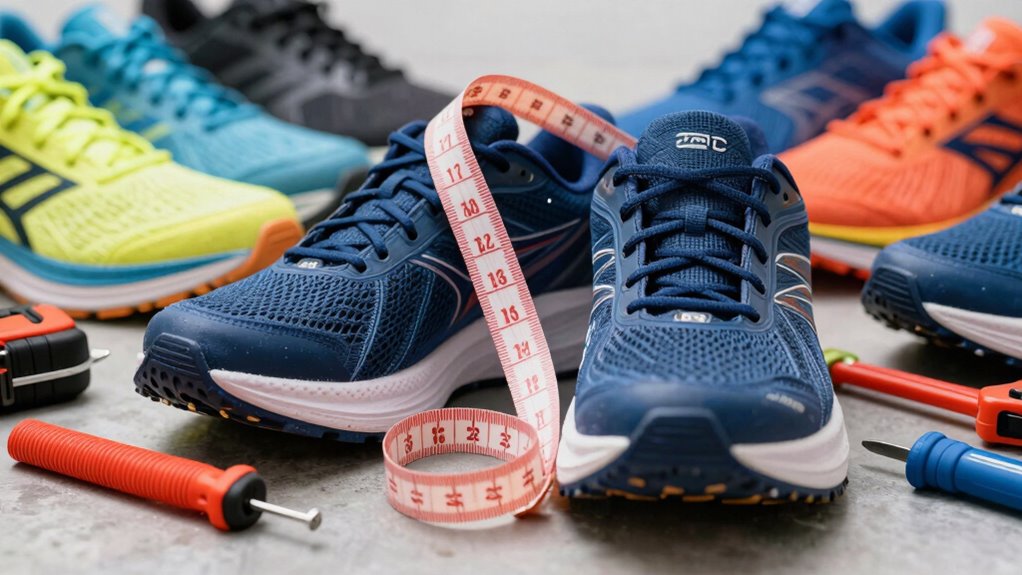
When measuring wide feet for running shoes, understanding the right techniques can make all the difference in achieving a comfortable and supportive fit.
Start by tracing your foot outline while standing to capture the true length and width. Measure from the heel to the longest toe for length, and across the ball of the foot for width. Repeat this process at the end of the day or after activity, using your intended running socks.
In-store, use a Brannock device to measure both foot length and width with standardized calipers. Have a professional fitter measure you standing, and request measurements in both inches and width letters.
Always size to the larger foot, as asymmetry is common. This guarantees accuracy and comfort in your running shoes.
Brand-Specific Width Options and Variations
Maneuvering brand-specific width options can be essential for runners with wide feet, as each brand offers distinct variations to cater to diverse foot shapes. Altra fit focuses on spacious toeboxes without midfoot narrowing, while Hoka stability provides wide options with generous vertical clearance. New Balance offers a full spectrum of widths, from extra-narrow to extra-extra-wide. Topo design includes a wide toebox ideal for high-volume feet. Brooks options, such as Hyperion Elite, provide both standard and wide fits. Nike adaptations include extra-wide models like the Vomero Plus. Salomon adjustments guarantee a broader fit in models like Speedcross 6 Wide. Adidas selection and Saucony availability also cater to wide feet, offering various styles for different needs. Runners should also consider cushioning technology when choosing wide-fit shoes, as it plays a significant role in comfort and joint protection.
Common Fit Issues and Solutions for Runners With Wide Feet
For runners with wide feet, finding the right fit can mean the difference between a comfortable run and a painful ordeal.
Common fit issues include foot pain from lateral forefoot pressure, causing bunions or corns. If you notice dorsal or intertoes blisters, it might be due to a lack of forefoot width. Persistent toenail bruising often signals insufficient toe-box space.
Conducting a proper fit assessment is essential; look for red marks or pressure indentations after short runs. Side-to-side foot movement within the shoe indicates too much internal volume. If you must lace shoes extra-tight to prevent slippage, consider a wider shoe.
Proper diagnostics, like using a Brannock device, help pinpoint the right width, reducing injury risks.
Practical Adjustments for Enhanced Comfort

Addressing common fit issues is just the beginning for runners with wide feet. Practical adjustments like lace techniques and foot adjustments can greatly enhance your comfort.
Start with the wide forefoot lacing to create more space and reduce pressure in the forefoot area. If heel slippage is a concern, try heel lock lacing for a secure hold without tightening the entire shoe.
For top-foot tightness, window lacing offers relief by opening space above the forefoot. Diagonal toe-lift lacing is ideal to prevent toe cramping and provide more room in the toe box.
Finally, straight bar lacing minimizes crossing, giving wider feet the extra space needed. To further enhance running comfort, addressing risk factors like hip and quadriceps muscle strength can mitigate pain and discomfort. These techniques guarantee your run remains comfortable and enjoyable, regardless of your foot width.
Strategies for Shopping and Selecting the Right Running Shoes
How do you find the perfect running shoes when you have wide feet? Start by measuring your feet accurately. Trace your foot, measure the widest part, and check at night when swelling occurs. Use sizing charts to match these measurements with the right width. Pay attention to width designations like 2E for men and D for women. When shopping, wear your running socks to try on shoes and guarantee a thumb’s width space between your longest toe and the shoe tip. Consider shoe materials that offer flexibility and breathability to accommodate wider feet comfortably. If you’re between sizes, opt for the larger size and adjust with socks or insoles. Always check the current shoe width label for guidance. Many running shoes prioritize cushioning to absorb impact and provide support, which is crucial for comfort, especially for runners with wide feet.
Wrapping It Up
Finding the perfect running shoe for wide feet can be challenging, but it’s essential for comfort and performance. Did you know that nearly 30% of individuals have wide feet? This means you’re not alone in your search for the ideal fit. By measuring accurately, exploring brand-specific widths, and making practical adjustments, you can greatly enhance your running experience. Remember, investing time in choosing the right shoe pays off in miles of comfort and improved performance.
i’m stuck between ordering my usual size in a wide and going up a half size in a regular-width shoe. The wide in my normal size feels a little too roomy through the heel, but the regular width squeezes my forefoot. Which direction is usually the safer bet for a long run fit?
If the wide in your normal size feels roomy in the heel but the regular width pinches your forefoot, the wide in your usual size is usually the better starting point. A half-size up often adds length as well as a little width, which can create extra movement and make heel slip worse. You want the shoe to match your forefoot width first, then use lacing to fine-tune the hold around the heel and midfoot. If possible, test the fit at the end of the day with your running socks on before deciding.