
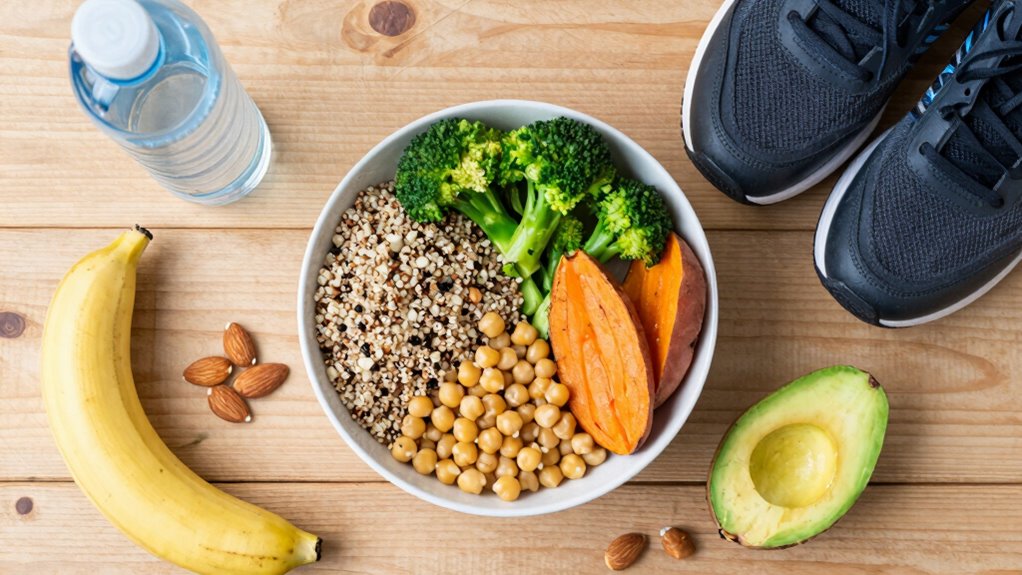
You can optimize endurance, recovery, and overall performance on a plant-based diet by matching calories to mileage and targeting 5–10 g/kg carbs and 1.2–2.5 g/kg protein, with fats at 20–30% of calories from unsaturated sources. Prioritize whole grains, legumes, fortified plant milks, and varied proteins; supplement B12, monitor iron and vitamin D, and consider algae DHA/EPA. Time carbs and protein around runs, use quick snacks and gels during long efforts, and follow meal plans for practical guidance if you want more specifics.
How a Vegan Diet Improves Your Running

When you choose a well-planned vegan diet, you can boost several physiological factors that directly support running performance. You’ll see lower inflammation and blood viscosity from plant-based foods, which improves oxygen delivery and helps endurance athletes sustain effort longer.
Studies of elite athletes like Scott Jurek and Rich Roll illustrate how a vegan diet can align with top-level athletic performance. You need adequate carbohydrate intake to refill glycogen storage and prevent premature fatigue during long runs.
With careful planning, protein intake from beans, lentils, quinoa, and other sources supports muscle recovery and maintenance, reducing injury risk. Taken together, these elements help you train more consistently, recover faster, and perform efficiently across varied distances and intensities.
Calculate Your Vegan Runner Calories, Carbs, Protein, and Fats
Although individual needs vary with training load and body size, you can calculate a practical daily target for calories, carbs, protein, and fats that supports endurance running by starting with your weight and typical weekly mileage. Multiply your body weight (kg) by 5–10 g for carbohydrates, and by 1.2–2.5 g for protein to match training intensity. Aim for fats to provide 20–30% of total calories, favoring unsaturated plant-based sources. Track intake with tools like Cronometer to meet dietary needs and support muscle recovery. Include nutrient-dense foods to cover key micronutrients like iron and calcium for optimal performance and bone health, emphasizing glycogen stores replenishment after long runs. Use the table below to estimate targets based on weight and training.
| Metric | Low-moderate training | High training |
|---|---|---|
| Carbohydrates (g/kg) | 5 | 10 |
| Protein (g/kg) | 1.2 | 2.5 |
| Fats (% calories) | 20 | 30 |
Build Each Meal: Protein + Carb Combos for Better Recovery
You’ve already estimated how many calories, carbs, protein, and fats you need based on body weight and mileage; now focus on how to assemble each meal so those numbers actually support recovery.
Pair protein with carbohydrates at roughly a 1:3 ratio after hard sessions to replenish glycogen and support muscle repair. In vegan diets, choose varied plant-based proteins—lentils, tofu, tempeh, quinoa—combined with whole grains or starchy vegetables for sustained energy during endurance training.
Include healthy fats like avocado or nuts to aid inflammation control without displacing core macros.
Prioritize meal timing: aim to consume a protein–carb combo within 30 minutes to enhance nutrient absorption and recovery, and repeat balanced meals every few hours to meet protein targets (1.2–2.5 g/kg) and optimize adaptation.
Also remember that adequate protein intake helps with injury prevention and tissue repair, supporting long-term running success through improved recovery and resilience from muscle repair.
Pre/During/Post-Run Fueling and Snack Ideas
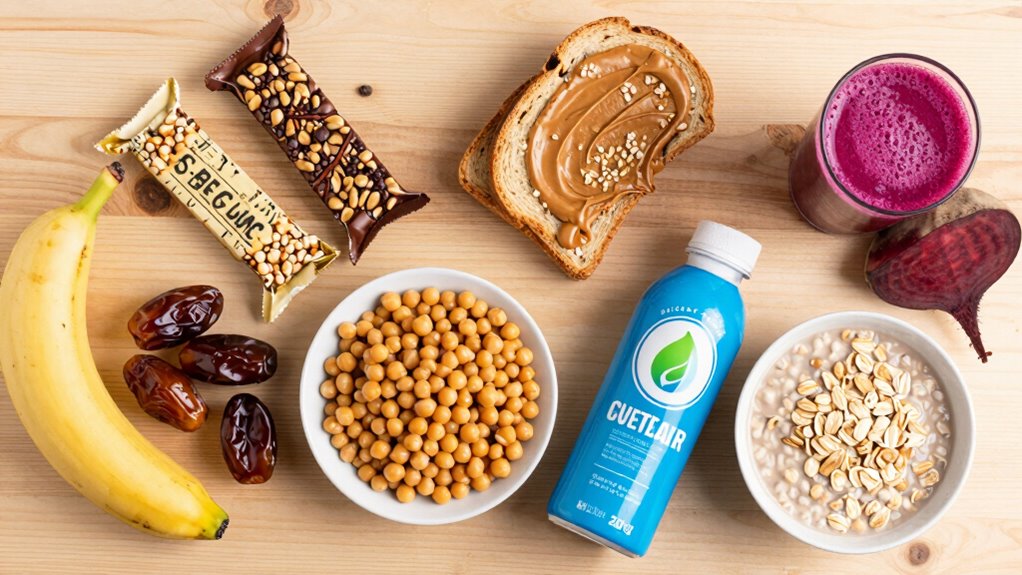
Plan your pre-run meals so you eat a balanced, complex-carb option like oatmeal or whole grain toast 4–6 hours before running to guarantee steady energy and prevent fatigue.
If you need a quick boost 30–60 minutes prior, choose a light snack such as a banana or an energy bar to avoid gastrointestinal upset.
During runs longer than an hour, use easily digestible carbs like gels or chews to maintain glycogen.
After your workout, refuel within 30 minutes with a carb-to-protein snack (about 3:1), for example a smoothie with plant-based protein powder, and rehydrate with water or an electrolyte beverage to support recovery.
Aim for daily carbohydrate intakes of 3–8 g/kg to support training demands and maintain glycogen stores, especially during periods of increased mileage and intensity, with attention to carbohydrate timing.
Pre-Run Meal Timing
When you’re planning what to eat before a run, timing and composition both matter because they determine how much usable energy you’ll have and how comfortably you’ll perform.
For vegan athletes, pre-run nutrition should prioritize complex carbohydrates 4–6 hours before exercise—think oatmeal or whole grain toast—to top up glycogen and serve as a steady energy source.
About 30–60 minutes prior, timing snacks like a piece of fruit or small smoothie provide quick fuel without gut distress.
Mind carbohydrate intake across the day (5–10 g/kg) to optimize stores.
Also respect hydration importance: sip fluids before and during runs.
Keep meal timing consistent with training so your gut adapts and you know which plant-based foods work best.
- 4–6 hr complex carbs
- 30–60 min light snack
- Daily carbohydrate targets
- Prioritize hydration importance
Electrolyte balance is also crucial for endurance and comfort during long runs, so plan salt and mineral intake accordingly, especially focusing on sodium and chloride to help maintain fluid balance.
Recovery Snack Options
Having covered timing and meal composition before runs, it helps to look next at snacks you can use before, during, and after workouts to support performance and recovery.
For pre-run fuel, choose complex carbohydrate options like oatmeal 4–6 hours out or a banana 30–60 minutes before for quick energy.
During long runs, use easy-to-digest energizing snacks such as dried fruit or gels, targeting 30–60 g carbohydrate per hour.
Post-run, prioritize a 3:1 carbohydrate to plant-based protein snack—smoothies with banana and protein powder work well for muscle recovery within 30 minutes.
Don’t forget hydration: electrolyte drinks or coconut water replenish fluids and salts.
Nutritious options like hummus with whole grain bread or nut butter smoothies emphasize whole foods and support vegetarian diets.
To maximize endurance for long events, consider carb loading in the days before a race to top up glycogen stores.
Supplements and Micronutrients Vegan Runners Can’t Skip
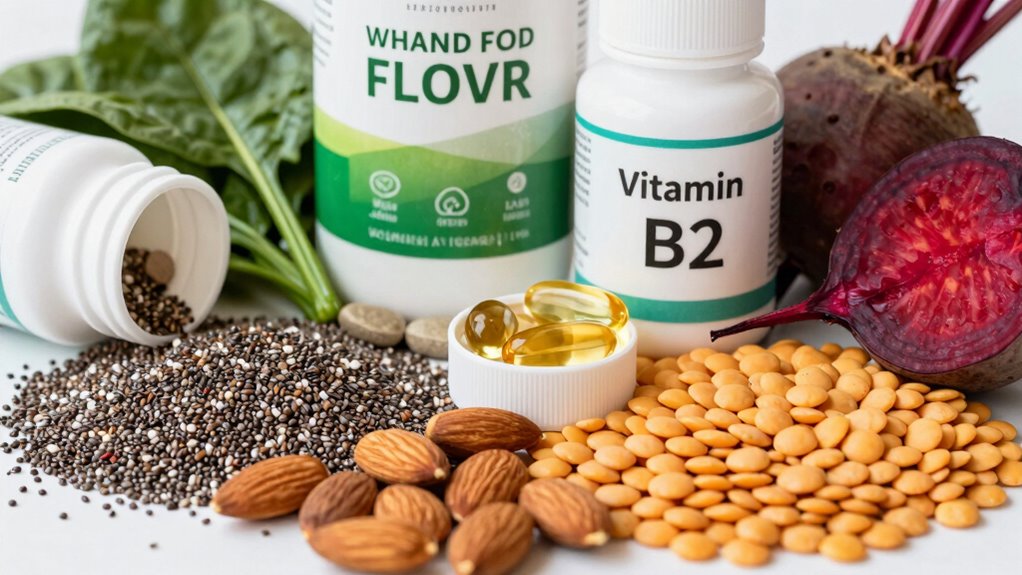
Because running puts extra demands on your body, you’ll need to pay close attention to certain micronutrients and supplements that are harder to get on a plant-based diet. You should prioritize Vitamin B12 supplementation because plant sources are unreliable; B12 supports nerve function and red blood cell formation.
Running increases nutrient needs on a plant-based diet—prioritize reliable B12 supplementation for nerve and blood health.
Monitor Iron closely, since non-heme iron absorbs less efficiently—pair iron-rich meals with vitamin C. Keep Calcium and Vitamin D topped up for bone strength, using fortified plant milks or supplements, especially with limited sun.
Include ALA-rich foods and consider algae-based DHA/EPA for ideal Omega-3 fatty acids and cardiovascular health. Regular blood tests will track nutrient levels and guide recovery-focused supplementation to maintain performance.
- Vitamin B12 supplementation
- Iron monitoring and pairing with vitamin C
- Calcium and Vitamin D sources
- Omega-3 (ALA plus algae DHA/EPA)
Quick 1-Day and 7-Day Vegan Runner Meal Plans and Swaps
After you’ve covered supplements and micronutrients, practical meal planning puts those recommendations into everyday practice so your training and recovery stay on track.
Use a quick 1-day vegan meal plan—oatmeal with fortified plant milk and berries, quinoa salad with chickpeas and mixed vegetables, and lentil stew with brown rice—to balance macronutrients and support protein intake.
Expand to a 7-day vegan meal plan that rotates smoothies with spinach and banana, black bean tacos, and tofu stir-fries to keep variety in your plant-based diet.
Implement simple meal swaps like almond or soy yogurt for dairy, chickpea flour pancakes for traditional pancakes, and tempeh or lentils for animal proteins.
Regular snacks—energy bars, hummus with vegetables—help maintain energy levels.
Aim for whole grains, legumes, and 3 cups of vegetables daily.
Wrapping It Up
You can thrive as a runner on a vegan or vegetarian diet by planning with purpose: calculate your calories and macros, pair protein with carbs at each meal, and prioritize iron, B12, vitamin D, omega-3s, and zinc. Use targeted supplements when needed and practice smart pre/during/post-run fueling to optimize performance and recovery. Think of nutrition as your training partner—consistent choices compound like miles on the road, producing steady, measurable gains.
I’m doing an early run before work and then lifting again in the evening, and I keep feeling either too full or too flat by the second session. Should I lean toward a bigger carb-heavy meal after the run, or split things into smaller snacks and a regular dinner?
Split things into smaller meals and snacks first, then make sure the bigger carb hit lands after the harder session of the day. For a two-a-day schedule, the main goal is to keep glycogen coming in steadily without sitting heavy before lifting. A carb-focused breakfast, a decent lunch, and a recovery snack with some protein usually work better than trying to force one huge meal. If the evening lift still feels flat, add another easy carb snack a bit earlier in the afternoon.