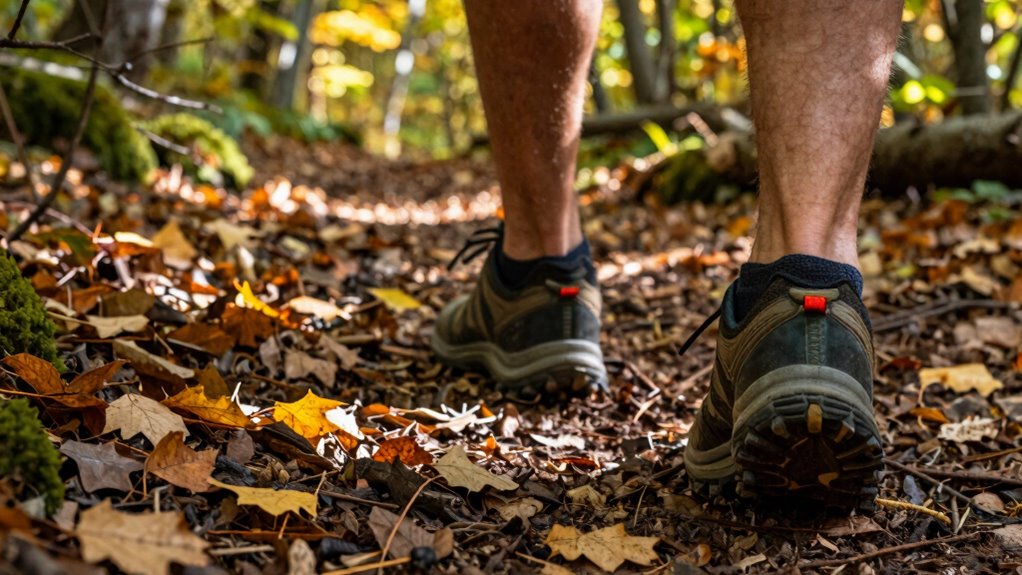
trail running safety tips

Trail Running 101: Traction, Protection, and How to Start Safely

When beginning trail running, choose the right shoe for your terrain, like light trail shoes for maintained paths or technical ones for rocky surfaces. Use moisture-wicking socks to prevent blisters and lubricate hotspots. Maintain traction with quick, short strides, adjusting cadence for inclines. Gradual mileage increases prevent injuries, while cross-training aids recovery. Plan routes according to your skill level, and don’t forget essential gear. Observe trail etiquette to respect the environment—you’ll discover much more soon.

Read More
identifying arch types accurately

High Arches Vs Flat Feet: Choosing Shoes and Insoles Without Guesswork

When choosing shoes and insoles for your feet, recognize if you have high arches or flat feet. For high arches, opt for cushioning and shock absorption, with thick midsoles and a deep heel cup for stability. Flat feet benefit from support with firm arch modules and stability features to reduce overpronation. Proper insoles can further enhance comfort and support. Understanding your arch type is key to selecting the right footwear, and there’s more to discover for tailored comfort.

Read More
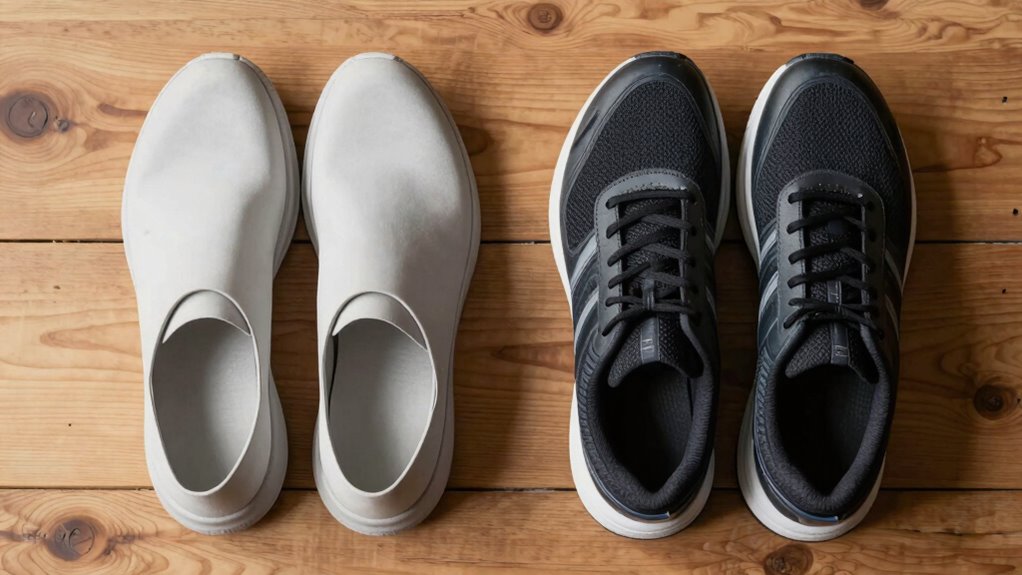
shoe type self assessment guide

Neutral Vs Stability Shoes: a Practical Self-Assessment (No Gait Lab Needed)

To choose between neutral and stability shoes, examine your foot type and wear patterns. Check your shoe’s outsoles: neutral patterns indicate balanced pronation, while medial wear suggests overpronation. Conduct a wet test to assess your arches. High arches require neutral shoes, low arches benefit from stability shoes. Test your balance with single-leg stances and track any discomfort. Gradually shift when switching shoes. Discover more about matching shoe types to your specific needs in further insights.

Read More