


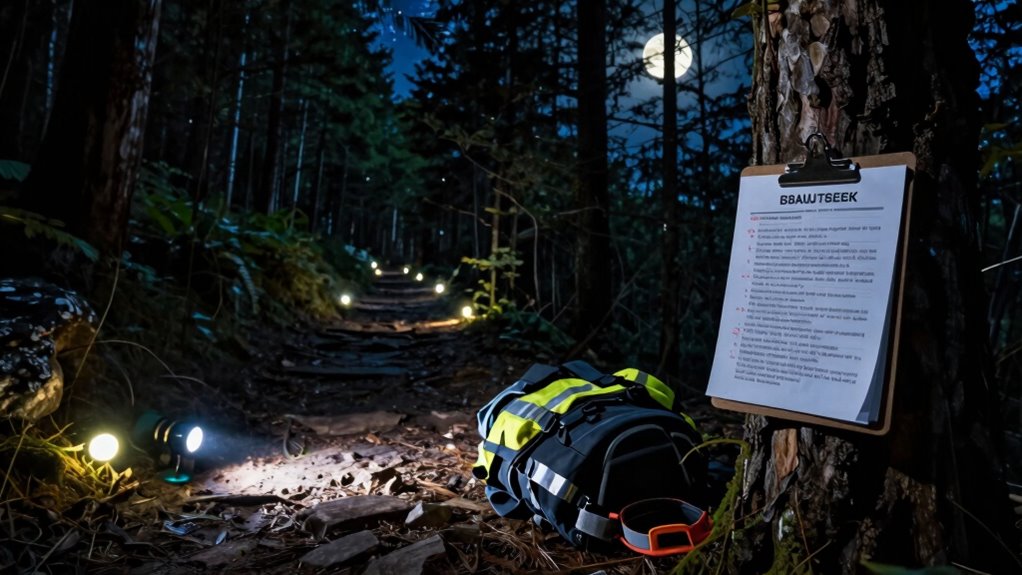
When you’re trail running in the dark, prioritize your safety and gear. Use headlamps with at least 200 lumens and wear reflective attire for visibility. Stick to familiar trails to avoid navigation issues, and always inform someone of your route. Carry essentials: a phone, ID, water, and a self-defense tool. Layer for warmth and maintain awareness by skipping earbuds. Running in groups is safer, and staying prepared guarantees a secure, enjoyable night run. Explore deeper insights ahead.
Essential Lighting Gear for Night Trails

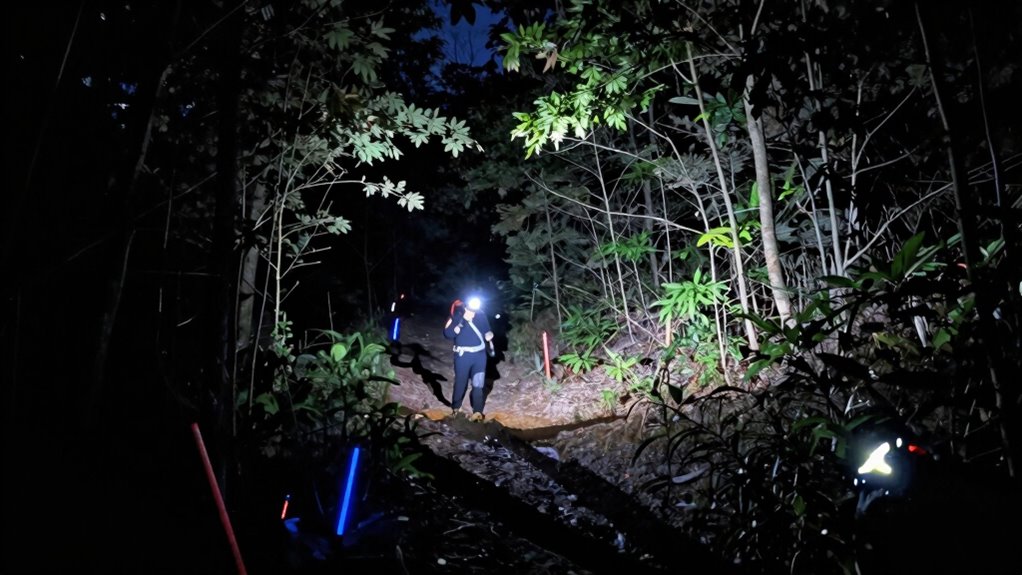
When you’re trail running in the dark, having the right lighting gear is essential for safety and visibility. A headlamp with features like a minimum output of 200 lumens, a comfortable fit, and adjustable beam settings guarantees you can see the trail clearly. Look for models with sturdy straps to prevent bounce and multiple brightness levels to manage battery life effectively. Flashlight options, such as handheld devices, offer directional aiming without moving your head. They provide better illumination from a lower angle and serve as great backups or complementary gear to a headlamp. Consider models like the Nathan Terra Fire 300 or Fenix LD30, which meet the recommended 200 lumens output, enhancing your trail running experience by guaranteeing ideal visibility. For optimal safety, choose running lights with weather resistance ratings like IPX4 to IPX6, ensuring they withstand varying conditions during your night trail adventures.
Enhancing Visibility With Proper Attire
When you’re trail running in the dark, wearing the right reflective clothing is essential for staying visible to others, especially drivers and cyclists. Opt for garments that combine high-visibility colors with retroreflective materials to guarantee you’re seen in low-light conditions and well after dusk. Enhance your visibility further by incorporating LED accessories like wearable flashing modules or battery-powered vests, which not only catch attention but also provide an extra layer of safety with their continuous or flashing light modes. Considering 360-degree visibility options, such as those offered by some high-visibility running vests, can significantly increase your safety during night runs.
Reflective Clothing Essentials
Reflective clothing is essential for trail runners aiming to enhance their visibility in low-light conditions. Utilizing reflective materials offers significant visibility benefits by bouncing light back to its source, making you more noticeable to drivers. Retro-reflective materials increase your conspicuousness against backgrounds, signaling a human presence and enabling recognition from afar when hit by vehicle headlights. High-visibility garments, like reflective vests and jackets, provide 360-degree reflectivity, ensuring you’re visible from all angles. Options such as the ULTRASPIRE Neon vest offer breathable mesh and adjustable straps, while the Brooks Run Visible jacket features reflective elements on shoulders, arms, and waist. For targeted coverage, consider arm warmers, beanies, and ankle bands, each offering lightweight, breathable, and comfortable designs for your trail running needs. When choosing reflective running belts, ensure they have features like adjustable straps and bounce-proof designs for optimal comfort and functionality.
LED Accessories Usage
LED accessories offer a notable advantage in enhancing visibility for trail runners maneuvering low-light conditions.
Head-level illumination, such as headlamps, guarantees forward terrain recognition with lumen guidelines suggesting 300–800+ lumens. Rear-facing LEDs on vests or armbands increase visibility to others, while low-mounted lights highlight foot placement. Torso-centered beams reduce shadowing, aiding close-range obstacle detection. Multi-height distribution optimizes 360° visibility, minimizing blind spots.
Select beam patterns based on terrain: spot beams for distance, flood beams for peripheral vision. Effective battery management is essential; use rechargeable units and carry backups. Consider comfort by choosing low-bounce gear and secure fasteners. Confirm weather resistance, opting for IP-rated accessories for protection in diverse conditions.
Proper LED usage greatly boosts safety and trail visibility.
Choosing Safe and Familiar Running Routes
Selecting the right trail for night runs is essential for ensuring safety and enjoyment. Prioritize route familiarity by choosing trails you’ve already run during the day. Recognize landmarks and trail junctions to navigate smoothly. Opt for single-loop or out-and-back routes that lead back to familiar access points, like a car park or trailhead. Trail selection should emphasize simplicity, with well-marked signage to minimize map reliance. Keep routes within your fitness limits and light battery life. Avoid complex networks that could lead to accidental detours. Incorporating proper running form is crucial to avoid injuries and enhance safety during night trail runs. Here’s a quick guide to help you:
| Aspect | Key Considerations | Tips for Safety |
|---|---|---|
| Route Familiarity | Prior knowledge of landmarks and junctions | Run during daylight first |
| Trail Selection | Simple, well-marked paths | Clear signs reduce navigation |
| Access Points | Known return spots | Use familiar car parks or trailheads |
| Route Length | Within fitness and battery limits | Shorter routes for night safety |
Implementing Key Safety Measures
While trail running in the dark can be exhilarating, implementing key safety measures is crucial to ensuring a secure and enjoyable experience.
Prioritize emergency preparedness by informing someone of your route and expected return time. Carry your phone, ID, and emergency contact information, and use tracking apps for added safety. When alone, share your real-time location.
Enhance visibility with reflective gear and a combination of lighting tools. Stay alert by avoiding earbuds, and run against traffic for increased awareness.
Self-defense strategies are essential—carry personal defense tools and practice their use confidently. Running with a partner or group boosts safety, as does choosing popular, well-trafficked routes.
Always prepare for sudden weather changes and carry essential items like water and a first aid kit.
Adapting Running Techniques for Night Conditions
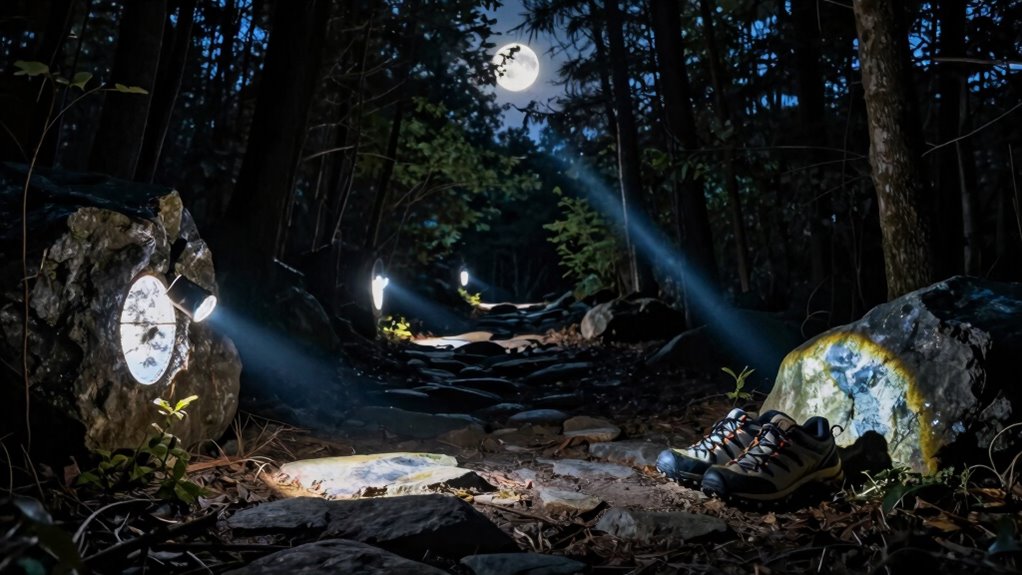
Adapting your running techniques for night conditions is essential for a safe and successful trail experience. Start by making pacing adjustments; slow down on unfamiliar or technical trails to allow more reaction time. Shorten your stride and increase cadence for stability. Visual scanning is vital—use your headlamp to look 10–20 meters ahead rather than fixating too close. Practice head movements to reveal hidden obstacles and adjust your beam angle based on terrain.
| Technique | Adjustment |
|---|---|
| Pacing | Reduce speed |
| Stride | Shorten and quicken |
| Visual Scanning | Look ahead, not down |
| Head Movements | Frequent side checks |
| Beam Angle | Adjust for terrain |
These strategies will help you navigate night trails confidently.
Additional Gear for Nighttime Trail Running
As you adjust your running techniques for the challenges of nighttime trails, equipping yourself with the right gear becomes equally important to guarantee safety and enhance performance.
Start with a reliable lighting system; headlamps, waist lamps, and hand-held flashlights offer varied illumination for different terrains. Spare lights and batteries are vital backups.
For visibility, wear reflective vests and bands, and consider clothing with integrated LED lights. To stay warm, layer with arm sleeves, a beanie, and gloves.
Don’t forget navigation tools like a GPS watch to track your route. Hydration packs are indispensable, ensuring you stay hydrated without stopping.
Finally, pack a self-defense tool for peace of mind. This all-encompassing gear will keep you safe and efficient on the trails.
Wrapping It Up
Setting out on a nighttime trail run is like entering a new world where safety and preparedness become your guiding stars. Equip yourself with essential lighting and reflective gear, ensuring you’re visible and secure. Stick to familiar paths, adapting your techniques for the dark. Prioritize safety measures, like running in groups or informing someone of your route. With the right gear and approach, you’ll confidently navigate the trails, transforming the night into a thrilling and safe adventure.