
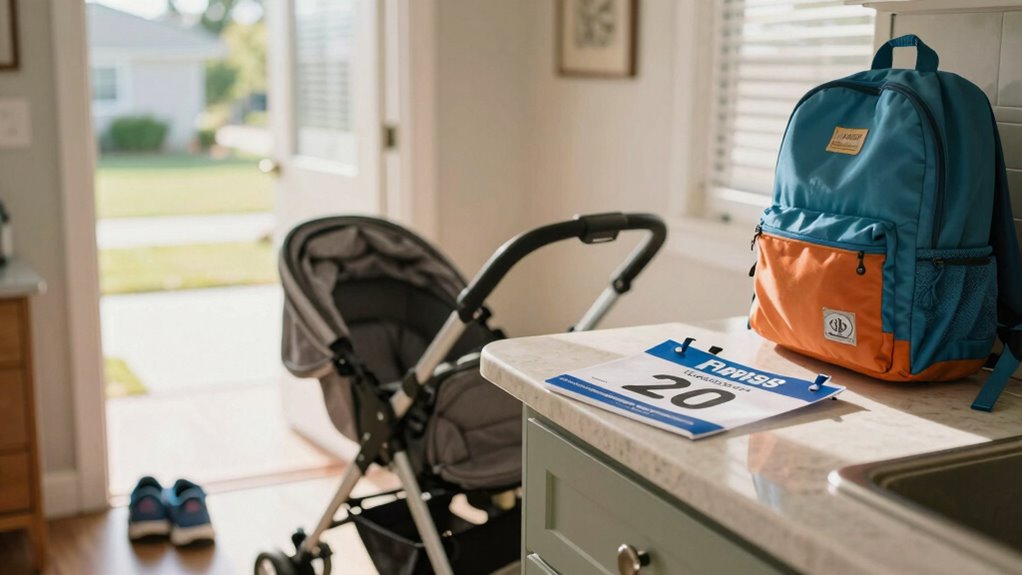
You can keep running without sacrificing family life by scheduling reliable, short workouts—use naptimes, early mornings, or after-bedtime 20–40 minute sessions—and blocking them on a shared calendar. Prioritize quality over quantity with tempo runs, intervals, or a weekly long run adapted to your time. Coordinate childcare swaps with your partner or local networks, and use jogging strollers or trailers safely when appropriate. Follow basic recovery, sleep, and nutrition rules, and continue for practical tips.
Quick-Start Checklist: Fit Running Into Family Life
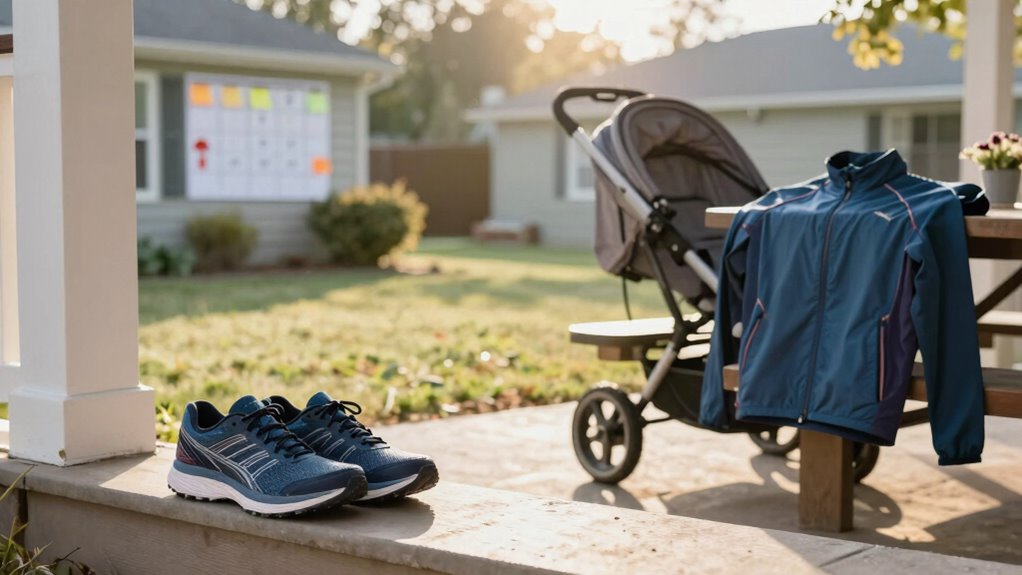
Start by mapping your week so you can carve out reliable running windows that fit family rhythms. Block naptimes for solo runs and treat them as fixed appointments; this helps you hit running goals without constantly renegotiating.
Plan a training schedule that alternates stroller jogs with focused sessions—start stroller outings once your child’s six months old to combine bonding and fitness.
Secure backup childcare through playdates or family support for longer workouts. Audit commitments and scale back non-essential activities, like extra volunteering, to protect training time.
On low-energy days, involve your kids in short, active routines so fitness becomes family time. Use this checklist to create predictable, realistic running habits that align with parenting demands and personal objectives. Consider adding a couple of weekly strength sessions to support joint alignment and reduce injury risk.
Define Your “Good Enough” Training for Busy Parents
You’ve mapped the week and carved out running windows; now define what “good enough” training looks like for your life.
Decide a realistic training plan that emphasizes quality over time: aim for about 150 minutes of moderate exercise weekly, or substitute shorter HIIT sessions to hit intensity targets when minutes are scarce.
Shift goals when needed — trade marathon mileage for shorter races or tempo runs — knowing even minimal, consistent effort improves fitness.
Build flexibility into the plan by slotting runs around kids’ activities or naptimes and accept that strict balance is unrealistic.
Prioritize healthy habits like sleep, nutrition, and recovery so your efficient sessions matter.
Consistency with adaptable expectations delivers meaningful progress without sacrificing family responsibilities.
Include strength training to improve running efficiency and reduce injury risk.
Carve Out Time: Scheduling Tactics That Actually Work
Start by blocking consistent chunks of time in your calendar—morning, nap, or evening windows—that become your go-to running slots so you can build a reliable routine.
Then sync those blocks with your partner and your children’s schedules, shifting as needed around activities and sleep times to maximize uninterrupted miles.
Communicate clearly about swaps and family runs so your training stays realistic, supported, and integrated into daily life.
Include strength and cross-training, like cycling or swimming, to maintain fitness while reducing injury risk and supporting your running goals with cross-training activities.
Prioritize Time Blocks
When family demands are highest, carve out consistent time blocks for running by identifying low-activity windows—early mornings, kids’ naps, or when a partner can watch the children—and treat those slots as non-negotiable appointments. You’ll use a family calendar to coordinate and communicate these sessions, which reinforces time priorities and aids in setting boundaries against overcommitment. Set realistic goals that fit those blocks, adjust intensity or duration as family needs change, and experiment with integrating activity into family outings when appropriate. Use this simple tracker to visualize options and negotiate schedule shifts with clarity. Regular, consistent running also supports anxiety reduction by releasing mood-boosting neurotransmitters like serotonin and endorphins.
| Block | Purpose |
|---|---|
| Early morning | Focused run |
| Nap time | Short workout |
| Weekend slot | Longer session |
Sync With Family
Although carving out running time takes planning, syncing your schedule with family rhythms makes it sustainable and respectful of others’ needs.
Identify consistent free slots—early mornings or late evenings—to prioritize runs without disrupting shared routines. Use naptime strategically; a focused run then maximizes efficiency while your child rests.
When solo options are limited, choose family-friendly activities like stroller jogs or neighborhood walks to maintain fitness and connection.
Discuss options with your partner, exchanging childcare shifts or coordinating simultaneous activities so both of you can train.
If necessary, explore childcare support from relatives or local facilities to create dedicated running windows.
Build your plan gradually and consistently to reduce injury risk and build endurance, following a structured plan that fits your life.
Swap Childcare and Partner Support: Practical Systems
If you coordinate childcare swaps with other parents and secure explicit partner support, you can carve out reliable blocks of time for training without sacrificing child supervision or family responsibilities.
Set clear expectations: agree on drop-off times, emergency contacts, and activity plans so everyone knows what to expect.
Use partner support by sharing calendars and negotiating who covers mornings, evenings, or weekends, ensuring fairness and predictability.
Tap local facilities or community programs for supplemental childcare when swaps aren’t available, and verify safety and staff credentials.
Build a network of fellow parents to align playdates with workout windows, maximizing efficiency.
Finally, include occasional family runs or shared activities so fitness complements family time rather than competing with it.
Short Running Workouts for Nights and Nap Times
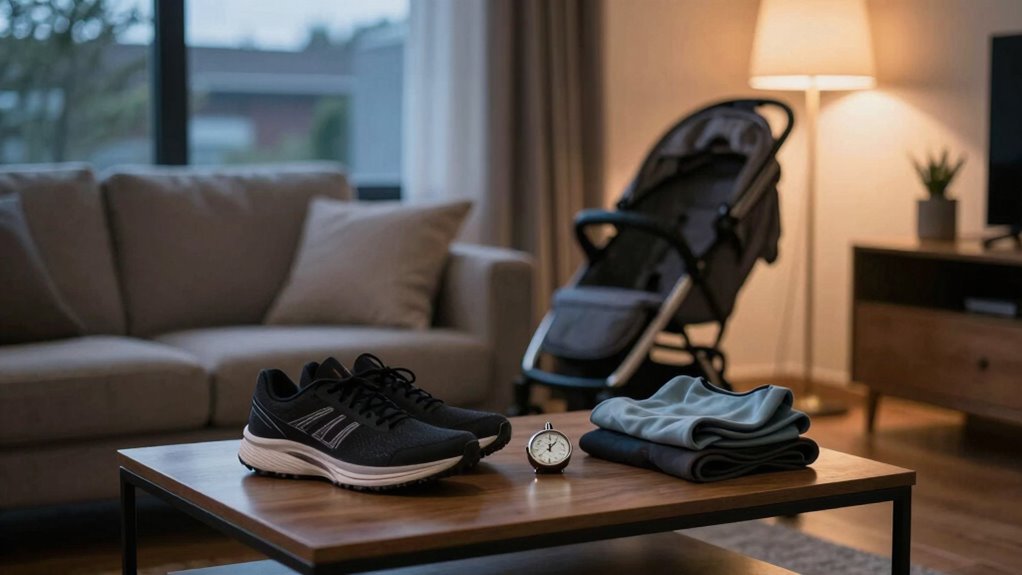
Carve out 20–30 minute blocks during your child’s nap or after bedtime to get focused, effective runs that won’t disrupt family time.
Use nap time deliberately: plan a short run combining a warm-up, 15–20 minutes of high-intensity intervals, and a brief cool-down. That HIIT structure maximizes aerobic and anaerobic gains in minimal time.
If weather or safety is a concern, move the session to a treadmill for consistent pacing and easy timing.
Set realistic goals—speed, distance, or perceived effort—so each session feels purposeful. Track progress to maintain motivation and adjust intervals as fitness improves.
Safe Runs With Babies and Young Kids (Strollers, Bikes, Rules)
When you take your baby or young child on runs, start by mastering stroller safety basics—use a jogging stroller with a secure harness, proper tire pressure, and a handbrake, and check with your pediatrician about appropriate age and positioning.
For older kids, choose a certified bike trailer and always confirm attachment points, visibility features, and that everyone wears helmets.
Finally, follow local road and path rules, pick smooth routes that minimize traffic conflicts, and time runs around naps to keep both workouts and childcare predictable.
Stroller Safety Basics
Running with a stroller can be a safe and enjoyable way to keep up your training while spending time with your child, but it requires careful attention to equipment, pediatric guidance, and local rules.
Prioritize stroller safety by choosing a model with a five-point harness, handbrake, and large sturdy wheels for varied terrain. Check straps each outing, keep your pace steady, and avoid sudden turns or steep, rough trails that increase tipping risk.
Confirm your child is ready—most pediatricians recommend waiting until about six months when head control is reliable.
Finally, follow local regulations about sidewalks, bike paths, and trail use to reduce conflicts and hazards.
- Use a jogging-specific stroller with safety features
- Fasten the five-point harness always
- Consult your pediatrician first
- Maintain steady, controlled pace
- Follow local path rules
Bike Trailer Guidelines
A properly equipped bike trailer can let you continue training while keeping your child secure and comfortable, but you should only start after checking readiness with your pediatrician and confirming the trailer meets safety standards.
Choose a bike trailer with key safety features: a five-point harness, reflective materials, and a high-visibility safety flag. Confirm local laws about helmet use and age limits before each outing.
Inspect the trailer regularly—inflate tires correctly, test brakes, and check attachment points—so mechanical issues don’t compromise safety.
Plan rides on smooth, paved paths that avoid heavy traffic to reduce risk and improve comfort. Use common-sense precautions, secure your child properly every time, and pause or modify outings if your pediatrician raises concerns.
Road And Path Rules
Because rules and conditions vary widely by location, you should always check local regulations and trail signage before taking a stroller or bike onto sidewalks, paths, or roads.
You’ll choose designated paths that are smooth and wide enough for safe stroller use and clear of heavy pedestrian traffic.
Confirm your stroller has a five-point harness and appropriate brakes, and never leave a child unattended during a run.
Use reflective gear and bright colors to improve visibility in low light.
Teach children fundamental road safety habits like looking both ways and using crosswalks so family rides and runs stay predictable and safe.
- Verify local rules for sidewalks, trails, and road allowances.
- Prefer wide, smooth paths for stroller use.
- Inspect harnesses and brakes before each run.
- Wear reflective clothing and lights.
- Practice crossing and road safety with kids.
Weekend Long Runs With Kids: Keep the Family Happy
How can you fit a weekend long run into family life without leaving anyone feeling overlooked?
Plan runs when weekend family time is flexible so you can share activities afterward.
Consider combining a long run with family-friendly outings—bike rides or walks—so kids stay engaged while you cover distance.
Use a jogging stroller for longer routes if your child’s age and comfort allow it; check safety and fit before you go.
Schedule runs during nap times to maximize efficiency and reduce disruption.
You can also run to a park or store, turning errands into quality time and saving separate trips.
Communicate plans ahead, set realistic distances, and remain willing to adapt so both fitness and family priorities are met.
Make Running Part of Family Culture and Motivation
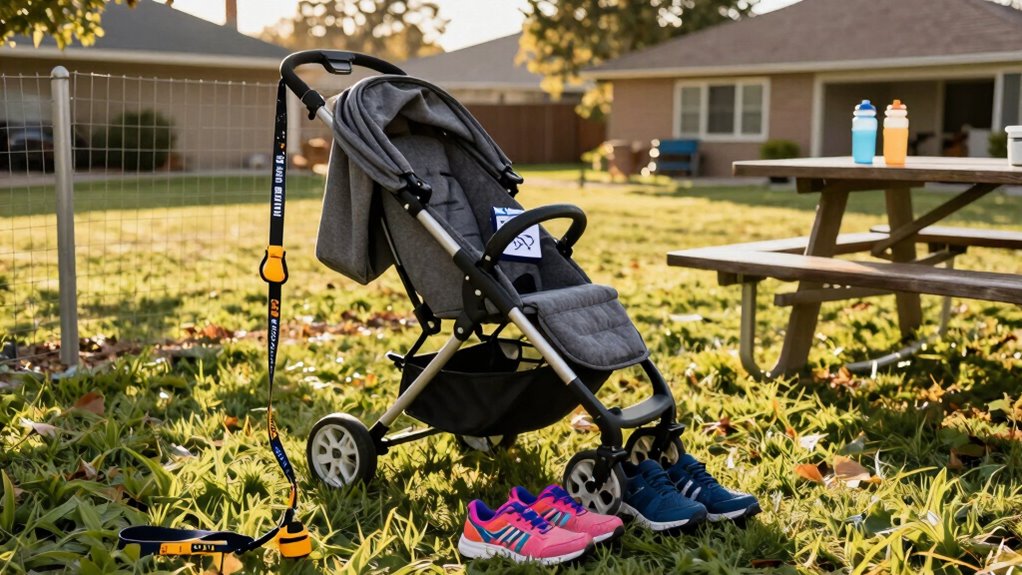
Once you’ve worked out how to fit weekend long runs into family life, deliberately weaving running into your family’s routine helps it stick as a healthy habit. You’ll show children that marathon training and everyday fitness aren’t separate from family values.
Make family runs regular and enjoyable: adjust pace, set playful challenges, and celebrate participation rather than speed. Use local fun runs or charity events to build teamwork and community connection. Model commitment by prioritizing your runs while balancing responsibilities, so kids learn resilience and self-care.
Make family runs fun and regular: slow the pace, add games, join local events, and celebrate effort over speed.
- Schedule short, consistent family runs or walks after dinner
- Create running games or timed challenges for kids
- Enter local fun runs as a family team
- Rotate leadership so everyone plans a route
- Celebrate milestones together
Troubleshoot Scheduling Conflicts and Adjust Your Plan
When your training calendar and family life collide, step back and treat conflicts like solvable problems rather than inevitabilities—you’ll preserve progress by evaluating priorities, communicating clearly, and adjusting the plan.
First, identify and prioritize your running goals against work and family commitments so your training fits real life. Use careful planning to slot workouts into reliable windows — early mornings or naptime — maximizing efficiency without sacrificing parenting duties.
Communicate schedules with your partner and request mutual support for busy periods. Build flexibility into your plan, swapping days or shortening sessions when obligations arise to keep consistency.
Finally, consider blending family time and activity, jogging with a stroller or inviting kids to warm-ups, preserving fitness and togetherness.
Wrapping It Up
You can keep running without sacrificing family life by setting realistic priorities, using short focused workouts, and building practical support systems with your partner or childcare swaps. Plan runs into your weekly schedule, adapt long runs for weekends with kids, and follow safety rules for strollers and bikes. When conflicts arise, adjust your “good enough” plan rather than quitting. With consistent small steps, you’ll make progress that feels like a superpower, sustainable and family-friendly.
I can get out the door either before my kids wake up or after they go to bed, but I keep messing up my sleep when I pick the wrong one. If I’m trying to stay consistent without feeling wiped out the next day, which slot usually works better to build around?
Pick the time block you can protect most reliably, then let sleep decide the final choice. If early mornings leave you drained, a post-bedtime run may be the safer long-term option, as long as it does not cut too far into recovery. If evenings tend to get interrupted or you skip them when the day runs long, mornings usually win on consistency. The best choice is the one you can repeat several days a week without turning the run into a sleep debt.