


Can one shoe do it all? In an ideal world, it could. But with varying terrains, impact types, and individual biomechanics, the perfect all-in-one shoe remains elusive. The one-shoe quiver framework, developed with insights from footwear engineers and real-world testers, suggests embracing versatility. By understanding how different shoe constructions impact performance and adapting your routine to include both cushioned and minimalist designs, you can enhance your running experience. There’s more to discover in optimizing your footwear strategy.
Understanding the Role of Shoe Rotation in Injury Prevention

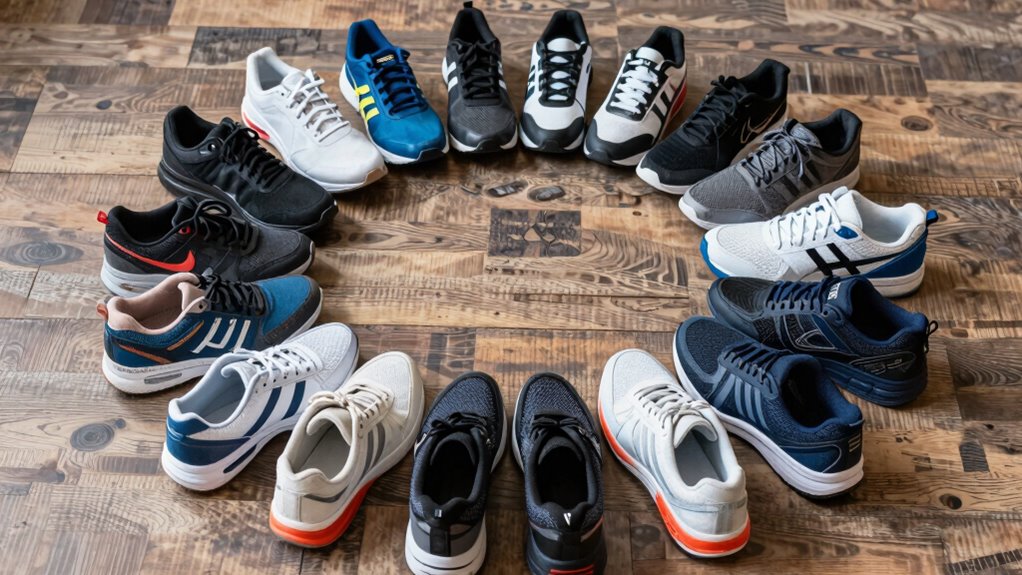
When it comes to preventing injuries in runners, the concept of shoe rotation plays an essential role. By rotating multiple shoes, you can greatly lower your injury risk, as shown in a 2015 study. The shoe benefits include altering your gait patterns and muscle recruitment, which reduces repetitive stress. This variation in footwear impacts injury mechanics by distributing force differently, preventing the same tissues from enduring repeated strain. Different shoes with varied midsole thickness and stiffness help balance muscular and skeletal adaptation. This approach not only reduces overuse injuries like tendinopathies and plantar fasciitis but also enhances your overall running efficiency. Additionally, incorporating strength training into your routine is vital for preventing common running injuries by strengthening often-overlooked muscles critical for running.
Evaluating Shoe Types for Varied Running Terrains
Evaluating the right running shoes for different terrains is essential for any runner aiming to optimize performance and prevent injuries.
When comparing trail shoe options, consider terrain-specific features. For road-to-trail runs, the Nike ReactX midsole offers a lively feel on roads and controlled bounce on trails, while its All Terrain Compound outsole guarantees a secure grip.
On smooth, maintained trails, lighter shoes like the Hoka Challenger 7 provide moderate cushioning and a snug fit, preventing blisters.
For technical, rocky terrain, Salomon Speedcross 6‘s flexible outsole and firm midsole offer agility and protection.
In muddy conditions, shoes with rugged soles, like those featuring Vibram Megagrip, excel.
For mixed terrains, Saucony Excursion TR17‘s low-profile lugs handle gravel and dirt shifts well.
The plush cushioning of HOKA Mens Bondi 9 is ideal for runners seeking maximum comfort and support on long-distance runs, providing a comfortable ride across varied terrains.
Analyzing the Impact of Shoe Construction on Performance
When you’re evaluating how a shoe’s construction can impact your performance, consider the cushioning and energy return, as these elements can greatly enhance your running economy and reduce muscle fatigue. A shoe’s flexibility and stability balance plays an essential role, as it affects your propulsion and overall biomechanics, ensuring you maintain efficiency while minimizing injury risk. Additionally, the durability and support provided by the shoe materials are critical for long-term performance, offering resilience and protection to withstand various running conditions. The premium foam midsole in the HOKA Mens Bondi 9 is a key feature that enhances cushioning and energy return, contributing to both comfort and performance for runners.
Cushioning and Energy Return
Understanding the impact of shoe construction on performance is essential, especially when you consider the role of cushioning and energy return.
Different cushioning types considerably affect how much energy returns to you during your run. Let’s break down the materials:
- PEBA/ZoomX foams: High energy return, around 70–80% on tests.
- A‑TPU foams: Similar to PEBA, with rebound near 75–80%.
- EVA foams: Lower energy return, typically 50–65%.
- Thickness and stack height: More cushioning can reduce impact but might increase energy deficit unless balanced by high-return materials.
- Shoe design elements: Plates and curved soles help maximize energy return by modifying foam compression dynamics.
The advanced foam technology in shoes like the Saucony Endorphin Elite 2 provides an extra boost by maximizing energy return. These factors play a pivotal role in enhancing your running efficiency.
Flexibility and Stability Balance
As you consider the balance between cushioning and energy return in your footwear, flexibility and stability play an equally important role in shoe performance.
Flexible shoes activate your intrinsic foot muscles, improving strength and reducing injury risks. The flexibility benefits allow natural toe and forefoot movement, enhancing efficiency on even terrain.
However, stability tradeoffs come into play with firmer outsoles and midsoles. These elements limit foot motion and support balanced gaits, countering overpronation and enhancing safety on uneven surfaces.
Stiffer construction, like a higher ankle collar, enhances perceived stability, vital for challenging terrains. While stability features may not boost agility considerably, they offer protection and structure, essential for those prioritizing support over flexibility in their footwear choices. It’s crucial to select shoes that provide adequate support to reduce stress on the body and minimize the risk of common running injuries such as Runners Knee and Shin Splints.
Material Durability and Support
Exploring the intricate details of shoe construction reveals how material durability and support greatly impact performance.
When choosing a shoe, consider how outsole longevity and midsole performance affect your experience. The hardness of rubber plays a role in durability versus traction, highlighting key traction factors. Cushioning types vary, influencing energy return and overall comfort.
- Outsole Longevity: Harder rubber compounds last longer, with some models exceeding 1000 miles.
- Midsole Performance: PEBA foams offer high energy return but degrade faster than EVA.
- Rubber Hardness: Harder variants enhance durability, while softer ones improve grip.
- Cushioning Types: Different materials affect shock absorption and energy return rates.
- Durability Testing: Rigorous tests guarantee materials withstand various stressors over time.
Understanding these elements aids in informed shoe selection.
Balancing Cushioning and Minimalism for Optimal Stride
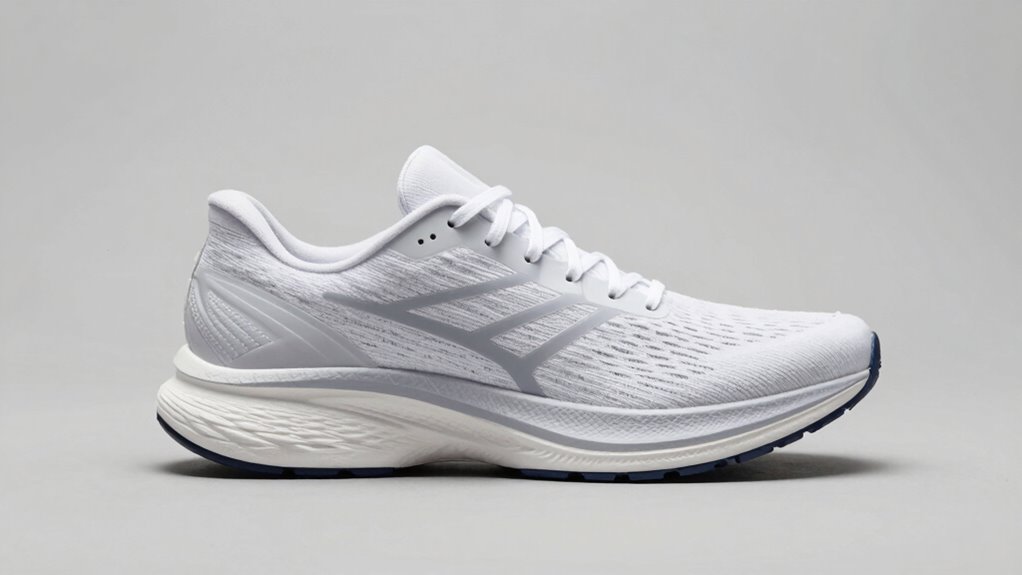
While steering through the decision between cushioned and minimalist shoes, it’s crucial to find a balance that optimizes your natural stride.
Minimalist benefits include promoting a natural gait, reducing joint impact, and strengthening foot muscles. These shoes enhance proprioception and encourage a midfoot or forefoot strike, conserving energy over longer runs. However, minimalist shoes offer minimal support, which mightn’t suit everyone.
Minimalist shoes promote a natural gait and strengthen foot muscles but offer minimal support.
On the other hand, cushioned shoes absorb shock and provide comfort for high-impact activities but come with cushioning drawbacks. They often encourage heel striking, potentially altering your natural stride and increasing loading rates.
To find the right balance, consider rotating between both types, using cushioned shoes for high-stress runs and minimalist ones for strengthening and enhancing stride efficiency.
Assessing Shoe Durability and Longevity
Finding the right balance between cushioning and minimalism sets the stage for understanding how shoe durability and longevity can impact your running experience.
When evaluating durability metrics, consider these longevity factors:
- Materials and Construction: Full-grain leather with Goodyear-welt construction can last decades with maintenance. In contrast, EVA and PU foams often degrade faster.
- Measurable Wear Metrics: Track cushioning performance to a 15% loss threshold, commonly around 550 miles for heels.
- Outsole Life: Rubber compounds usually last 700–760 miles, but usage can cause variations.
- User and Environmental Impact: Heavier users and abrasive surfaces can accelerate wear.
- Maintenance Practices: Regular cleaning and conditioning extend shoe life, and resoling can be a cost-effective repair solution.
Strategies for Adapting to New Footwear Choices
When you’re ready to introduce new footwear into your running routine, it’s essential to approach the change with a well-thought-out strategy to prevent injuries and guarantee comfort. Begin with gradual mileage progression, increasing your weekly distance in the new shoe by no more than 10% per week. Alternate runs between new and familiar shoes to moderate load spikes. Use shoe change strategies like tracking perceived effort and monitoring for localized pain. Employ footwear adaptation techniques by starting with short exposures to differing stack heights and heel-to-toe drops.
| Strategy | Technique |
|---|---|
| Gradual Mileage Progression | Increase by 10% weekly, alternate shoes |
| Progressive Exposure | Short exposures to differing stack heights |
| Track & Monitor | Check effort, watch for pain |
Develop a targeted strength program to support these changes.
Wrapping It Up
When considering if one shoe can truly do it all, think of it as finding the perfect dance partner. It’s about balance—between cushioning and minimalism, durability and adaptability. While a single shoe might meet many needs, rotating different pairs can prevent injuries and enhance performance across varied terrains. So, don’t tie yourself to a single option; explore footwear choices that match your stride and goals, ensuring you’re always ready to hit the ground running.