


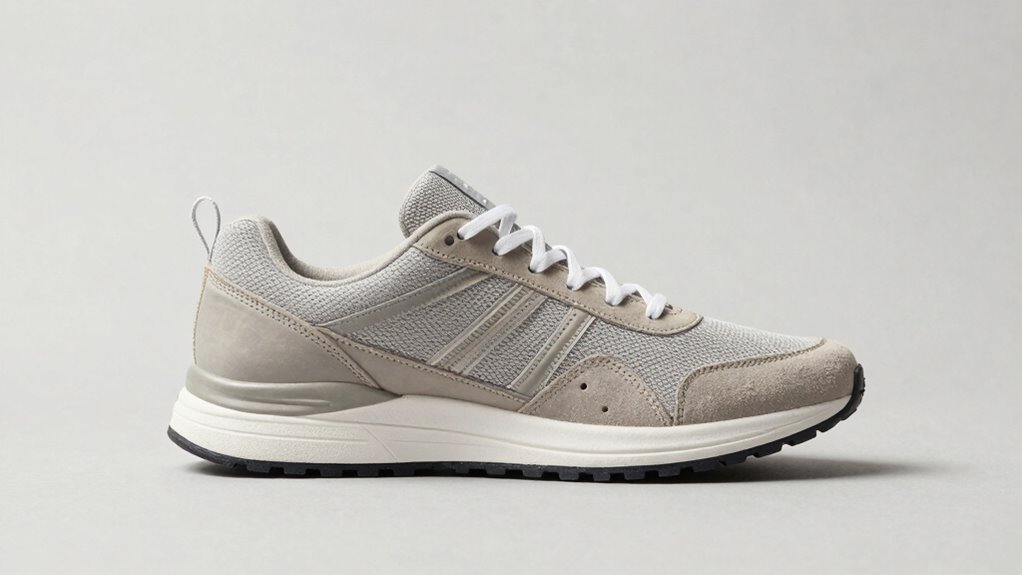
A ‘one-shoe quiver’ offers convenience for those seeking a single, versatile footwear option, but understanding its limitations is vital. While it can meet various running needs, it may not match specialized performance of multiple shoes. Flat shoes excel in comfort, whereas technical models enhance precision on difficult terrains. Adopting a multi-shoe rotation can improve performance and extend shoe life. Balancing convenience with an all-encompassing footwear approach maximizes benefits. There’s more to learn beyond this brief overview.
Understanding the Benefits and Limitations of a One-Shoe Quiver


When considering a one-shoe quiver, it’s crucial to recognize the benefits and limitations that come with this versatile approach.
You’ll find that a single shoe offers the convenience of not having to switch shoes between different climbing types, but it does come with performance trade-offs. High-performance, downturned shoes excel in precision on micro-edges but can cause foot fatigue.
On the other hand, flat, neutral shoes provide comfort fit and support for long routes, yet they compromise on technical performance. A versatile, do-it-all shoe strikes a middle ground, offering moderate performance across various climbing styles without excelling in any one area.
Balancing comfort and performance is key, and understanding your foot morphology can help mitigate discomfort and potential injury.
Exploring Multi-Shoe Quiver Advantages
Although a one-shoe quiver offers simplicity, exploring the advantages of a multi-shoe quiver can greatly enhance your climbing experience.
By rotating between different pairs, you can markedly reduce injury risk. Alternating shoes changes load distribution and foot strike mechanics, which reduces repetitive stress on your tissues.
Rotating shoes alters load and foot strike, minimizing repetitive stress and injury risk.
This variety also prevents consistent wear patterns, allowing your shoes’ cushioning to rebound and preserve shock attenuation. A multi pair benefits you by extending each shoe’s lifespan, lowering replacement frequency, and ultimately saving on costs.
Additionally, using shoes with different stack heights and heel drops challenges your movement patterns, enhancing adaptability and preventing overuse injuries. Incorporating strength training exercises like lunges and squats can further improve your performance and reduce injury risk.
With these strategies, you can optimize your performance and safeguard your health effectively.
Key Considerations for Selecting a Versatile Running Shoe
Selecting a versatile running shoe involves understanding several key factors to assure a comfortable and effective run.
First, consider fit features: allow a thumb’s width of space between your longest toe and the shoe’s end to avoid cramping, and try both shoes to accommodate any foot asymmetry. Your foot shape matters; choose from regular or wide options to prevent squeezing.
Different cushioning types cater to various needs: moderate cushioning offers balance, while maximum cushioning provides protection.
Consider terrain compatibility by selecting road shoes for pavements or trail shoes for uneven surfaces.
Your pronation and gait also influence choice—neutral shoes for neutral pronation, stability shoes for overpronation, and cushioned shoes for supination.
Additionally, breathable mesh materials in running shoes help regulate temperature and moisture, preventing discomfort and potential foot issues. These considerations will help you select the perfect shoe.
Building a Balanced Shoe Rotation Framework

Crafting a balanced shoe rotation framework is essential for any runner aiming to optimize performance and minimize injury risks. By incorporating varied cushioning types and running distances into your routine, you can reduce injury risk by 39% through biomechanical stress variation. A well-planned shoe rotation distributes impact forces across muscles and joints, while strengthening stabilizing muscles through different cushioning and drop levels. Start with a reliable daily trainer as your foundation, then add shoes for speed and diverse terrain. Consider low-heel drops for calf engagement and high-heel drops for upper leg stress. A minimum two-pair rotation, especially if you’re running four or more days a week, not only extends the lifespan of your shoes but also enhances recovery and improves running economy by 4%. Additionally, investing in athletic gear can enhance running efficiency by up to 20%, further contributing to peak performance and injury prevention.
Adapting Your Footwear Strategy as Running Standards Evolve
As running standards continue to evolve, adapting your footwear strategy becomes essential to stay ahead and meet the changing demands.
Embrace the latest shoe innovations and cushioning technologies to enhance your running experience. With daily trainers now incorporating max-stack designs and responsive race foams, like the Adidas EVO SL, the traditional categories blur, offering you diverse options.
Incorporate cutting-edge shoe technologies to blur traditional categories and elevate your running experience.
Consider shoes with advanced midsole foams, such as the Nike Structure 26’s full ReactX foam, providing stability without bulk. The Brooks Glycerin 22 adds extra DNA LOFT v3 for a plush feel, making it versatile.
Prioritize lightweight, cushioned, and responsive footwear that meets your specific needs. By staying informed and flexible, your footwear strategy can evolve alongside industry trends, ensuring peak performance and comfort.
For example, the HOKA Mens Bondi 9 offers plush cushioning for exceptional comfort, making it a top pick for long-distance runners in 2025.
Wrapping It Up
In your quest for the perfect running shoe, remember that a one-shoe quiver is like a Swiss army knife—versatile yet not always specialized. Embracing a balanced shoe rotation can be your ticket to conquering varied terrains and training demands. Stay informed and flexible as footwear standards evolve, ensuring you’re equipped for every stride. By understanding the nuances of shoe selection, you’ll stride confidently, blending comfort and performance with each step you take.