

Choose activewear that wicks moisture, breathes well, and stretches so you can move freely; polyester or nylon blends with spandex are reliable choices. Fit true to size using brand charts and measure chest, waist, hips, inseam, and shoulders to avoid chafing. Match bottoms and layers to weather—light shorts for heat, insulated tights and a windproof shell for cold—and prioritize flat seams, secure pockets, reflective details, and durable construction for longer use. Keep going to learn practical picks and layering tips.
Running Fabrics: Moisture‑Wicking, Breathability, Insulation
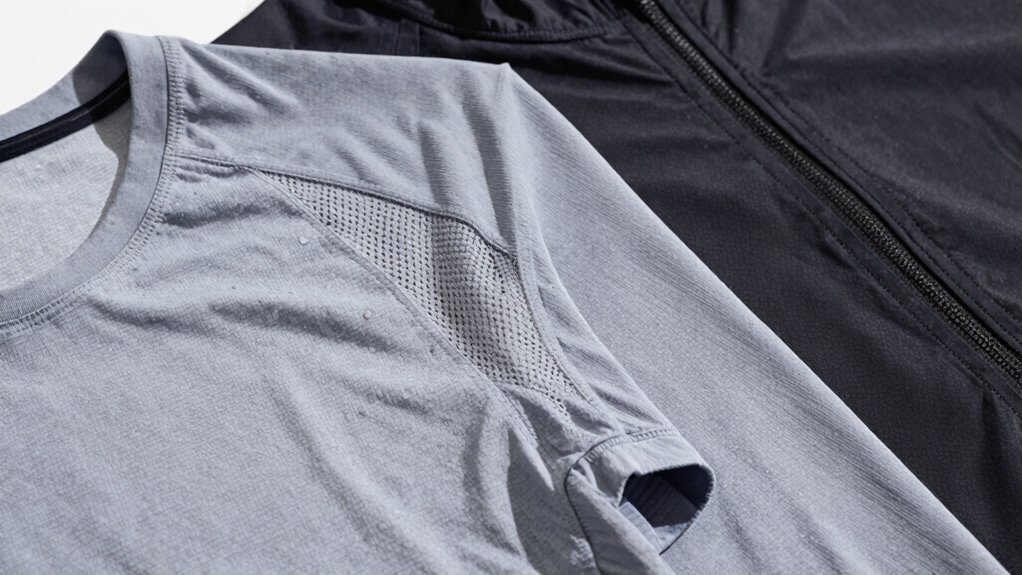
When you pick running apparel, prioritize fabrics that move sweat away from your skin, breathe well, and provide the right level of insulation for the conditions.
You’ll want moisture-wicking fabrics like polyester and nylon blends that pull sweat away quickly, keeping you dry during intense efforts.
Check for breathability via mesh panels or targeted ventilation to help sweat evaporate and regulate temperature.
Look for mesh panels or targeted vents to boost airflow, speed sweat evaporation, and regulate body temperature.
In cold weather, choose thermal materials with insulation properties that trap warmth while still letting moisture escape, so you don’t overheat.
Invest in durable materials that resist wear and washing, preserving performance and comfort over time.
Fabrics with some stretch support fit and flexibility, giving you a full range of motion for high-quality mens running without restriction.
Incorporating strength training into your routine also helps reduce injury risk by improving muscle balance and tissue resilience injury prevention.
Pick the Right Fit: Cut, Sizing, and Range of Motion
When you shop for running gear, start with true-to-size measurements and check each brand’s sizing chart so you’re not guessing between fits.
Prioritize freedom of movement by choosing fabrics with stretch and cuts that won’t bind at the hips or thighs during strides.
Pay attention to tailored hem and rise—these details control coverage, prevent chafing, and help layers sit correctly for comfort on varied runs.
Consider choosing garments made from sustainable materials to reduce environmental impact and exposure to harmful chemicals.
True-To-Size Measurements
Picking the right fit starts with accurate measurements and a clear understanding of brand-specific sizing charts, since a medium at one maker can fit like a small at another. You should use true-to-size measurements to guarantee gear will fit well and provide a comfortable fit that maintains a balance of coverage while avoiding excess fabric. Focus on measuring key areas—chest, waist, hips, inseam, and shoulder width—when choosing the right cut. Prefer activewear with spandex or elastane for controlled stretch. Try items on and perform basic movements while testing for comfort so you confirm fit without restricting performance. Measure in the evening for the most accurate sizing and to account for natural foot swelling when planning footwear true-to-size measurements. Below is a quick reference to guide sizing checks.
| Area | What to Measure | Why it Matters |
|---|---|---|
| Chest | Fullest circumference | Guarantees top fits over torso |
| Inseam | Inside leg length | Affects pant length & stride |
Freedom Of Movement
Accurate measurements give you the baseline, but freedom of movement determines how your gear performs on the run. You should choose activewear that offers a snug fit without restricting strides—too loose and you risk chafing prevention failures and fabric bunching.
Prioritize stretchy materials and four-way stretch blends like spandex or elastane so garments move with you, preserving mobility through hips and shoulders. Look for articulated cuts, split hems, and designs shaped for running mechanics; these enhance comfort during dynamic motion.
Inspect flat seams and moisture-wicking fabrics to reduce irritation and stay dry. Check each brand’s sizing chart and, when possible, test ranges of motion before buying.
Fit that balances support and freedom of movement will optimize performance and comfort. Consider pairing your apparel with shoes that offer soft cushioning to maintain comfort on long runs.
Tailored Hem And Rise
A well-chosen hem and rise can make the difference between a comfortable run and constant adjustment, so pay close attention to these details when selecting shorts or tights.
You want a tailored hem that creates a snug fit at the leg without cutting circulation, providing chafing prevention while supporting freedom of movement. Check fit guides for each brand; sizing variability means measurements matter more than label sizes.
Favor designs with stretchy materials like spandex or elastane to maximize range of motion and enhance mobility and comfort in hips and thighs.
Consider athletic cuts—tapered waists or articulated rises—that follow your body during sprints and long miles.
Finally, verify layering compatibility so base layers or compression pieces don’t restrict motion when temperatures change.
Include occasional strength and mobility work to maintain the hip and ankle range of motion that supports a proper fit during runs, especially single-leg movements for balance and stability single-leg movements.
Bottoms by Weather & Distance: Shorts, Tights, and Pants
Whether you’re heading out for a quick, hot-weather tempo run or preparing for a long, cold-distance training session, choosing the right bottoms will keep you comfortable and performing at your best.
For warm, short runs, pick lightweight shorts made from moisture-wicking fabric for ventilation and ease of movement.
For cooler conditions or longer distances, tights provide insulation and moisture management; choose short, 3/4, or full lengths to match conditions.
In cold or windy weather, layer running pants or windproof shells over tights to retain warmth while preserving breathability and flexibility.
Prioritize a snug but non-restrictive fit, flat seams to reduce chafing, and secure pockets for essentials during runs.
Aim for a snug, non-restrictive fit with flat seams to prevent chafing and secure pockets for essentials.
- Match length to temperature and distance
- Prioritize moisture-wicking materials
- Guarantee proper fit and seam construction
- Use pockets for gels and keys
Outer Layers and Seasonal Layering: What to Wear Each Season
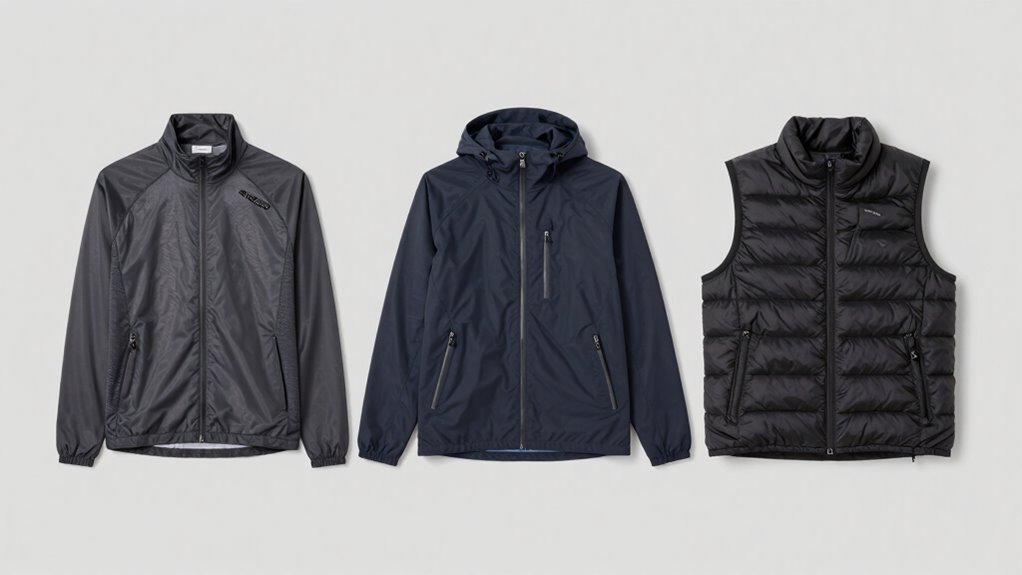
Because weather and activity demand change with the seasons, you should plan outer layers that balance temperature control, moisture management, and wind protection so you stay comfortable and performant on every run.
In spring and fall, choose lightweight, moisture-wicking long-sleeve tops and windproof jackets as breathable outer layers that handle unpredictable seasonal conditions.
In summer, wear short sleeves or tanks in breathable, moisture-wicking synthetic fabrics and lightweight shorts for maximum comfort.
In winter, build from thermal base layers to insulating mid-layers and finish with windproof, insulated jackets to minimize heat loss.
Your layering strategy should use a moisture-wicking base, targeted insulation for warmth, and a breathable, protective outer shell.
Prioritize synthetic fabrics for durability, consistent moisture control, and overall comfort.
Accessories That Matter: Headwear, Socks, Gloves, Visibility
While core clothing covers the big thermal and moisture-management needs, the right accessories refine fit, protection, and safety so your run stays comfortable and incident-free.
You should pick headwear that’s moisture-wicking and adaptable—caps or multifunctional wraps that offer sun protection or act as face masks for warmth.
Choose socks with cushioning and a snug fit to prevent blisters and maintain comfort on long efforts.
For cold outings, select gloves that balance warmth and dexterity so you can handle gear without bulk.
Prioritize visibility by adding accessories with reflective elements, especially for dawn or dusk runs, and consider lightweight vests or bands to increase contrast.
- headwear: moisture-wicking caps or multifunctional wraps
- socks: cushioned, snug fit for blister prevention
- gloves: insulated, low-bulk warmth and dexterity
- visibility: reflective elements, vests, bands
Key Features and Brands to Consider: Compression, Seams, Pockets, Reflective Gear
Key features like compression, seam construction, pocket security, and reflective detailing directly affect your comfort, performance, and safety on the run, so you should evaluate each before buying. Choose compression pieces from brands like Under Armour or X-Bionic to boost circulation and reduce fatigue; they pair well with moisture-wicking fabrics for recovery and comfort. Inspect seams: flatlock stitching cuts chafing and irritation during long distances. Evaluate pockets: secure, zippered pockets keep keys and gels stable without bouncing. Prioritize reflective gear for visibility in low light; look for integrated strips or panels. Consider reputable activewear brands such as Nike, Asics, and Salomon for durable, technical options that balance function and fit.
| Feature | Benefit | Example |
|---|---|---|
| Compression | Circulation, less fatigue | Under Armour |
| Seams | Less chafing | Flatlock |
| Pockets | Secure storage | Zippers |
| Reflective gear | Improved visibility | Reflective panels |
Wrapping It Up
Think of building your running kit like outfitting a ship: you need a hull (base layers) that repels water, sails (outer layers) that catch wind without weighing you down, and rigging (fit, pockets, reflective trim) tuned for smooth motion. Choose fabrics and cuts that match your routes and seasons, and add accessories for comfort and safety. With thoughtful selection, your gear becomes a reliable vessel that helps you move farther, faster, and more confidently.
My synthetic tee starts rubbing under my arms by the end of an evening run, and I’m trying to decide whether a looser top would actually help or if I should be looking for flatter seams instead.
A looser top can help if the rubbing is coming from the shirt sitting too close, but flatter seams and a softer finish matter too. For arm-area chafing, look for a running top that gives a little room through the chest and shoulders without feeling baggy. If the fabric traps sweat or the seams sit right where you swing your arms, that usually gets uncomfortable fast.