

When returning to running after a break, select shoes with features that reduce shock. Choose midsoles made of EVA foam for excellent protection and energy return. Opt for shoes with a higher stack height and a tapered heel design to lessen joint stress and improve shifts. Insoles should absorb impact energy and reduce tibial acceleration. Prioritize outsoles with effective damping for your durability and comfort needs. You’ll discover more about ideal shoe features to enhance your running experience.
Selecting the Right Midsole Foam for Shock Absorption
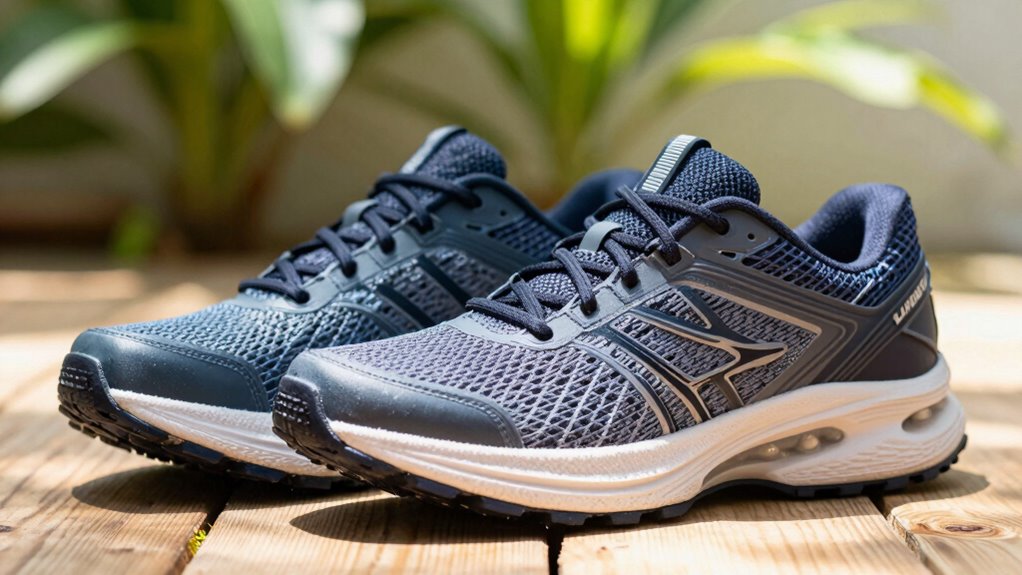
When returning to running after a break, selecting the right midsole foam for shock absorption is vital to guarantee comfort and performance. Embracing the EVA advantages can make a significant difference. EVA foam is a popular choice due to its excellent shock protection and responsiveness, offering a cushioning effect that surpasses PU. It’s lighter, ensuring a more comfortable run without compromising on energy return, which stands at an impressive 60-65%. This makes EVA an ideal option for daily trainers. On the other hand, soft foam provides plush cushioning, enhancing comfort for neutral runners seeking a softer ride. However, it’s important to remember that this softness can reduce stability, so balancing comfort and support is imperative for peak performance. Choosing shoes with breathable mesh materials can also help regulate temperature, preventing blisters and keeping feet dry during runs.
Understanding Cushioning Geometry and Stack Height
When you’re returning to running, understanding stack height and cushioning geometry is essential for optimizing your comfort and performance. A higher stack height can offer benefits like reduced joint stress and increased comfort, especially with features like a tapered heel design that can enhance heel-to-toe changes. Additionally, a rockered sole can improve running efficiency by encouraging a smoother gait, making your return to running more enjoyable and effective. Selecting shoes with responsive cushioning systems can further enhance foot stability and support, aiding in a smoother transition back into running.
Stack Height Benefits
Stack height, a key aspect of running shoe design, plays a significant role in cushioning and impact protection. When you choose a shoe with a high stack height, you benefit from increased cushioning effects, which help absorb shock and reduce joint pressure. Shoes with a stack height around 35mm typically score an average cushioning rating of 8.6, while those near 45mm can reach up to 9.5, providing plush protection for long runs or recovery. High stack shoes are particularly advantageous if you have high arches or rigid feet. They help redistribute pressure, enhancing comfort and reducing risks like ulceration, especially beneficial for conditions like diabetes or arthritis. The premium foam midsole found in some high stack shoes further enhances cushioning and energy return, providing a soft and resilient stride.
| Stack Height | Cushioning Score |
|---|---|
| 35mm | 8.6 |
| 39-40mm | 9.0+ |
| 45mm | 9.5 |
Tapered Heel Design
Exploring running shoe design further, you’ll find that the tapered heel design plays a pivotal role in cushioning geometry, complementing the benefits of stack height.
The tapered heel benefits you by reducing abrupt edge contact at your initial heel strike, smoothing your heel-to-toe shift. Tapered heel mechanics aim to extend the initial contact time, spreading compressive strain across more midsole volume and reducing focal stress peaks.
This means reduced peak impact force and smoother landings, enhancing your running experience. By altering the contact patch center-of-pressure, medial tapering can help offload excessive pronation torque, benefiting your tibialis posterior and plantar fascia.
Rockered Sole Advantages
Understanding the benefits of a rockered sole can greatly enhance your running experience by optimizing cushioning geometry and stack height.
Rocker types like full-length and heel-first rockers aid in smooth shock dispersion, reducing abrupt changes at impact. A full-length rocker promotes a continuous rolling motion, while heel-first rockers guide your foot forward, easing pressure on the calcaneus.
Meanwhile, forefoot rockers minimize strain during toe-off by reducing required dorsiflexion. Midfoot rockers focus on the arch, creating a controlled rollover. These designs help disperse impact across the sole.
Additionally, rockers paired with high stack heights restore necessary rollover mechanics, compensating for lost flexibility and lowering joint strain. Integrating strength training practices into your routine can further enhance running efficiency and reduce injury risks by building muscle strength and correcting imbalances.
Evaluating Insole and Internal Padding Contributions
When considering the contributions of insoles and internal padding to your running experience, it’s important to recognize their role in enhancing comfort and reducing impact forces. Insole technology can absorb 24-32% of impact energy, considerably lessening the strain on your body. Using cushioned insoles decreases the ground reaction force peak by 6.8% and lowers loading rates by 8.3%. Plus, peak tibial acceleration drops by 15.8%, providing increased comfort during runs. Padding materials like INSITE Levation and TPE5020 foams excel in shock absorption and cushioning. GEL materials improve elasticity and absorption, enhancing your shoe’s performance. These innovations not only optimize shock absorption but also support your biomechanics, ensuring a smoother, more protective running experience. A well-cushioned midsole contributes to smoother transitions from heel to toe, enhancing overall stability.
Assessing Outsole Design and Material Damping
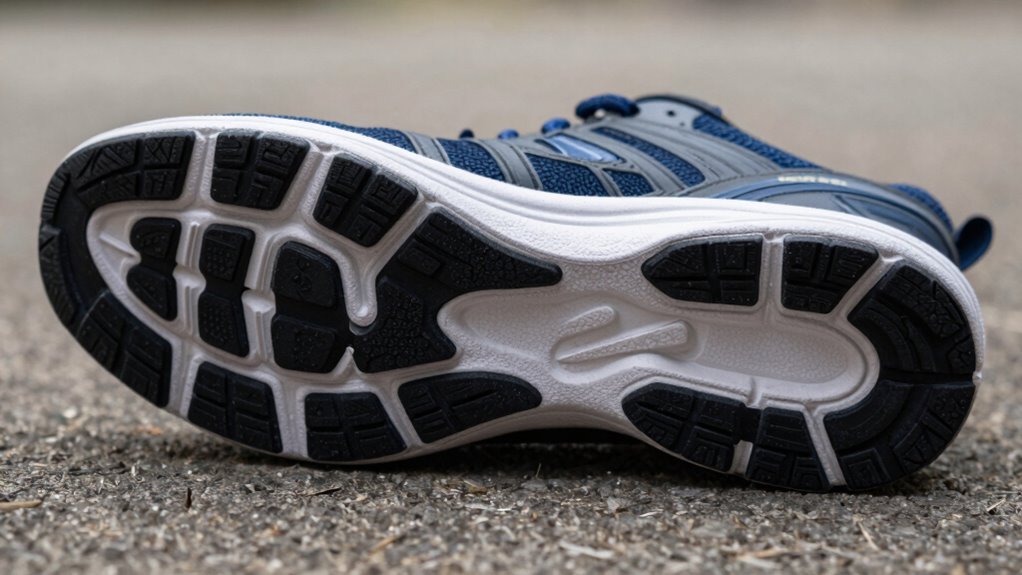
Comfort and impact reduction are essential for a successful return to running, and while insoles and padding play a significant role, the design and material of your shoe’s outsole are equally important. Outsole durability and shock absorption often hinge on the rubber compounds used. Firm rubber outsoles emphasize durability, while softer compounds enhance minor impact absorption. Rubberized foam, like in the ASICS Gel Cumulus 26, provides a forgiving landing, though it may not last as long. ZigTech outsoles offer superior cushioning. Hollow designs reduce weight and improve shock absorption.
| Outsole Type | Durability | Shock Absorption |
|---|---|---|
| Firm Rubber | High | Low |
| Soft Rubber | Moderate | Moderate |
| Rubberized Foam | Low | High |
| ZigTech | Moderate/High | High |
Selecting the right outsole depends on your priorities.
Considering Energy Return, Plates, and Mechanical Components
While choosing the right running shoe, it’s essential to take into account energy return, plates, and mechanical components, as these elements can greatly influence your running efficiency.
Carbon plates, for instance, can enhance running efficiency by up to 4%. Here’s what you should consider:
- Energy Return: Some shoes, like the PUMA prototype, improve energy return by 3%, offering a trampoline-like effect that aids performance.
- Carbon Plates: These plates not only increase efficiency but also interact with midsole energy return, enhancing running economy by 2.7%.
- Mechanical Components: Lightweight models, under 200g, reduce oxygen consumption, making your run less taxing.
- Running Economy: AFT shoes universally enhance running economy by 1–3.6%, making them a smart choice for serious runners.
Monitoring Durability, Mileage Effects, and Maintenance
To keep your running shoes in ideal condition, regularly inspect them for signs of wear, such as worn-out treads or creases in the midsole, which indicate it’s time for a replacement.
Rotating between multiple pairs of shoes can help extend their lifespan by allowing them to fully recover between runs, ensuring consistent performance.
Tracking the mileage on each pair using apps or a simple log can alert you when it’s time to replace them, preventing injuries caused by worn-out footwear.
Inspect for Wear Indicators
As you return to running after a break, it’s crucial to inspect your shoes for wear indicators to confirm they still provide the necessary support and cushioning.
Begin the inspection process by examining the outsole for flattened or shiny areas, which suggest reduced traction and increased shock. Look for asymmetrical wear patterns, indicating biased loading and potential injury risk.
Check for exposed midsole foam through holes, signaling a loss of protective barriers and higher impact at footstrike. Finally, assess the midsole condition for visible creasing or sagging, evidence of irreversible compression and diminished shock absorption.
By following this checklist, you can verify your shoes are in prime condition:
- Outsole examination
- Midsole integrity
- Upper and internal checks
- Mileage tracking
Rotate and Replace Footwear
After evaluating your shoes for wear indicators, it’s time to contemplate the importance of rotating and replacing your footwear to maintain peak performance and comfort.
By varying your rotation frequency, you can extend your shoe lifespan and experience consistent cushioning. Regularly switching between multiple pairs allows the midsoles to decompress and recover, especially if made from EVA foam, which breaks down faster.
Aim to replace shoes every 300-500 miles, depending on factors like pace and surface. Use apps like Strava or Garmin Connect to track mileage per pair, ensuring you don’t run every shoe to failure.
Regular cleaning and proper storage also enhance durability. Observing these practices helps maintain ideal shock absorption and traction, reducing the risk of injury.
Wrapping It Up
To guarantee a smooth return to running, focus on shoe features that minimize shock. Did you know that shoes with a 10mm stack height can reduce impact by up to 10%? Prioritize midsoles with effective foam and consider cushioning geometry for ideal shock absorption. Don’t overlook insoles, outsoles, and mechanical components for enhanced comfort. Regularly monitor shoe durability and maintain them well for longevity. By choosing wisely, you’ll protect your joints and improve your running experience.
I took about six months off after a knee flare-up, and I’m easing back with run-walk miles on pavement. If I’m trying to keep the shock down while my legs adapt again, should I look first at EVA foam, a higher stack, or a tapered heel in the shoes I buy now?
For your situation, start with a shoe that combines EVA foam with a moderate-to-higher stack and a tapered heel. That mix usually gives you the easiest transition back because it cushions impact without feeling too unstable on run-walk sessions. If your knee is still sensitive, prioritize comfort and smooth heel-to-toe movement over a firmer, faster ride. Try them on late in the day and make sure the heel feels secure, since poor lockdown can make a soft shoe feel less protective.